
HBOT Conversations:
Dr. Hemal Mehta & Vibrant Health University
Dr. Hemal Mehta, MD is a Medical Director and an Independent Medical Examiner who focuses on pain management through a Regenerative medicine approach. Dr. Mehta is Board Certified in Physical Medicine and Pain Management. He received his Doctor of Medicine Degree from Ross University School of Medicine and completed his residency at East Carolina. He is the Medical Director of Vibrant Health of North Carolina, Tennessee Integrative Pain Institute, and TN Integrative Healthcare: Musculoskeletal and Regenerative Center; additionally, Dr. Mehta is the attending physician at Nashville Regenerative Orthopedics. Dr. Mehta is the 2013 recipient of the Inaugural Patient Appreciation Award at Nashville Academy of Medicine, and the 2004 Research Resident of the Year for East Carolina University. Dr. Mehta has extensive experience with stem cell proliferation, and angiogenesis. He has incorporated Ozone Injection Therapy, PRP (Platelet-Rich Plasma) Injections, Hyperbaric Oxygen Therapy and Regenerative Matrix and Regenerative Medicine Procedures – to name a few – into his integrative wellness & longevity medical practices.
Watch the Podcast
HBOT News Network welcomes back Dr. Hemal V. Mehta, M.D.; Medical Director of Vibrant Health of North Carolina. Dr. Mehta has joined HBOT News Network three times previously, where we focused heavily on the topics of fasting & regenerative medicine – see Dr. Mehta & Fasting, Dr. Mehta & Fasting (Part 2), and Dr. Mehta & Regenerative Medicine.
We are thrilled to have Dr. Mehta return to discuss Vibrant Health University. Vibrant Health University is a new start-up educational program through Vibrant Health. It is a way to help educate, not just the public, but also providers who are interested in performing regenerative therapies, regenerative injections, and providing an alternative to patients that’s not typically available.
Vibrant Health University wants to steer the medical field and general public away from the traditional heavy focus of pharmacology and surgical techniques; and educate people more on the integrative approaches available for regenerative therapies and regenerative treatments. What people can expect from Vibrant Health University (once it gets up and going), is a variety of online programs and podcasts they can watch. Then, if interested further, physicians can choose the option for an in-person educational program where Dr. Mehta or his team can visit the physician’s office (or the physician can visit them) and the physician can then witness live demonstrations, and learn how to do proper procedures for regenerative treatments, while incorporating their protocols into their treatment plans.
The courses at Vibrant Health University will be a structured program with a certification process. Dr. Mehta explains that they are planning to provide different tiers. For example, a lower tier, a medium tier, and a higher tier of education to providers based on their level of expertise, and based on how much knowledge they already have and how much they want to obtain. The ultimate goal of the program is to have the courses accredited by the appropriate certifying boards to count as continuing medical education for physicians.
Dr. Mehta & di Giralomo spend time discussing the importance of physician education, the continued benefits of fasting, and how to gain control of excessive inflammation.
Dr. Mehta remind us of Vibrant Health’s focus — to integrate traditional and non-traditional medicine to give each patient the best outlook and care. Ultimately, integrative medicine is integrating functional medicine and holistic therapies with what we’ve learned through history regarding how the human body works. God gave us everything we need to survive from the beginning of human life. Dr. Mehta ends this segment by explaining through the study of medicine, it’s incredibly difficult to not believe that there is a God or a higher power that has created this body. The human body is made to be able to tolerate all kinds of different injuries, in all kinds of different aspects of life, while adapting to the environment. There is absolutely no other machine that man has ever made that’s even similar to the divine healing capabilities of the human body.
If you’d like to know more about Vibrant Health University, please contact Vibrant Health at www.vibranthcs.com/contact/
Guest
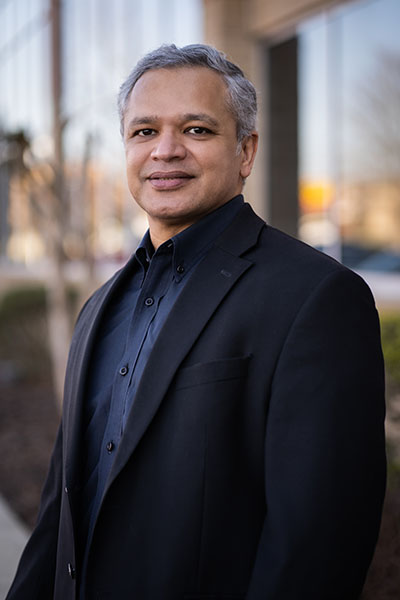
Dr. Hemal Mehta
Subscribe Now, It’s Free!
Recent HBOT News
Linear analysis of heart rate variability in post-concussive syndrome.
Heart rate variability (HRV) represents measurable output of coordinated structural and functional systems within the body and brain. Both mild traumatic brain injury (mTBI) and HRV are modulated by changes in autonomic nervous system function. We present baseline HRV results from an ongoing mTBI clinical trial. HRV was assessed via 24-hour ambulatory electrocardiography; recordings were segmented by physiological state (sleep, wakefulness, exercise, standing still). Time, frequency, and spatial domain measures were summarized and compared with symptoms, sleep quality, and neurological examination. Median low frequency/high frequency (LF/HF) ratio exceeded 1.0 across segments, indicating prevalence of sympathetic modulation. Abnormal Sharpened Romberg Test was associated with 29% LF/HF decrease (95% CI [2.1, 47.7], p=0.04); pathological nystagmus associated with decreased standard deviation of electrocardiogram R-R interval (SDNN) index (25% decrease, 95% CI [0.8, 43.4], p=0.04). Increased sympathetic modulation was associated with increased anger scores (19% LF/HF increase with 5-point State Trait Anger Expression Inventory-2 trait anger increase (95% CI [1.2, 39.1], p=0.04)). A 13% HF increase (95% CI [2.1, 25.7], p=0.02) was observed with increased Pittsburgh Sleep Quality Index scores. These results support autonomic nervous system dysfunction in service members after mTBI.
TBI study questioned: Dr. Weaver response.
Abstract: Weaver, Lindblad, Wilson, Churchill, Deru, , , , (). TBI study questioned: Dr. Weaver response. Undersea & hyperbaric medicine : journal of the Undersea and Hyperbaric Medical Society, Inc, ;44(1):82-85. https://www.ncbi.nlm.nih.gov/pubmed/28768093
Sleep assessments for a mild traumatic brain injury trial in a military population.
Baseline sleep characteristics were explored for 71 U.S. military service members with mild traumatic brain injury (mTBI) enrolled in a post-concussive syndrome clinical trial. The Pittsburgh Sleep Quality Index (PSQI), sleep diary, several disorder-specific questionnaires, actigraphy and polysomnographic nap were collected. Almost all (97%) reported ongoing sleep problems. The mean global PSQI score was 13.5 (SD=3.8) and 87% met insomnia criteria. Sleep maintenance efficiency was 79.1% for PSQI, 82.7% for sleep diary and 90.5% for actigraphy; total sleep time was 288, 302 and 400 minutes, respectively. There was no correlation between actigraphy and subjective questionnaires. Overall, 70% met hypersomnia conditions, 70% were at high risk for obstructive sleep apnea (OSA), 32% were symptomatic for restless legs syndrome, and 6% reported cataplexy. Nearly half (44%) reported coexisting insomnia, hypersomnia and high OSA risk. Participants with post-traumatic stress disorder (PTSD) had higher PSQI scores and increased OSA risk. Older participants and those with higher aggression, anxiety or depression also had increased OSA risk. The results confirm poor sleep quality in mTBI with insomnia, hypersomnia, and OSA risk higher than previously reported, and imply sleep disorders in mTBI may be underdiagnosed or exacerbated by comorbid PTSD.