
HBOT Conversations:
Dr. Peter Canaday (Part 2)
Dr. Peter Canaday has published work in Applied Physiology, Respiratory Medicine, and Diagnostic Radiology. He has presented at National (USA) and International meetings, and his research supported the eventual FDA approval of a new medical imaging device incorporating digital X-ray tomosynthesis. He has sat on National, State, and Local advisory committees, and given testimony at the State Legislative level in the USA.
Dr. Canaday’s experience with Hyperbaric Oxygen Therapy dates back to the 1980s when he studied HBOT under Dr. Eric Kindwall, “The Father of Hyperbaric Medicine”. Dr. Canaday also co-founded the Hyperbaric Medicine Department at St. Anthony Hospital in Lakewood, Colorado.
From 2007, Dr. Canaday spent time in community radiology practices before settling in New Zealand in 2013 as a Consultant Radiologist. Since 2016, he was employed at a Midlands region DHB and served as Head of Department before retiring in March 2021.
Watch the Podcast
HBOT News Network welcomes Dr. Peter Canaday.
This is Part 2 of Conversations with Dr. Peter Canaday. Part 1 can be viewed here. Dr. Canaday now lives primarily in New Zealand, but his history with medicine and Hyperbaric Oxygen Therapy dates back over 40 years to the United States.
In this HBOT News Network Conversations, Dr. Canaday continues the discussion on COVID-19 vaccines and the suppression of medical data. di Girolamon asks the question, “where do we go from here?”. Dr. Canaday explains that Hyperbaric Oxygen Therapy is one of the most exciting things that has piqued his interest in the medical field. He explains that huge numbers are really starting to be revealed of people who have been negatively affected by COVID, either from the point of long-COVID or from a vaccine injury; and Hyperbaric Oxygen could be potentially very helpful to this population, as it is a natural therapy involving oxygen and pressure that upregulates the anti-inflammatory gene and down regulates the inflammatory gene.
However, Hyperbaric Oxygen Therapy threatens the pharmaceutical companies bottom line and when that happens we all start to see some pretty disturbing things start surfacing — such as the science being buried, fake studies being published showing HBOT to be ineffective, major medical Journals rejecting scientific articles outlining all the adverse affects from the vaccine.
The spirit of humanity needs to be embraced here, and it is not.
Dr. Canaday encourages viewers to learn more at www.nzdsos.com — it’s “New Zealand Doctors Speaking Out with Science“. The NZDSOS is very similar to America’s Frontline Doctors and there is a plethora of educational information that can be learned regarding what happened during the COVID-19 pandemic and is still happening today. Dr. Canaday further encourages us all to open our eyes, hearts and ears as we listen and digest to all of this information. Often times, it’s when doctors keep getting shut down and censored that we all need to be listening closer instead of turning the other cheek.
Dr. Canaday and di Girolamo stresses that everyone should be looking into the God-given miracle of Hyperbaric Oxygen Therapy. Be sure to find a treatment center near you if you are experiencing effects of long-COVID or a vaccine injury.
This HBOT News Conversation was filmed on October 4, 2022
Guest
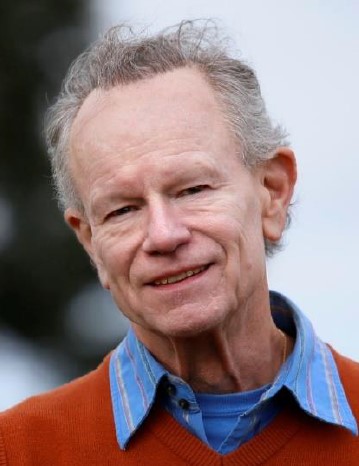
Dr. Peter Canaday
Following completion of medical school at the University of Massachusetts in 1976, Dr. Peter Canaday took up training as an Internal Medicine specialist at the University of Michigan, followed by sub-specialist training in Respiratory and Intensive Care at the University of North Carolina. He began his medical career in a busy trauma hospital in Denver, Colorado in 1981 and practiced for 12 years. During his time there, he managed many of the types of patients now seen with severe COVID-19, co-founded a sleep disorders laboratory and a hyperbaric medicine department. As well, he participated in a dozen committee assignments, and rose to Chairman of the Department of Internal Medicine. In 1993, Dr Canaday changed career and completed training as a Radiologist at the University of Wisconsin in 1997. During an 8-year period at Creighton University Medical School in Nebraska, he became tenured as an Assistant Professor of Radiology, and head of the section of Pulmonary Radiology. He also served on or chaired over a dozen hospital and medical school committees and was appointed Clinical Coordinator for the Radiology Department during his time there. Dr Canaday has also published work in applied physiology, respiratory medicine, and diagnostic radiology, has presented at national (USA) and international meetings, and his research supported the eventual FDA approval of a new medical imaging device incorporating digital X-ray tomosynthesis. He has sat on national, state, and local level advisory committees and given testimony at the state legislative level in the USA. From 2007, Dr Canaday spent time in community radiology practices before settling in New Zealand in 2013 as a Consultant Radiologist. Since 2016, he was employed at the Taranaki District Health Board and served as Head of Department before retiring in March 2021.
Subscribe Now, It’s Free!
Recent HBOT News
Hyperbaric oxygen therapy restored traumatic stress-induced dysregulation of fear memory and related neurochemical abnormalities.
Individuals with posttraumatic stress disorder (PTSD) are characterized by fear memory problems and hypocortisolemia of which traumatic stress-induced monoaminergic disruption over infralimbic (IL) cortex is considered the key mechanism. Hyperbaric oxygen therapy (HBOT) has recently proven its utility in treating several mental disorders but remains unexplored for PTSD. The present study aimed to examine the effects of 5-day HBO paradigm on traumatic stress (single prolonged stress, SPS, an animal model of PTSD)-induced dysregulation of fear memory/anxiety profiles and related abnormalities in IL monoamines and plasma corticosterone.
Hyperbaric oxygen therapy is an effective adjunctive treatment for severe perianal Crohn’s disease
Abstract: BACKGROUND: Perianal involvement occurs in about 30% of children with Crohn's disease (CD). Treatment of perianal CD requires a multidisciplinary approach with a combination of immunomodulatory therapy, antibiotics and surgery. Hyperbaric oxygen...
Hyperbaric oxygen promotes neural stem cell proliferation by activating vascular endothelial growth factor/extracellular signal-regulated kinase signaling after traumatic brain injury.
Hyperbaric oxygen (HBO) therapy and neural stem cell (NSC) transplantation can improve traumatic brain injury (TBI) clinically. This study aimed to investigate the mechanism of HBO promoting NSC proliferation and neurological recovery after TBI. Twenty-four Sprague-Dawley rats were divided randomly into three groups: a sham group, a TBI group (constructed using Feeney’s free-fall method), and an HBO-treated TBI group. Neurological function was evaluated by Neurological Severity Scores on days 1, 3, and 7, and we found that TBI-induced poor neurological function was improved by HBO. On day 7 after TBI, we observed that TBI promoted NSC proliferation, migration to the lesion area, and the levels of vascular endothelial growth factor (VEGF), VEGFR2, Raf-1, MEK1/2, and phospho-extracellular signal-regulated kinase (ERK) 1/2 protein, which were further boosted by HBO, from immunohistochemistry, immunofluorescence, and Western blot experiments. In vitro, cell injury was applied to NSCs isolated from neonatal Sprague-Dawley rats by the Cell Injury Controller II system. Moreover, data from the BrdU Kit and Western blot showed that in-vitro HBO significantly accelerated NSC proliferation and the levels of proteins related to cell cycle and the VEGF/ERK pathway after cell injury, which was suppressed by the VEGFR2 inhibitor. Taken together, this study indicated that HBO may promote NSC proliferation by activating VEGF/ERK signaling and play a crucial role in neuroprotection after TBI.