
Special Report – Veterans and HBOT
The unfortunate truth is that countless veterans, just like Simon, repeatedly battle suicidal thoughts. They struggle from their battle wounds and PTSD with each passing minute.
These brave souls protected our country, and it’s beyond time that we protect their future. Thankfully there is hope in HBOT.
Watch the 30 Minute Special Report
Veterans are at especially high risk for suicide due to the injuries they’ve endured and the horrific images they’ve seen. Post-traumatic stress disorder (PTSD) and traumatic brain injury (TBI) rank high among the reasons why veterans are choosing death over living. But there is hope for new beginnings. Hyperbaric oxygen therapy (HBOT) is helping war veterans turn their lives around.
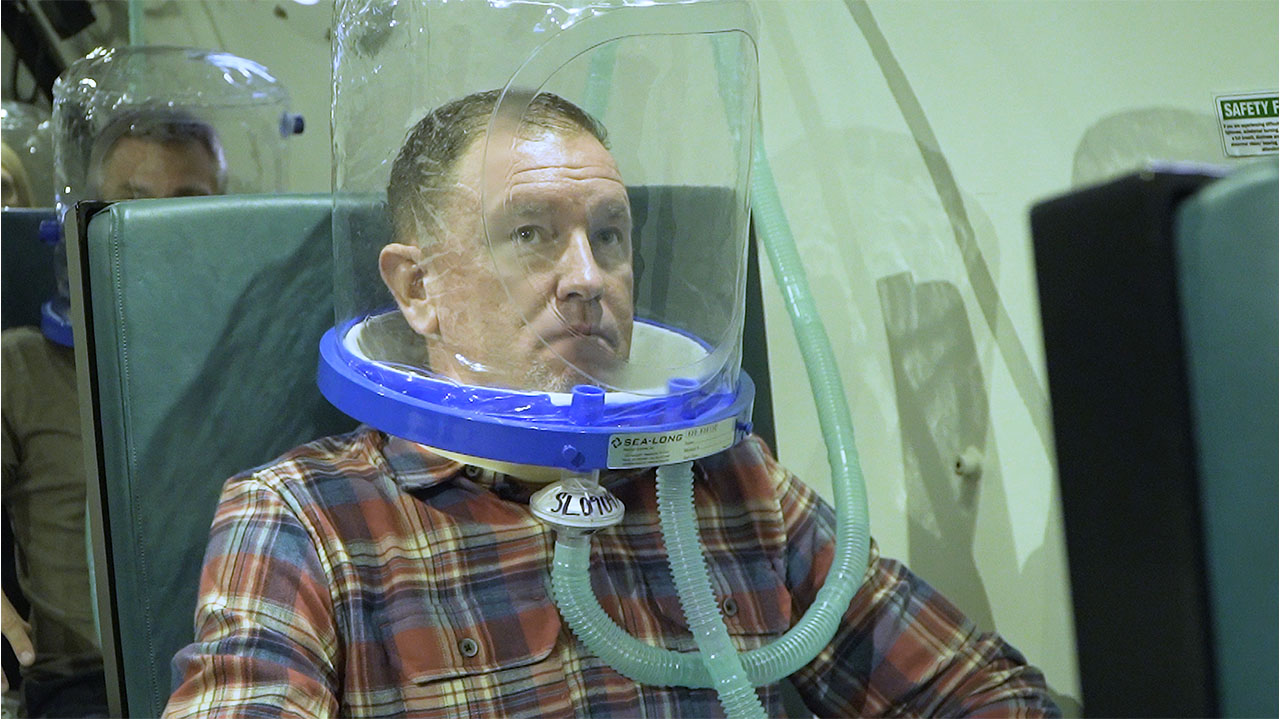
In this Special Report, Edward diGirolamo, host of the HBOT News Network, dives into HBOT and what the state of North Carolina is doing to help get veterans this life saving therapy. We hear from Melissa Spain, CEO of the Community Foundation of NC East, as she discusses their involvement to get NC Senate Bill 442 passed; a bill that has appropriated funds to provide HBOT to NC veterans who suffer from TBI and PTSD.
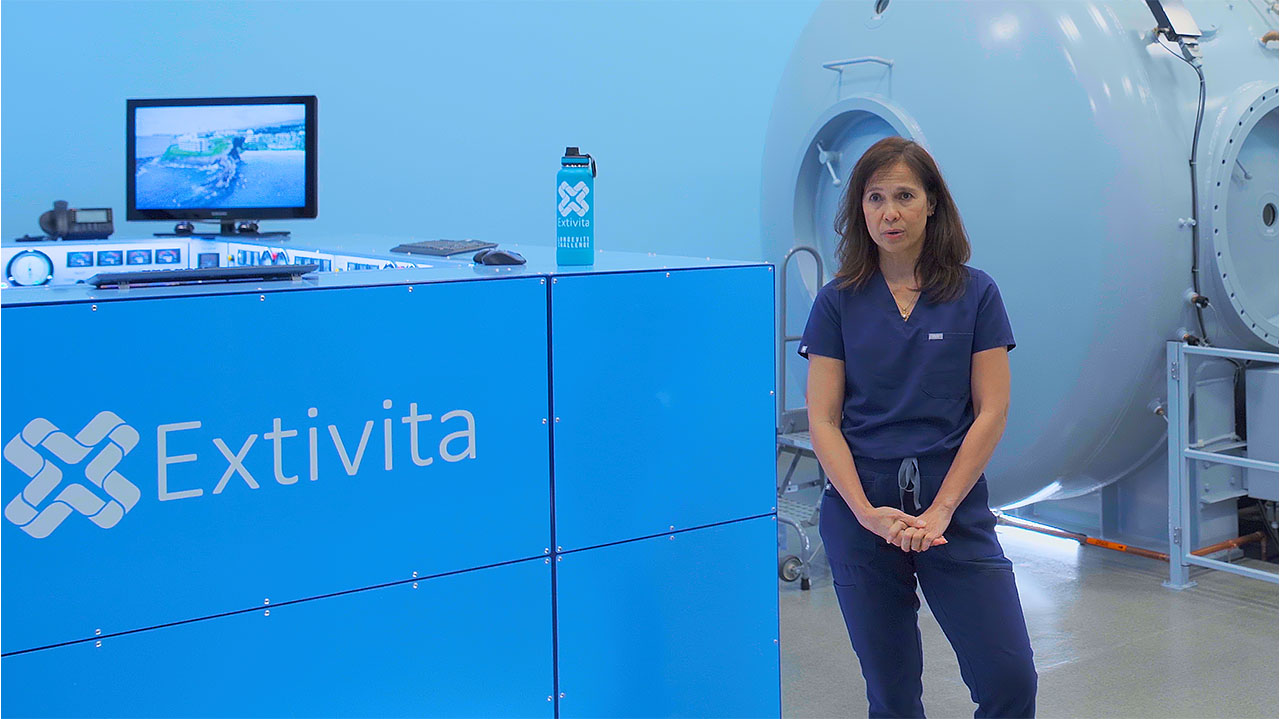
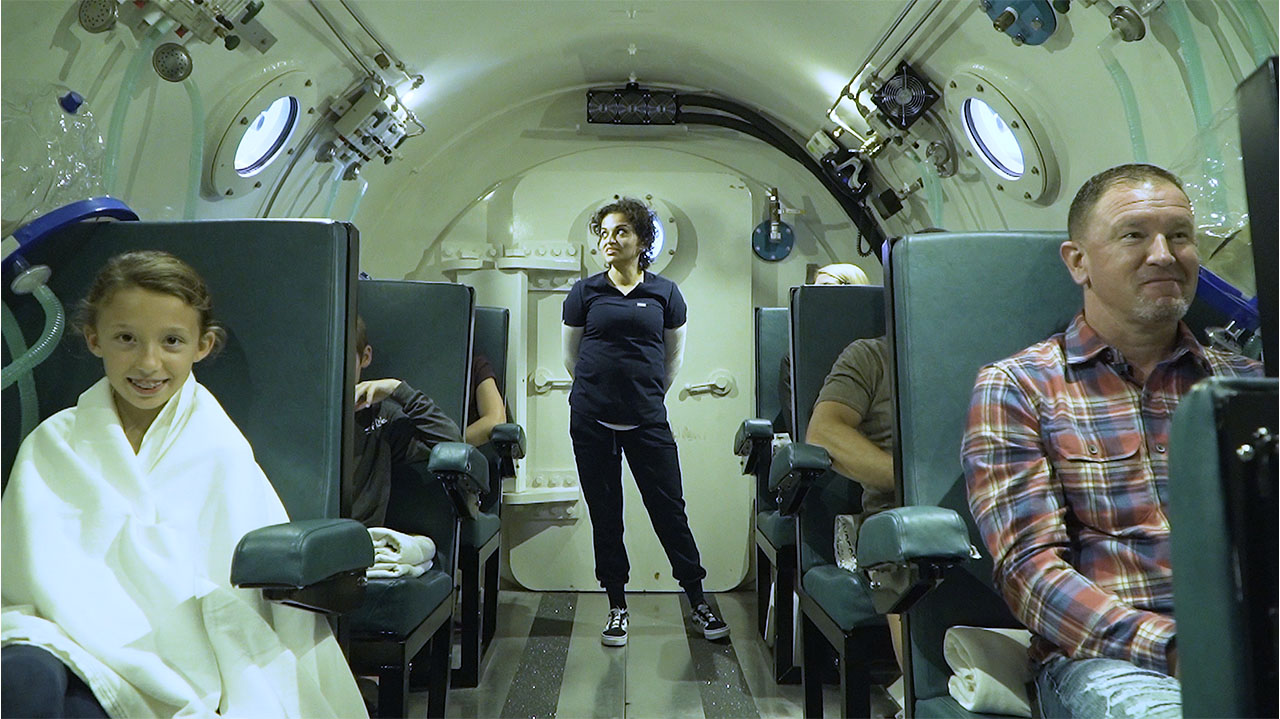
We are also greeted by Elena Schertz, Nurse Practitioner at Extivita-RTP in Durham, NC. Elena gives us a tour of their state-of-the-art clinic where soldiers are receiving HBOT. One of their veteran patients, Simon LeMay, agreed to share his story with us to help spread the hope that exists within the world of hyperbaric oxygen therapy.
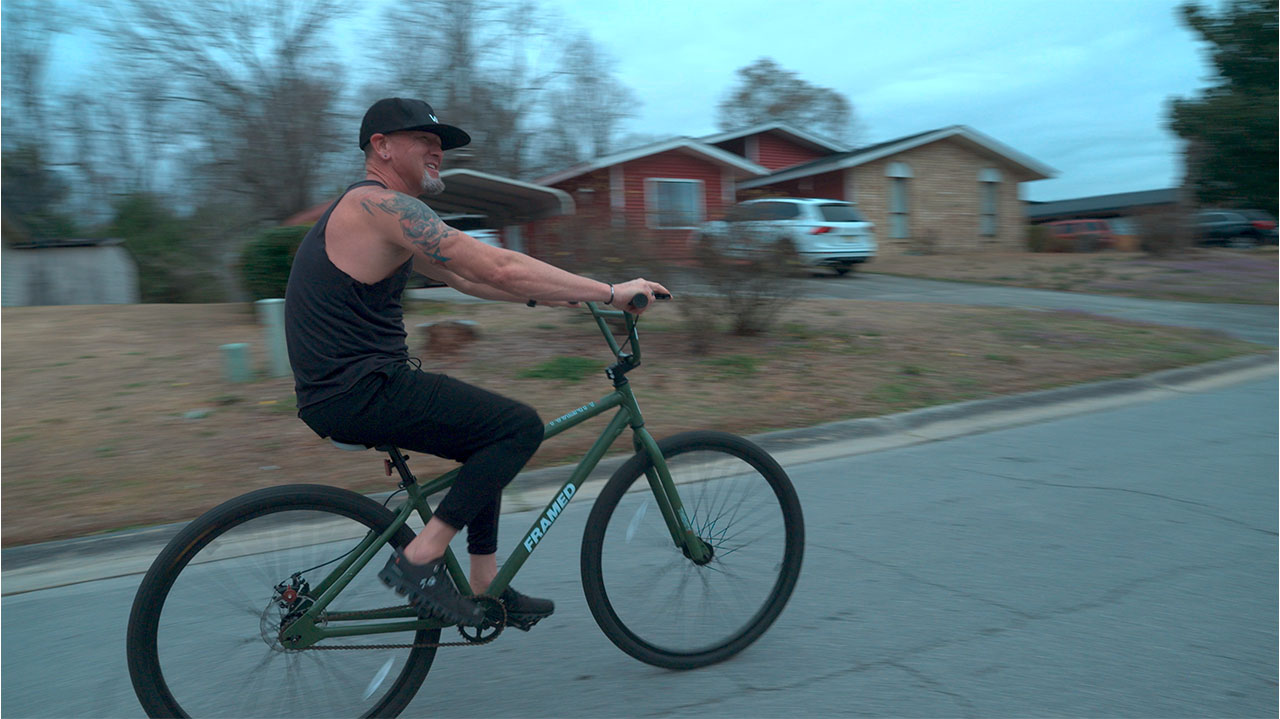
Meet a true American Hero, Simon LeMay, retired Sergeant Major with 25-years in the US Marine Corps. LeMay was deployed to Iraq and Afghanistan five times during a ten year period. He lost his best friend in battle and witnessed horrific incidents of violence and injury among his Marine bothers. Although LeMay was blessed to avoid serious physical injury to himself, he did come home with an invisible wound of war.
IED exposures left him with a TBI and visions of war and death haunted him with PTSD. Simon turned to alcohol and pain pills to ease the emotional and physical pain, leading him down a dark tunnel of depression and suicidal thoughts that almost ended in demise.
After hearing about it from friends, his loving family talked him into trying hyperbaric oxygen therapy to help heal his brain injuries. LeMay received treatment at Extivita- RTP in Durham, NC and states after 20-30 treatments he started realizing that he was once again “starting to feel emotion,” with the sense of worthlessness disappearing and the suicidal ideation being no more.
“I started looking forward to the next day,” Simon exclaims.
Also included in this Special Report is a raw and personal interview with Cate, Simon’s wife. Today she is thrilled with Simon’s progress, even calling hyperbaric oxygen therapy “God sent.”





Guest
Organizations
For more information about the guest organizations featured in this special, please click on the links.

North Carolina Hyperbaric Oxygen Therapy Clinic
Extivita RTP

NC HBOT for Veterans Program
The Community Foundation of NC East
Subscribe Now, It’s Free!
Recent HBOT News
A Rare Complication After Septoplasty: Visual Loss Due to Right Retinal Artery Spasm.
Abstract: Septoplasty is a commonly used procedure for correcting septal cartilage deformities. Hemorrhage, abscesses, scaling, adhesions, and scar tissue are often seen after the operation of the septoplasty, but temporary or permanent visual loss due to local...
Hyperbaric oxygen therapy for spinal cord ischaemia after complex aortic repair – a retrospective review.
Complex aortic repair (CAR) carries high rates of debilitating postoperative complications, including spinal cord injury. The rate of spinal cord deficits post-CAR is approximately 10%, with permanent paraplegia in 2.9% and paraparesis in 2.4% of patients. Treatment options are limited. Rescue therapies include optimization of spinal cord perfusion and oxygen delivery by mean arterial pressure augmentation (> 90 mm Hg), cerebrospinal fluid drainage, and preservation of adequate haemoglobin concentration (> 100 g L?). Hyperbaric oxygen therapy (HBOT) has been described in several case reports as part of the multimodal treatment for spinal cord ischemia. HBOT has been used in our centre as adjunct rescue treatment for patients with spinal cord injury post-CAR that were refractory to traditional medical management, and we aimed to retrospectively review these cases. After Research Ethics Board approval, we performed a retrospective review of all post-CAR patients who developed spinal cord injury with severe motor deficit and were treated with HBOT at our institution since 2013. Seven patients with spinal cord injury after CAR were treated with HBOT in addition to traditional rescue therapies. Five patients showed varying degrees of recovery, with two displaying full recovery. One developed oxygen-induced seizure, medically treated. No other HBOT-related complications were noted. Our retrospective study shows a potential benefit of hyperbaric oxygen therapy on neurological outcome in patients who developed spinal cord injury after CAR.
Perfluorocarbon in Delayed Recompression with a Mixed Gender Swine Model of Decompression Sickness.
Perfluorocarbons (PFC) are fluorinated hydrocarbons that dissolve gases to a much greater degree than plasma and hold promise in treating decompression sickness (DCS). The efficacy of PFC in a mixed gender model of DCS and safety in recompression therapy has not been previously explored. Swine (25 kg; N = 104; 51 male and 53 female) were randomized into normal saline solution (NSS) or PFC emulsion treatment groups and subjected to compression on air in a hyperbaric chamber at 200 fsw for 31 min. Then the animals were decompressed and observed for signs of DCS. Afterwards, they were treated with oxygen and either PFC (4 cc · kg-1) or NSS (4 cc · kg-1). Surviving animals were observed for 4 h, at which time they underwent recompression therapy using a standard Navy Treatment Table 6. After 24 h the animals were assessed and then euthanized. Survival rates were not significantly different between NSS (74.04%) and PFC (66.67%) treatment groups.