
Special Report – Veterans and HBOT
The unfortunate truth is that countless veterans, just like Simon, repeatedly battle suicidal thoughts. They struggle from their battle wounds and PTSD with each passing minute.
These brave souls protected our country, and it’s beyond time that we protect their future. Thankfully there is hope in HBOT.
Watch the 30 Minute Special Report
Veterans are at especially high risk for suicide due to the injuries they’ve endured and the horrific images they’ve seen. Post-traumatic stress disorder (PTSD) and traumatic brain injury (TBI) rank high among the reasons why veterans are choosing death over living. But there is hope for new beginnings. Hyperbaric oxygen therapy (HBOT) is helping war veterans turn their lives around.
In this Special Report, Edward diGirolamo, host of the HBOT News Network, dives into HBOT and what the state of North Carolina is doing to help get veterans this life saving therapy. We hear from Melissa Spain, CEO of the Community Foundation of NC East, as she discusses their involvement to get NC Senate Bill 442 passed; a bill that has appropriated funds to provide HBOT to NC veterans who suffer from TBI and PTSD.
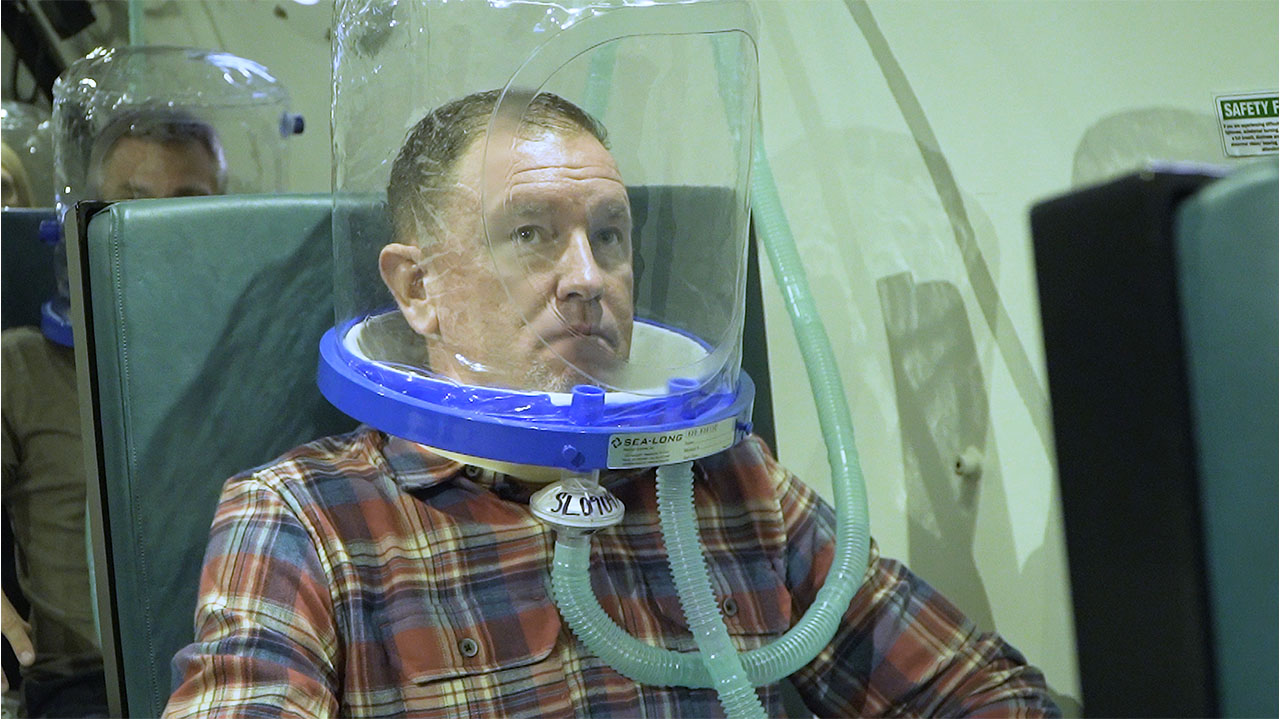
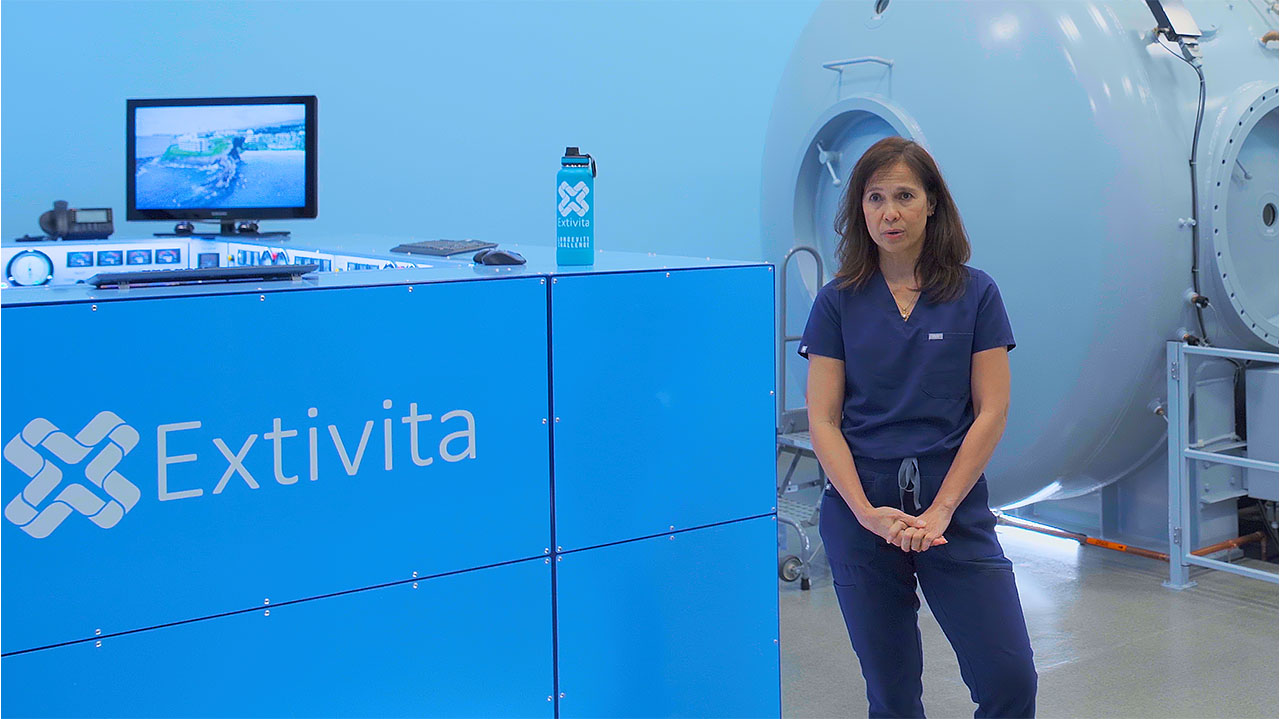
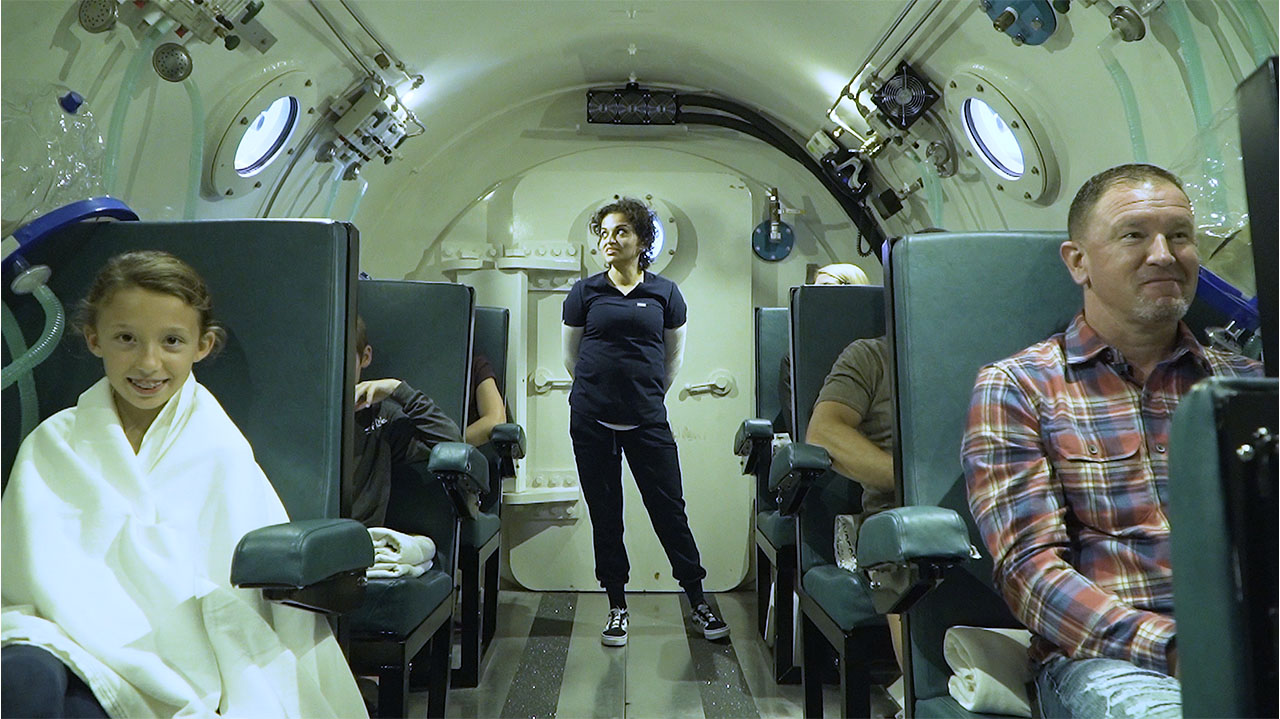
We are also greeted by Elena Schertz, Nurse Practitioner at Extivita-RTP in Durham, NC. Elena gives us a tour of their state-of-the-art clinic where soldiers are receiving HBOT. One of their veteran patients, Simon LeMay, agreed to share his story with us to help spread the hope that exists within the world of hyperbaric oxygen therapy.
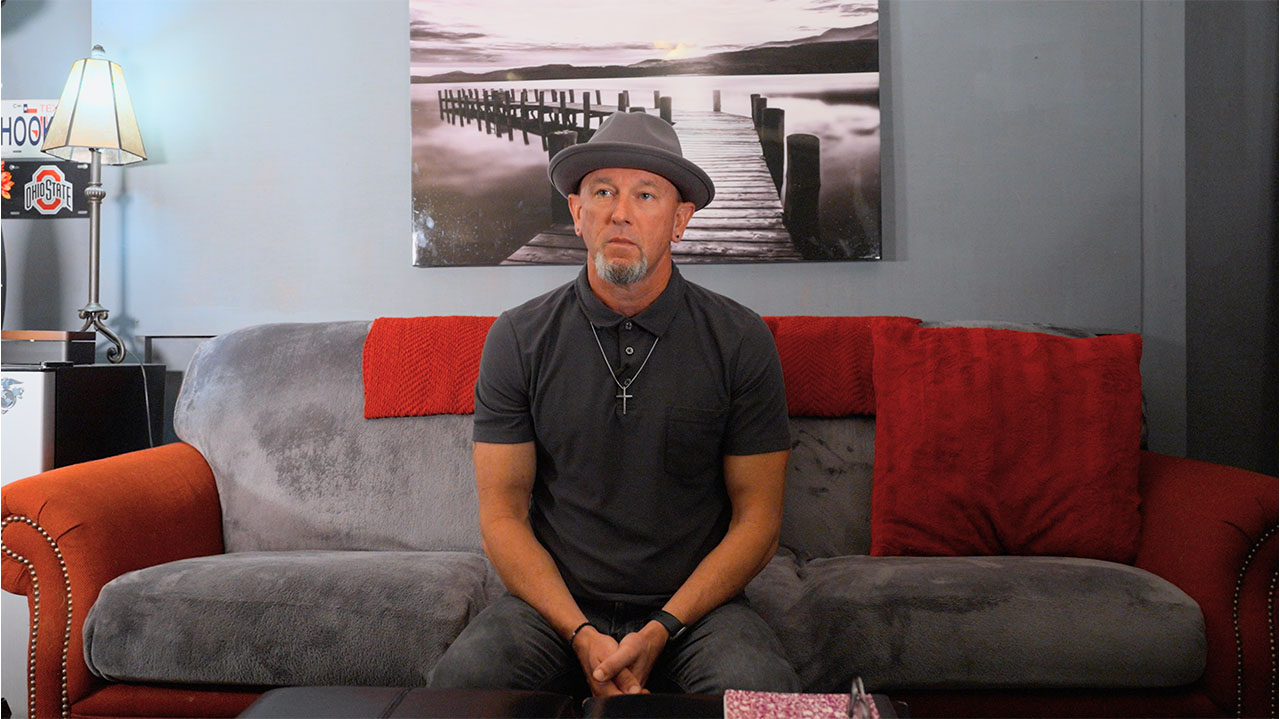
Meet a true American Hero, Simon LeMay, retired Sergeant Major with 25-years in the US Marine Corps. LeMay was deployed to Iraq and Afghanistan five times during a ten year period. He lost his best friend in battle and witnessed horrific incidents of violence and injury among his Marine bothers. Although LeMay was blessed to avoid serious physical injury to himself, he did come home with an invisible wound of war.
IED exposures left him with a TBI and visions of war and death haunted him with PTSD. Simon turned to alcohol and pain pills to ease the emotional and physical pain, leading him down a dark tunnel of depression and suicidal thoughts that almost ended in demise.
After hearing about it from friends, his loving family talked him into trying hyperbaric oxygen therapy to help heal his brain injuries. LeMay received treatment at Extivita- RTP in Durham, NC and states after 20-30 treatments he started realizing that he was once again “starting to feel emotion,” with the sense of worthlessness disappearing and the suicidal ideation being no more.
“I started looking forward to the next day,” Simon exclaims.
Also included in this Special Report is a raw and personal interview with Cate, Simon’s wife. Today she is thrilled with Simon’s progress, even calling hyperbaric oxygen therapy “God sent.”




Guest
Organizations
For more information about the guest organizations featured in this special, please click on the links.

North Carolina Hyperbaric Oxygen Therapy Clinic
Extivita RTP

NC HBOT for Veterans Program
The Community Foundation of NC East
Subscribe Now, It’s Free!
Recent HBOT News
TBI study questioned: Dr. Weaver response.
Abstract: Weaver, Lindblad, Wilson, Churchill, Deru, , , , (). TBI study questioned: Dr. Weaver response. Undersea & hyperbaric medicine : journal of the Undersea and Hyperbaric Medical Society, Inc, ;44(1):82-85. https://www.ncbi.nlm.nih.gov/pubmed/28768093
Sleep assessments for a mild traumatic brain injury trial in a military population.
Baseline sleep characteristics were explored for 71 U.S. military service members with mild traumatic brain injury (mTBI) enrolled in a post-concussive syndrome clinical trial. The Pittsburgh Sleep Quality Index (PSQI), sleep diary, several disorder-specific questionnaires, actigraphy and polysomnographic nap were collected. Almost all (97%) reported ongoing sleep problems. The mean global PSQI score was 13.5 (SD=3.8) and 87% met insomnia criteria. Sleep maintenance efficiency was 79.1% for PSQI, 82.7% for sleep diary and 90.5% for actigraphy; total sleep time was 288, 302 and 400 minutes, respectively. There was no correlation between actigraphy and subjective questionnaires. Overall, 70% met hypersomnia conditions, 70% were at high risk for obstructive sleep apnea (OSA), 32% were symptomatic for restless legs syndrome, and 6% reported cataplexy. Nearly half (44%) reported coexisting insomnia, hypersomnia and high OSA risk. Participants with post-traumatic stress disorder (PTSD) had higher PSQI scores and increased OSA risk. Older participants and those with higher aggression, anxiety or depression also had increased OSA risk. The results confirm poor sleep quality in mTBI with insomnia, hypersomnia, and OSA risk higher than previously reported, and imply sleep disorders in mTBI may be underdiagnosed or exacerbated by comorbid PTSD.
Relationship between clinical and radiologic findings of spinal cord injury in decompression sickness.
Decompression sickness may involve the central nervous system. The most common site is spinal cord. This study was conducted to determine the relationship between magnetic resonance(MR) imaging findings of spinal damage. We conducted a retrospective review of 12 patients (male=10, female=2) who presented with spinal cord symptoms. We investigated their clinical features, neurological findings and radiologic findings. The depth and bottom time of the dive were 34.5 meters (range 22-56) and 22.7 minutes (range 10-55) respectively. Most divers ascended within appropriate time frame as shown by the decompression tables. The most frequent initial symptoms were lower limb weakness (n=12), followed by sensory disturbances (n=10) and bladder dysfuction (n=5). The chief radiologic abnormalities were continuous (n=3), or non-continuous (n=5) high-signal intensity on T2-weighted images at posterior paramedian portion of the spinal cord, mainly thoracic level. There were no abnormal findings in the remaining four (4) patients, and they showed good prognosis. All patients were treated with hyperbaric oxygen therapy and some received high-dose dexamethasone. On discharge, five (5) patients had made a full recovery, seven (7) had some residual neurological sequelae, and all patients except one (1) regained normal bladder function. Spinal cord decompression sickness is a neurological emergency. Early recognition and treatment may minimize neurological damage. Initial normal finding in MR imaging was a good predictor for prognosis in spinal decompression sickness.