
News & Research
Hyperbaric Oxygen Therapy has been used for the better part of two centuries. Search our arhives below for past HBOT news and research or scroll down for the latest.
The Latest HBOT News & Research
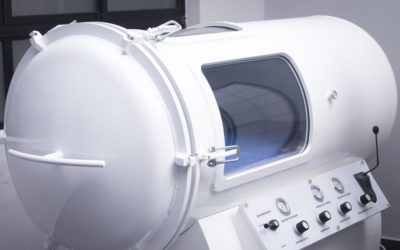
Could an existing oxygen therapy treat Alzheimer’s?
"Breathing oxygen at a higher-than-normal air pressure might ease some of the symptoms of Alzheimer's disease, if recent research done in mice has the same results in humans." Mice genetically engineered to develop some human features of...
Is Hyperbaric Oxygen Therapy Effective in Cisplatin-Induced Ototoxicity in Rats?
Abstract: Cisplatin is an antineoplastic agent, used in the treatment of different types of malignant neoplasms. Side effects such as ototoxicity, nephrotoxicity, and bone marrow toxicity are the main limitations of its clinical use. The aim of the...
Clinical Trial – Hyperbaric Oxygen Therapy in Sickle Cell Pain
Hyperbaric oxygen therapy in acute sickle cell pain crisis. The purpose of this study is to
explore if hyperbaric oxygen therapy would decrease hospital length of stay and pain
associated with acute sickle cell pain crisis. Eligibility criteria include both female and
males age 19 years or older with sickle cell who are in an acute pain crisis. Exclusions
include pregnancy and a sickle cell crisis complicated by any acute significant concomitant
factors/conditions (i.e., acute chest syndrome, acute MI/stroke). Interventions would be 1-3
hyperbaric oxygen sessions depending on response to the therapy. Each treatment session will
be approximately two hours in length. Evaluation would be through patients’ self assessment
via the visual analog scale for pain level before and after treatments as well as tracking
length of stay in the hospital.
Multi-Modal Treatment of Rhinocerebral Mucormycosis in a Pediatric Patient with Relapsed Pre-B Acute Lymphoblastic Leukemia.
Abstract: A 17-year-old female developed invasive rhinocerebral mucormycosis during intensive re-induction chemotherapy for relapsed pre-B acute lymphoblastic leukemia. Due to the high case fatality rate for invasive mucormycosis in profoundly...
Management of Glioblastoma Multiforme in a Patient Treated With Ketogenic Metabolic Therapy and Modified Standard of Care: A 24-Month Follow-Up.
Abstract: Few advances have been made in overall survival for glioblastoma multiforme (GBM) in more than 40?years. Here, we report the case of a 38-year-old man who presented with chronic headache, nausea, and vomiting accompanied by left partial...
VA to Provide Hyperbaric Oxygen Therapy to Some Veterans with Chronic PTSD
Press release from the U.S. Department of Veterans Affairs announced that it will offer Hyperbaric Oxygen Therapy (HBOT) as a treatment option for Veterans with persistent post-traumatic stress disorder (PTSD) symptoms resistant to...
Salvaging the dehisced glans penis.
Abstract: The glans penis may show a deep groove (surgically favorable), or may appear flat with an absent sulcus (unfavorable). Glans dehiscence following hypospadias repair, especially after multiple surgeries, frequently results in a scarred,...
Clinical Trial – Dosage of Intrathecal Hyperbaric Bupivacaine and the Incidence of Post Spinal Shivering.
Shivering is very common after spinal anaesthesia. Many studies have investigated the role of
adding adjuvants to the local anaesthetics to decrease the incidence of post-spinal
shivering. Non of the studies n the literature review have investigated the role of different
dose of local anaesthetic alone in reducing the incidence of post-spinal shivering. In the
present study the investigators aimed to compare the effect of different local anaesthetic
dose in reducing post-spinal shivering.
Clinical Trial – Peripheral Analgesia in Painful Diabetic Neuropathy
Chronic obliterative arteriopathy of the inferior limbs is a frequent condition observed in
diabetics. The later stages induce pain at rest and trophic disorders (ulcer, gangrene) that
lead to chronic limb ischemia. Without possible surgical revascularization ,pain management
and tissue healing are used to avoid amputation.
Prevalence of diabetes is twice higher in Reunion Island than in metropolitan France. As a
consequence, the rate co-morbobidities, such as chronic obliterative arteriopathy of the
inferior limbs, is also increases.
This study compares the efficiency of two analgesic treatments in diabetics with forefoot
injuries.