
News & Research
Hyperbaric Oxygen Therapy has been used for the better part of two centuries. Search our arhives below for past HBOT news and research or scroll down for the latest.
The Latest HBOT News & Research

Casey Diskin Encourages Novel Therapies for Children with Disabilities
Casey Diskin serves as a director at a Michigan-based recovery center where big things are happening to improve the lives of children with disabilities. Diskin has developed a unique approach to care that is gaining increased attention in...
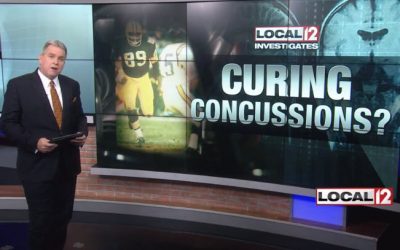
A breakthrough that may reverse concussion damage – Retired NFL Players Association
CINCINNATI (WKRC) - As the NFL gets ready to crown a new champion, concussions remain a focus of football. While the league has done much to protect today’s players, some of the greatest players to ever take the field say they struggle with damage...
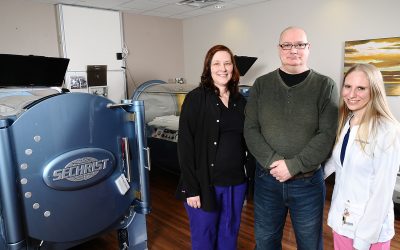
Patient’s hearing improves thanks to Hyperbaric Oxygen Therapy at RMH
When months of medication failed after George Cooley was diagnosed with idopathic sudden sensorineural hearing loss (SSHL), also known as sudden deafness, his ENT recommended hyperbaric oxygen therapy (HBOT). George faithfully arrived for treatment...
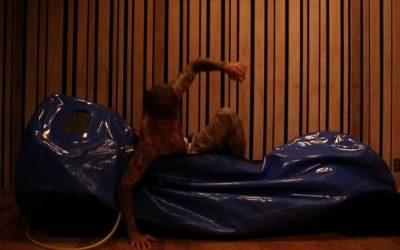
Justin Bieber sleeps in a hyperbaric chamber
Justin Beiber has a hyperbaric oxygen chamber in his home and one in his studio. He uses these chambers to help manage his stress and anxiety. There are many different types of HBOT chambers; but for Beiber, his chambers are pod-like, resembling...

Fitness genes of group A streptococci in necrotizing fasciitis and myositis.
Abstract: Necrotizing fasciitis and myositis caused by group A streptococci (GAS) are among the most fulminating infections, with a mortality rate of 20% to 30%. Although numerous regimens have been utilized in attempts to control these devastating...

Asymptomatic Patients Received Repetitive HBOT Protocols to Evaluate Sustained Cardiac Effect
One of the largest hyperbaric treatment centers in the world, The Sagol Center for Hyperbaric Medicine and Research at Shamir Medical Center, announced exciting results from a recent study; leading the medical industry to believe that a HBOT...
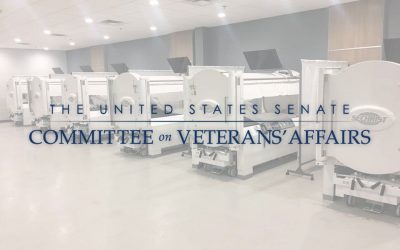
Senate VA Committee Passes Legislation on Hyperbaric Oxygen Therapy
Back in October 2019, at Senator Cramer’s invitation, VA Secretary Robert Wilkie and the Senator toured Healing with Hyperbarics of North Dakota, a Fargo-based HBOT clinic. Cramer states, “The primary point of the federal government is the defense...
Clinical Trial – the Use of Magnesium Sulfate for Prevention of Postspinal Shivering
Shivering is an unpleasant experience after spinal anesthesia. Shivering is defined as an
involuntary, repetitive activity of skeletal muscles. The mechanisms of shivering in patients
undergoing surgery are mainly intraoperative heat loss, increased sympathetic tone, pain, and
systemic release of pyrogens. Spinal anesthesia significantly impairs the thermoregulation
system by inhibiting tonic vasoconstriction, which plays a significant role in temperature
regulation. Spinal anesthesia also causes redistribution of core heat from the trunk (below
the block level) to the peripheral tissues. These two effects predispose patients to
hypothermia and shivering. The median incidence of shivering related to regional anesthesia
observed in a review of 21 studies is 55%. Shivering increases oxygen consumption, lactic
acidosis, carbon dioxide production, and metabolic rate by up to 400%. Therefore, shivering
may cause problems in patients with low cardiac and pulmonary reserves. The best way to avoid
these intraoperative and postoperative shivering-induced increases in hemodynamic and
metabolic demands is to prevent shivering in the first place. Although magnesium is among
several pharmacological agents used for the treatment of shivering, its effects on prevention
of shivering during central neuraxial blockade have not been evaluated to date. Henceforth,
the aim of this study was to evaluate the effect of magnesiume on shivering during spinal
anesthesia.
Aim:
to compare the efficacy of intravenous versus intrathecal magnesium sulphate for prevention
of post spinal shivering in adult patients undergoing elective lower limb orthopedic
surgeries.
Clinical Trial – Comparing the Effects of Levobupivacaine and Bupivacaine in Saddle Spinal Anesthesia
İn this study; it was aimed to investigate the effects of equipotent doses of hyperbaric
bupivacaine and hyperbaric levobupivacaine in outpatient anorectal surgery under saddle
block. Sixty patients between the age of 18- 50 and in the risk group of ASA I-II included in
the study. 7,5 mg of 0,5% hyperbaric bupivacaine or 7,5 mg of 0,5% hyperbaric levobupivacaine
injected into the intrathecal space in sitting position through L4-L5 or L5-S1 intervertebral
space in 30 seconds. All patients kept in sitting position for 5 minutes with aid after
intrathecal injection and than layed in supine position, finally they positioned in prone
jack-knife. Hemodynamic parameters like NIBP, HR, SpO2, sensory and motor block
characteristics, duration of analgesia, time of first voiding, mobilization time, patient and
surgeon satisfaction, adverse effects and discharge time were recorded during and after
surgery.