
News & Research
Hyperbaric Oxygen Therapy has been used for the better part of two centuries. Search our arhives below for past HBOT news and research or scroll down for the latest.
The Latest HBOT News & Research

Micheal Bear Clair HBOT Story
Michael Bear Clair is a former Professional wrestler and Nashville Session player and lifelong touring musician. He spent his teen years and adult life playing music for a living and playing with some of the biggest stars in the music industry...
Clinical Trial – Enhanced Recovery After Laparoscopic Colorectal Surgery Study
The study will assess the impact on quality of care after implementation of the ERAS
(Enhanced Recovery After Surgery) protocol for laparoscopic colorectal surgery in Vilnius
University Hospital Santaros klinikos. The primary goal of this study is to compare efficacy
of two different types of anaesthesia – general and combined (spinal and general), efficacy
of multimodal analgesia in both groups, need for rescue analgetics, time to bowel movement,
time to ambulation. We also aim to study overall patient satisfaction and measure
health-related quality of life, from date of randomisation until the date of hospital
discharge, 30 days, 3 months and 6 months post-discharge.
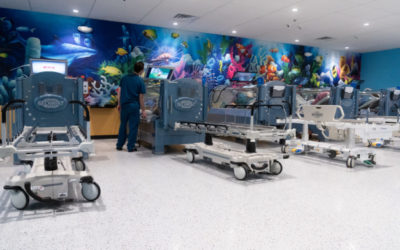
A New Hope for Neurological Disorders Through Hyperbaric Oxygen Therapy
"It may help reverse, theoretically, some of the process that’s causing the autism." From delayed learning and speech, to cognitive impairments and social functioning, autism affects every aspect of a child’s life. What if there was a therapy that...

New law gives veterans option to seek oxygen-based therapy for PTSD
North Carolina’s veterans gained another way to treat battlefield trauma. With Gov. Roy Cooper signing House Bill 50 into law, Veterans Administration physicians can treat veterans with post traumatic stress disorder or a traumatic brain injury...
Clinical Trial – Use of Hyperbaric Oxygen Therapy for the Treatment of Crush Injuries
The purpose of this study is to determine whether using hyperbaric oxygen (HBO) improves
wound healing for patients who have a crush injury. The comparison of the prospective
intervention group to the retrospective matched cohort aims to show that HBO can improve
wound healing and decrease poor outcomes for patients with crush injuries. The information
gained from this small study will serve as a basis for a follow-up prospective, randomized
control trial to further delineate the role of HBO in a larger patient population.
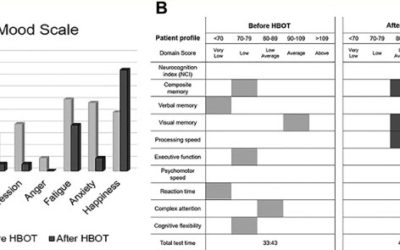
Retrospective Case Series of Traumatic Brain Injury and Post-Traumatic Stress Disorder Treated with Hyperbaric Oxygen Therapy
Returning veterans are frequently diagnosed with traumatic brain injury (TBI) and post-traumatic stress disorder (PTSD). Considering a recent case-controlled study of hyperbaric oxygen therapy (HBOT) reporting a reduction in suicidal ideation, we investigated retrospectively three veterans with chronic TBI/PTSD symptoms who were treated with multiple rounds of HBOT with neurophysiological testing performed before and after treatment. Improvements were detected on parameters within neurocognitive domains, including reductions in suicide-related symptoms. These findings independently confirm that HBOT may be effective in treating specific symptoms of TBI/PTSD that are not currently addressed with existing therapeutic approaches.
Clinical Trial – Hyperbaric Oxygen for Carbon Monoxide Induced Chronic Encephalopathy
in some patients, a few days or weeks after they recover from carbon monoxide poisoning they
develop new symptoms. These can affect mood, ability to think or remember clearly, and
movements. Some people develop movement problems that are similar to Parkinson’s disease.
This damage to brain tissue is called "encephalopathy," and this study will look at the
effect of pressurized oxygen therapy on long term, or chronic, encephalopathy.
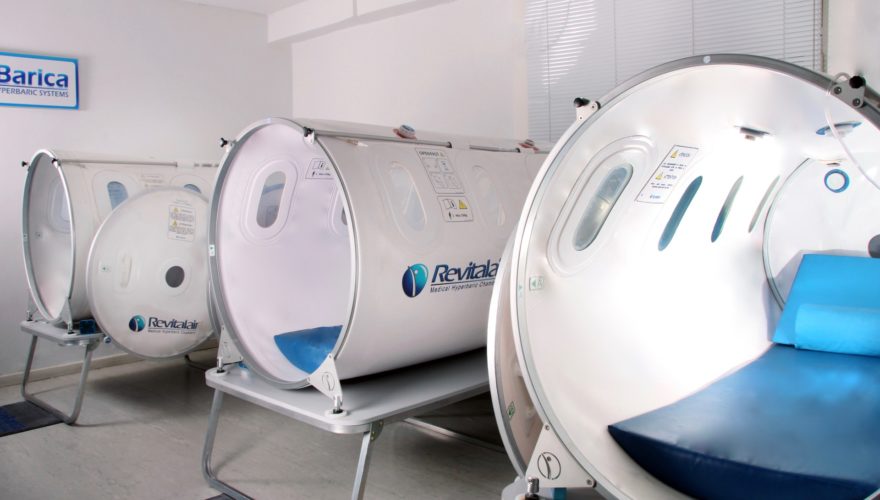
A new treatment could benefit vets with PTSD and brain injury, lawmakers want insurers to reimburse for it
Through the use of hyperbaric, oxygen-rich chambers, medical researchers have found a way to restore a significant amount of neurological function in brain tissue thought to be chronically damaged by stroke, traumatic injury, and metabolic disorder — even years after
Clinical Trial – Plethysmographic Variability Index in Post Spinal Anesthesia Hypotension in Cesarean Section
– Full term pregnant female patients presented for elective C.S for single viable fetus
will be included in this study.
– Before anesthesia, the patient will be attached to a monitor of: ECG , heart rate, non
invasive blood pressure, pulse taximeter applied on the index finger of the limb not
attached to the blood pressure cuff, pulse oximetry and plethysmographic variability
index (PVI) and perfusion index (PI) will be taken by (Massimo radical 7, Massimo corp.
USA). Measures will be recorded every 5 minutes preoperative.
– Patients with PVI <15 will be excluded from the study.
- Patients with PVI > 15 are started on intravenous infusion of warm ringer lactate
solution via suitable pore intravenous cannula to reach target of PVI <15 or a total 1
liter of ringer lactate.
- The patients in which the PVI is corrected by fluid to level below 15 will be Group (C)
or corrected group. Patients in which intravenous fluid administration did not result
any change in PVI or changed but still higher than 15 will be Group (NC) or non
corrected group.
After preoperative preparation patient is shifted to operating theater, with all monitors
applied. She will receive spinal block at lumbar 3-4 space with hyperbaric bupivacaine 8 mg
plus 25 mic fentanyl. After giving anesthesia and positioning for surgery with a left lateral
tilt of 15 degrees,