
News & Research
Hyperbaric Oxygen Therapy has been used for the better part of two centuries. Search our arhives below for past HBOT news and research or scroll down for the latest.
The Latest HBOT News & Research
International Survey Regarding the Use of Rehabilitation Modalities in Horses.
Abstract: To define which biologic, electrophysical and other modalities are used in horses for injury or performance issues, a questionnaire regarding 38 modalities was distributed to eight veterinary groups. A total of 305 complete or partial...
Clinical Trial – Effects of Repetitive Hyperbaric Oxygen Therapy in Patients With Acute Ischaemic Stroke
Background and Rationale:
Cerebrovascular disease is always ranked at the top causes of death and most of hospitalized
acute stroke patients have ischemic stroke [1].
Although the mortality rate of acute ischemic stroke is less than that of hemorrhagic stroke
[1], it still results in patient disabilities and complications that often lead to
significant costs to individuals, families, and society.
Traditional treatment for acute ischemic stroke includes thrombolytic therapy by injecting
tissue plasminogen activator (t-PA) within three hours after onset of symptoms [2],
antiplatelets and/or anticoagulant agents administered within the first 48 hours. Clinically,
the narrow time window of thrombolytic therapy and coexisting contraindications limit the use
of t-PA [2]. Thus, searching for an effective supplemental treatment for acute ischemic
stroke is imperative.
Hyperbaric oxygen therapy (HBOT) is valuable in treating acute carbon monoxide poisoning
[3,4], air or gas embolism [5], facilitating wound healing [6] and has been used as an
adjuvant treatment for many neurological disorders that need further study as concussion [7]
, stroke [8,9], cerebral palsy [ 10],traumatic brain injury [ 11], cerebral air embolism
[12], Autism [13] and multiple sclerosis [14].
Indications of hyperbaric oxygen therapy recommended by undersea and hyperbaric medical
society (UHMS) [15] are 1.air or gas embolism [5], 2.carbon monoxide poisoning [3,4],
3.clostridial myositis and myonecrosis [16], 4.crush injury, compartment syndrome and other
acute traumatic ischemias [17], 5.decompression sickness [18], 6.arterial insufficiencies
[19], 7.severe anemia [20], 8.intracranial abscess [21], 9.necrotizing soft tissue infections
[22],10. refractory osteomyelitis [23], 11.delayed radiation injury [24], 12.compromised
grafts and flaps [25], 13.acute thermal burn injury [26] and 14.idiopathic sudden
sensorineural hearing loss [27].
Known mechanisms of HBOT-induced neuroprotection include enhancing neuronal viability via
increased tissue oxygen delivery to the area of diminished blood flow, reducing brain edema,
and improving metabolism after ischemia [28,29]. Furthermore, a recent study performed on a
rat suggested that upregulation of the expression of glial derived neurotrophic factor (GDNF)
and nerve growth factor (NGF) might underlie the effect of HBOT [30].
The effectiveness of use of Hyperbaric oxygen therapy in human ischemic stroke is still
controversial that need further evaluation.
Clinical Trial – Effect of Adjuvant Hyperbaric Oxygen Therapy on Bells Palsy Outcome
This is a randomized, single blinded, non-placebo controlled that will compare one group of
Bells Palsy patients receiving the current standard of care including oral corticosteroids
and oral antivirals against an experimental group receiving the current standard of care in
addition to hyperbaric oxygen therapy. Outcome assessment will be based on both objective
analyses of facial movements as well as subjective quality of life scales.
[Hyperthyroidism-induced calciphylaxis: A case report].
Abstract: Calciphylaxis or calcific uremic arteriolopathy (CUA) is a cutaneous disease with ulcerations secondary to calcification of cutaneous and subcutaneous small arteries and arterioles. It is a rare but severe disease with significant...
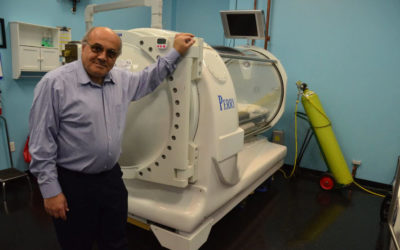
Could hyperbaric treatment heal the brain?
Each year, thousands of Americans suffer a traumatic brain injury. In 2013, about 2.8 million TBI-related emergency department visits, hospitalizations and deaths occurred in the United States, according to the Centers for Disease Control and...
Prevalence of augmented renal clearance and performance of glomerular filtration estimates in Indigenous Australian patients requiring intensive care admission.
Abstract: Augmented renal clearance (ARC) refers to the enhanced renal excretion of circulating solute commonly demonstrated in numerous critically ill subgroups. This study aimed to describe the prevalence of ARC in critically ill Indigenous...
Clinical Trial – Neurocognitive Decline in Patients With Brain Metastases
The phase I component of the study is to identify maximal tolerated dose (MTD). The phase II
is to evaluate neurocognitive decline.

Growth Hormone (GH) and Cardiovascular System
Abstract This review describes the positive effects of growth hormone (GH) on the cardiovascular system. We analyze why the vascular endothelium is a real internal secretion gland, whose inflammation is the first step for developing...
Hyperbaric oxygen treatment in thromboangiitis obliterans: a retrospective clinical audit.
Abstract: Wounds refractory to standard treatment in patients with thromboangiitis obliterans (TAO, Buerger's disease) are associated with amputation, other morbidity and mortality. The purpose of this study was to investigate the effect of...