
HBOT Conversations:
Dr. Hemal Mehta & Fasting (Part 1)
Dr. Hemal Mehta, MD is a Medical Director and an Independent Medical Examiner who focuses on pain management through a Regenerative medicine approach.
Dr. Mehta is Board Certified in Physical Medicine and Pain Management. He received his Doctor of Medicine Degree from Ross University School of Medicine and completed his residency at East Carolina. He is the Medical Director of Vibrant Health of North Carolina, Tennessee Integrative Pain Institute, and TN Integrative Healthcare: Musculoskeletal and Regenerative Center; additionally, Dr. Mehta is the attending physician at Nashville Regenerative Orthopedics.
Dr. Mehta is the 2013 recipient of the Inaugural Patient Appreciation Award at Nashville Academy of Medicine, and the 2004 Research Resident of the Year for East Carolina University.
Dr. Mehta has extensive experience with stem cell proliferation, and angiogenesis. He has incorporated Ozone Injection Therapy, PRP (Platelet-Rich Plasma) Injections, Hyperbaric Oxygen Therapy and Regenerative Matrix and Regenerative Medicine Procedures – to name a few – into his integrative wellness & longevity medical practices.
Watch the Podcast
HBOT News Network welcomes Dr. Hemal V. Mehta, M.D.; Medical Director of Vibrant Health of North Carolina.
After the first 10-15 years of his medical career focusing on interventional pain management, Dr. Mehta started to get involved in regenerative medicine. Regenerative medicines is a newer field of medicine involving PRP – Platelet Rich Plasma, stem cells, and different techniques (like HBOT) to help regenerate tissue in the body. When he first started using regenerative medicine, Dr. Mehta witnessed his patients doing considerably better and improving to the point that he was able to even wean them off of opioid pain medications. It was then that Dr. Mehta started integrating Hyperbaric Oxygen Therapy (HBOT or HBO Therapy) into some of the individualized patient healing plans he would develop for optimum healing.
Dr. Mehta touches on inflammation and how inflammation is one of the greatest problems people today deal with on a daily basis. Bad food choices, injuries and even stress all contributes to an increase of inflammation. Targeting inflammation is key to a healthy body and mind. Hyperbaric oxygen is an ideal therapy to address inflammation by upregulating the anti-inflammatory gene and downregulating the inflammatory gene. Dr. Mehta also mentions other therapies that assist in reducing inflammation in the joints and body — regenerative treatments using stem cells, PRP, ozone injections and exosomes.
According to Dr. Mehta, too much focus and energy goes into the promotion of pharmaceutical drugs to ease every ailment, indication or condition. He mentioned that when he was studying for his medical degree, he had almost two years of pharmacology classes but only one six-week semester of nutrition. It’s unfortunate that nutrition is not stressed more to young doctors, because much of the food we purchase at the grocery store is toxic and very pro-inflammatory. Dr. Mehta stresses that “you are what you eat”. Processed food is one of the worst things for our bodies. In his opinion, processed food is a major oxygen depleter since our bodies have to use extra energy and oxygen to break it down. Our bodies have to work much harder to break down processed junk, so he encourages our viewers to eat foods that are natural and avoid processed.
Since nutrition is a HUGE part of a person’s health, it’s important to look at alternatives to pharmaceutical drugs – like Hyperbaric Oxygen Therapy and fasting. In Dr. Mehta’s opinion, fasting is an excellent way for people to maintain health. Our bodies don’t necessarily NEED 3 meals a day, so when we overeat our bodies store the excess. Dr. Mehta is a big believer in fasting and reminds us that fasting is the ultimate detox. Food, especially processed food, sugar, and food with high fructose corn syrup, can be very pro-inflammatory and toxic. Fasting accelerates the process of the liver cleaning out toxins and gives our organs a much needed break to heal and rejuvenate. Fasting dates back to the Bible and beyond – every religious facet has fasting as part of their religion.
Fasting is nothing new, so try it and add Hyperbaric Oxygen Therapy into the mix too; something magical is truly happening to the body when you fast and receive HBOT. Dr. Mehta reminds us that there is also a strong association between fasting and reduced cancer risk, which he will get into more in Part 2 of our Conversations with Dr. Mehta about fasting & HBOT. Stay tuned to learn more about how fasting starves the cancer cells from the sugars and nutrients they need to feed and grow.
*Pease consult your doctor to see if fasting is right for you.
Guest
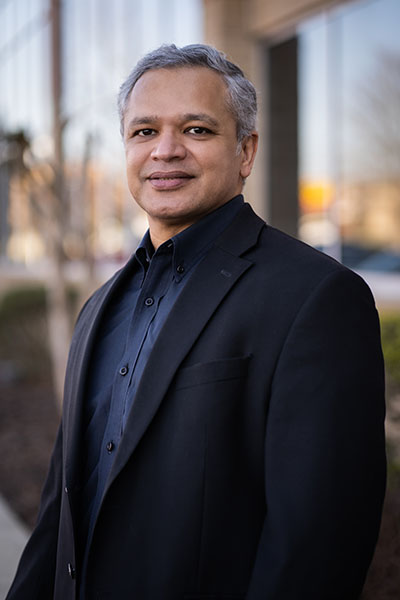
Dr. Hemal Mehta
Dr. Hemal Mehta specializes in non-opioid treatment for joint pain, osteoarthritis, spine pain and neuropathy. He is a board-certified Physical Medicine and Rehabilitation physician whose goal for patients is to reduce pain while increasing their level of function & quality of life. He received his Doctor of Medicine Degree from Ross University School of Medicine and completed his residency at East Carolina.
Dr. Mehta is the Medical Director of Vibrant Health of North Carolina, Tennessee Integrative Pain Institute, and TN Integrative Healthcare: Musculoskeletal and Regenerative Center; additionally, Dr. Mehta is the attending physician at Nashville Regenerative Orthopedics. He is the 2013 recipient of the Inaugural Patient Appreciation Award at Nashville Academy of Medicine, and the 2004 Research Resident of the Year for East Carolina University. He is a member of the American Academy of Physical Medicine & Rehabilitation, American Society of Interventional Pain Physicians, and American Association of Neuromuscular and Electrodiagnostic Medicine.
Subscribe Now, It’s Free!
Recent HBOT News

VEGF and bFGF induction by nitric oxide is associated with hyperbaric oxygen-induced angiogenesis and muscle regeneration
Abstract: Hyperbaric oxygen (HBO) treatment promotes early recovery from muscle injury. Reactive oxygen species (ROS) upregulation is a key mechanism of HBO, which produces high O2 content in tissues through increased dissolution of oxygen at high pressure. Nitric...
Clinical Trial – Postoperative Urinary Retention in Orthopedic Patients
The objective of this study is to compare the incidence of postoperative urinary retention
related to spinal anesthesia with morphine and spinal anesthesia associated with peripheral
blockade in orthopedic procedures of lower limbs. Secondary objectives are assessing the
incidence of nausea and vomiting; postoperative pain and opioid consumption at 24 hours after
surgery with each of the techniques. A total of 52 patients submitted to a lower limb
orthopedic procedure were randomized to the intervention groups: spinal anesthesia with
morphine versus spinal anesthesia without opioid associated with peripheral nerve block.
After surgery, bladder ultrasound will be performed in post-anesthesia care unit to identify
urinary retention and patients will be followed for 24 hours to assess outcomes.
Clinical Trial – Autonomic Modulation After Spinal Anesthesia With Depth of Anesthesia and Vital Signs.
Spinal anaesthesia has the advantage that produced nerve block by the injection of local
anaesthetic into cerebrospinal fluid (CSF). However, the greatest challenge in spinal
anaesthesia is to control the spread of local anaesthetic through the CSF to provide a block
which is adequate for the proposed surgery without unnecessary extensive spread, and
increased risk of complications.