
HBOT Conversations:
Dr. Hemal Mehta & Fasting (Part 2)
Dr. Hemal Mehta, MD is a Medical Director and an Independent Medical Examiner who focuses on pain management through a Regenerative medicine approach. Dr. Mehta is Board Certified in Physical Medicine and Pain Management. He received his Doctor of Medicine Degree from Ross University School of Medicine and completed his residency at East Carolina. He is the Medical Director of Vibrant Health of North Carolina, Tennessee Integrative Pain Institute, and TN Integrative Healthcare: Musculoskeletal and Regenerative Center; additionally, Dr. Mehta is the attending physician at Nashville Regenerative Orthopedics. Dr. Mehta is the 2013 recipient of the Inaugural Patient Appreciation Award at Nashville Academy of Medicine, and the 2004 Research Resident of the Year for East Carolina University. Dr. Mehta has extensive experience with stem cell proliferation, and angiogenesis. He has incorporated Ozone Injection Therapy, PRP (Platelet-Rich Plasma) Injections, Hyperbaric Oxygen Therapy and Regenerative Matrix and Regenerative Medicine Procedures – to name a few – into his integrative wellness & longevity medical practices.
Watch the Podcast
di Girolamo & Dr. Mehta examine the use of Vitamin C IV therapy for cancer, and how the combination of Vitamin C IV therapy, fasting and oxygen therapy – especially in the form of Hyperbaric Oxygen Therapy – has been known to put patients in remission and completely eliminate some very serious cancers. Dr. Mehta describes Hyperbaric Oxygen as a “game changer” when adding it into a cancer treatment protocol. He explains that as doctors they are trained to look at chemotherapy first to treat cancer, but there are many holistic ways to help a cancer patient shrink the tumors, stop the spread and live a longer life. He agrees that HBOT would be a great option to help cancer patients on their healing journey.
Diet is another holistic way to treat cancer. A water fast that puts the body in a ketogenic state, or a ketogenic organic diet are all ranked high as ideal ways to use alternative, natural methods for cancer and pain relief.
Dr. Mehta tells a personal story of his past that involved his father’s diagnosis of papillary thyroid cancer, and how it was the holistic and natural methods Dr. Mehta recommended that gave him extended life. Vitamin C Therapy, consuming organic wheatgrass daily, and daily deep breathing techniques to increase oxygen levels all contributed to him living 3 years longer than his prognosis. After massive shrinkage of the tumors during those 3 years; his father was convinced by an Ocologist to undergo chemotherapy in hopes that it would completely eradicate the cancer from his body. The chemotherapy caused cardio toxicity and unfortunately ultimately lead to Dr. Mehta’s father passing away.
di Girolamo suggests that viewers watch Research Rundown Episode 16: The Ketogenic Diet and Hyperbaric Oxygen Therapy Prolong Survival in Mice with Systemic Metastatic Cancer. This is a popular Research Rundown where our host, Ed di Girolamo, analyzes a study led by researcher, Dominic D’Agostino. The benefit of combining ketogenic diet with Hyperbaric Oxygen Therapy (HBOT) for metastatic cancer treatment is some very exciting research in the world of HBOT, cancer research, and fasting! This particular research and Dominic’s involvement to help prove that cancer can be eliminated (and maybe even cured) by combining a heavy ketogenic diet and Hyperbaric Oxygen Therapy is further discussed in this HBOT News Conversations episode with Dr. Mehta.
*Pease consult your doctor to see if fasting is right for you.
Guest

Dr. Hemal Mehta
Subscribe Now, It’s Free!
Recent HBOT News
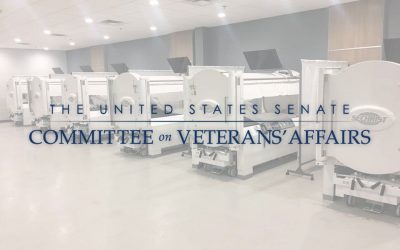
Senate VA Committee Passes Legislation on Hyperbaric Oxygen Therapy
Back in October 2019, at Senator Cramer’s invitation, VA Secretary Robert Wilkie and the Senator toured Healing with Hyperbarics of North Dakota, a Fargo-based HBOT clinic. Cramer states, “The primary point of the federal government is the defense of our nation. Part...
Clinical Trial – the Use of Magnesium Sulfate for Prevention of Postspinal Shivering
Shivering is an unpleasant experience after spinal anesthesia. Shivering is defined as an
involuntary, repetitive activity of skeletal muscles. The mechanisms of shivering in patients
undergoing surgery are mainly intraoperative heat loss, increased sympathetic tone, pain, and
systemic release of pyrogens. Spinal anesthesia significantly impairs the thermoregulation
system by inhibiting tonic vasoconstriction, which plays a significant role in temperature
regulation. Spinal anesthesia also causes redistribution of core heat from the trunk (below
the block level) to the peripheral tissues. These two effects predispose patients to
hypothermia and shivering. The median incidence of shivering related to regional anesthesia
observed in a review of 21 studies is 55%. Shivering increases oxygen consumption, lactic
acidosis, carbon dioxide production, and metabolic rate by up to 400%. Therefore, shivering
may cause problems in patients with low cardiac and pulmonary reserves. The best way to avoid
these intraoperative and postoperative shivering-induced increases in hemodynamic and
metabolic demands is to prevent shivering in the first place. Although magnesium is among
several pharmacological agents used for the treatment of shivering, its effects on prevention
of shivering during central neuraxial blockade have not been evaluated to date. Henceforth,
the aim of this study was to evaluate the effect of magnesiume on shivering during spinal
anesthesia.
Aim:
to compare the efficacy of intravenous versus intrathecal magnesium sulphate for prevention
of post spinal shivering in adult patients undergoing elective lower limb orthopedic
surgeries.
Clinical Trial – Comparing the Effects of Levobupivacaine and Bupivacaine in Saddle Spinal Anesthesia
İn this study; it was aimed to investigate the effects of equipotent doses of hyperbaric
bupivacaine and hyperbaric levobupivacaine in outpatient anorectal surgery under saddle
block. Sixty patients between the age of 18- 50 and in the risk group of ASA I-II included in
the study. 7,5 mg of 0,5% hyperbaric bupivacaine or 7,5 mg of 0,5% hyperbaric levobupivacaine
injected into the intrathecal space in sitting position through L4-L5 or L5-S1 intervertebral
space in 30 seconds. All patients kept in sitting position for 5 minutes with aid after
intrathecal injection and than layed in supine position, finally they positioned in prone
jack-knife. Hemodynamic parameters like NIBP, HR, SpO2, sensory and motor block
characteristics, duration of analgesia, time of first voiding, mobilization time, patient and
surgeon satisfaction, adverse effects and discharge time were recorded during and after
surgery.