
HBOT Conversations:
Dr. Hemal Mehta & Regenerative Medicine
Dr. Hemal Mehta, MD is a Medical Director and an Independent Medical Examiner who focuses on pain management through a Regenerative medicine approach.
Dr. Mehta is Board Certified in Physical Medicine and Pain Management. He received his Doctor of Medicine Degree from Ross University School of Medicine and completed his residency at East Carolina. He is the Medical Director of Vibrant Health of North Carolina, Tennessee Integrative Pain Institute, and TN Integrative Healthcare: Musculoskeletal and Regenerative Center; additionally, Dr. Mehta is the attending physician at Nashville Regenerative Orthopedics.
Dr. Mehta is the 2013 recipient of the Inaugural Patient Appreciation Award at Nashville Academy of Medicine, and the 2004 Research Resident of the Year for East Carolina University.
Dr. Mehta has extensive experience with stem cell proliferation, and angiogenesis. He has incorporated Ozone Injection Therapy, PRP (Platelet-Rich Plasma) Injections, Hyperbaric Oxygen Therapy and Regenerative Matrix and Regenerative Medicine Procedures – to name a few – into his integrative wellness & longevity medical practices.
Watch the Podcast
We continue our conversation with Dr. Hemal V. Mehta, MD; Medical Director of Vibrant Health of North Carolina. This the third time Dr. Mehta has joined us at HBOT News, so be sure to review his other two segments where he provides fascinating information on the power of fasting — Part 1 & Part 2
In this segment Dr. Mehta dives into all the different types of regenerative medicine that is available for a number of different conditions —
Cardiac
Dr. Mehta’s clinical practice is constantly working with patients to try to improve their cardiac function through primarily exercise. Yet, when they wanted to take it a step further and try implementing oxygen therapy into the mix with exercise therapy; they made an interesting discovery. First, they tried to decrease a patient’s oxygen levels and have them exercise for a few days to try to boost their red cell production; which they had some success doing. Next, they wanted to get the cardiac patients on high-dose Hyperbaric Oxygen Therapy (HBOT), and that was when they discovered that the proper chamber made all the difference in the world. Additional research into the topic of HBOT and healthy heart function is discussed, and di Girolamo highlights some research he stumbled across regarding Hyperbaric Oxygen Therapy healing the damage from heart attacks. Our host urges anyone listening who knows someone with low heart function to get them into a hyperbaric chamber.
COVID & Vaccine Injuries
Dr. Mehta speaks of long-COVID and how Hyperbaric Oxygen Therapy is making a world of difference in patients who are still struggling from COVID symptoms years later. But, let’s back up… what about treating patients with active COVID in hyperbaric chambers? In theory, it makes 100% sense. He describes that part of the problem with COVID is the virus gets into the lungs and causes extreme inflammation. It’s your body’s immune response to that virus that is killing people, it’s what we know as a cytokine storm. Hospitals have been giving COVID patients an immunosuppressant to decrease immune function, and Dr. Mehta explains why that’s the exact opposite of what they should be doing. The immunosuppressant is suppressing a patient’s immune system and taking down all of their guards, setting the stage for sepsis. Unfortunately, most people who died of COVID, actually died from sepsis. Dr. Mehta states that if the hospitals were to use Hyperbaric Oxygen Therapy instead, they would be increasing the concentration of oxygen in a patient’s body; therefore decreasing inflammation through the oxygen + pressure, and allowing the lungs to rest why their body naturally fights off the infection.
Vaccine injuries from the COVID-19 vaccine are also becoming more and more common. Vaccinated people are developing autoimmune disorders at an alarming rate. Dr. Mehta can’t say for certain that it’s all related, but it certainly makes sense that it would be.
Autism
The conversation of vaccine injuries flowed right into the topic of Autism, as the concern about the relationship between the two is discussed. Dr. Mehta explained that he does see Autism patients at his clinic, and he was doing stem cell therapy for Autism using Wharton’s Jelly. Wharton’s Jelly is the made from the umbilical cord. The umbilical cord used to be considered trash after the baby was born, until somebody decided to study it and found that the umbilical cord is full of young stem cells and regenerative properties, including regenerative tissue that can be injected to help the body naturally regenerate new tissue. Since the stem cells in an umbilical cord are so young they didn’t have any surface markers on them to distinguish one person from another person, so there’s not a cross-reaction. It’s one of the few substances the FDA allows to be used in that manner. However, even though his clinic was witnessing significant Improvement in brain function with the use of Wharton’s Jelly to treat Autism, they had to halt recommending it. The FDA came out with a mandate stating that Wharton’s Jelly should not be used for “upper motor neuron disorders”, which are brain and spinal cord injuries. Autism fell into this category, but Dr. Mehta stresses that all they saw was significant improvement and at no time did Wharton’s Jelly do any harm to a patient. In fact, Dr. Mehta was so impressed with the results that he absolutely would continue to use it on Autistic patients at the patient’s request.
Dr. Mehta further states, “I’ve got to give every patient a chance if they come to me and say, ‘Hey, will you please try this?’. As long as I know I’m not doing any harm to that patient, then I definitely will. And that’s where hyperbaric oxygen therapy, in my opinion, if you do it the right way you’re not going to do harm to these patients and there is no real risk, but other than there’s a benefit that the patient will get potentially from doing this therapy.”
Back Pain
Dr. Mehta explains that if a patient comes in with back pain shooting down the leg, it’s sciatica. And many times the patient will have surgery with an end results of the sciatica going away for a year or two. But, what’s interesting is that the back pain never goes away, and now the patient is stuck with what they call axial back pain (pain localized to the back). Sometimes after a few years, that pain comes back because the surgery promoted degenerative disc disease. Unfortunately there’s not really a cure for a bulging disc through traditional medicine. However, in one of Dr. Mehta’s clinics they have been treating degenerative disc disease successfully with intradiscal injections of bone marrow aspirate concentrate (BMAC), which is basically your own bone marrow. This regenerative approach aspirates the bone marrow taken from you, and then that bone marrow is sent to the lab, where it’s spun down and stem cells are extracted. The stem cells from the bone marrow are then injected intradiscally into the disc and into the surrounding area (the musculature). Dr. Mehta says they are seeing good improvement in a patient’s pain, including improvement in their ability to function. Even the shooting pain down the legs has been getting better, without the complication of long-term axial back pain that surgery can cause . While there is a definite need for surgery in certain cases, Dr. Mehta explains that doctors have promptly overdone surgical needs. In his integrative medicine clinics they are proving that regenerative medicine is the answer for patients who are seeking an non-surgical option.
Dr. Hemal Mehta primarily sees the majority of his patients at the Tennessee Spine & Joint Centers, schedule an appointment with him here.
Guest
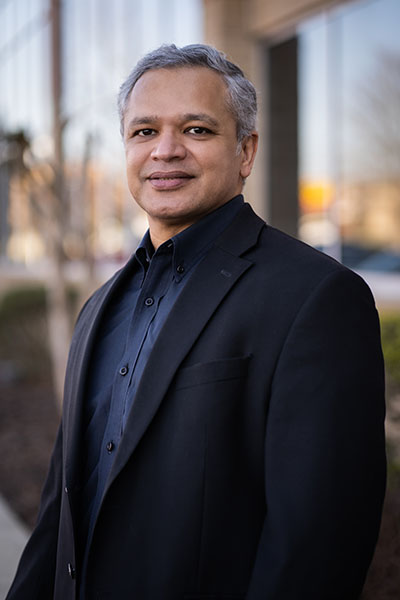
Dr. Hemal Mehta
Dr. Hemal Mehta specializes in non-opioid treatment for joint pain, osteoarthritis, spine pain and neuropathy. He is a board-certified Physical Medicine and Rehabilitation physician whose goal for patients is to reduce pain while increasing their level of function & quality of life. He received his Doctor of Medicine Degree from Ross University School of Medicine and completed his residency at East Carolina.
Dr. Mehta is the Medical Director of Vibrant Health of North Carolina, Tennessee Integrative Pain Institute, and TN Integrative Healthcare: Musculoskeletal and Regenerative Center; additionally, Dr. Mehta is the attending physician at Nashville Regenerative Orthopedics. He is the 2013 recipient of the Inaugural Patient Appreciation Award at Nashville Academy of Medicine, and the 2004 Research Resident of the Year for East Carolina University. He is a member of the American Academy of Physical Medicine & Rehabilitation, American Society of Interventional Pain Physicians, and American Association of Neuromuscular and Electrodiagnostic Medicine.
Subscribe Now, It’s Free!
Recent HBOT News
Clinical Trial – Dose and Response of Intrathecal Hydromorphone in Patients Undergoing Cesarean Section at Virginia Commonwealth University Health System
In the United States the incidence of cesarean deliveries have increased over the last
several decades and is currently approximately 30% nationwide. The anesthesia and analgesia
for elective c-sections vary between institutions.
Parturients present a unique challenge for the anesthesiologist as the mother has to care not
only for herself, but also for the newborn postpartum. While intrathecal opioids provide
adequate pain relief, they do so at the cost of bothersome side effects for patients, such as
pruritus and nausea/vomiting.
Intrathecal hydromorphone has started to be explored as a new option for intrathecal
analgesia. A study done by Beatty et al. showed in a retrospective review that 40 mcg of
intrathecal dilaudid was safe and effective as compared to intrathecal morphine for analgesia
after cesarean delivery. Additionally they showed no difference in side effect profiles of
the two medications. Mhyre et al. investigated the use of 100 mcg of intrathecal dilaudid
with hyperbaric bupivacaine in varying dosages for labor analgesia. The results were
inconclusive, but the dosage of hydromorphone was reported to be without adverse effects.
Virginia Commonwealth University Health Systems has successfully instituted the use of
intrathecal morphine with superior analgesia but with undesired side effects, most notably
pruritus. Recent drug shortages of duramorph have prompted investigators to seek alternative
options for post cesarean section analgesia. The investigators are interested in determining
the dose, efficacy, and side effect profile of intrathecal hydromorphone. Although our
institution has never utilized intrathecal hydromorphone for our patient population, it has
been studied at various other institutions where it has been found to be safe and efficacious
with an acceptable side effect profile.
Repeat spinal anesthesia in cesarean section: A comparison between 10 mg and 12 mg doses of intrathecal hyperbaric (0.05%) bupivacaine repeated after failed spinal anesthesia: A prospective, parallel group study.
Abstract: Spinal anesthesia for cesarean section is not a 100% successful technique. At times, despite straightforward insertion and drug administration, intrathecal anesthesia for cesarean section fails to obtain any sensory or motor block. Very few studies and...
Endocan reduces the malign grade of gastric cancer cells by regulating associated protein expression.
Abstract: Endocan, which has been identified to be low expressed in gastric cancer, was found to be positively related to the differentiation level of gastric cancer in vivo and in vitro. In the present study, we aimed to investigate the role of endocan in gastric...