
HBOT Conversations:
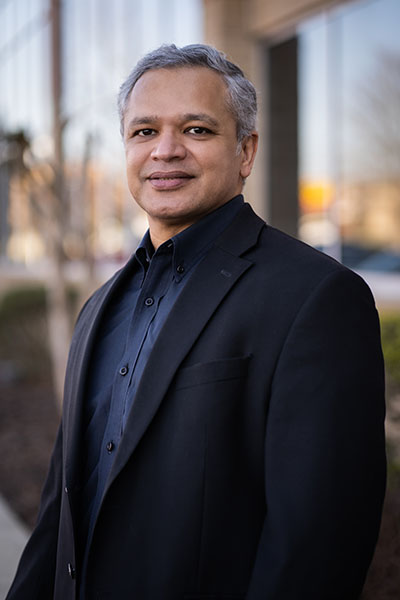
Dr. Hemal Mehta & Vibrant Health University
Dr. Hemal Mehta, MD is a Medical Director and an Independent Medical Examiner who focuses on pain management through a Regenerative medicine approach. Dr. Mehta is Board Certified in Physical Medicine and Pain Management. He received his Doctor of Medicine Degree from Ross University School of Medicine and completed his residency at East Carolina. He is the Medical Director of Vibrant Health of North Carolina, Tennessee Integrative Pain Institute, and TN Integrative Healthcare: Musculoskeletal and Regenerative Center; additionally, Dr. Mehta is the attending physician at Nashville Regenerative Orthopedics. Dr. Mehta is the 2013 recipient of the Inaugural Patient Appreciation Award at Nashville Academy of Medicine, and the 2004 Research Resident of the Year for East Carolina University. Dr. Mehta has extensive experience with stem cell proliferation, and angiogenesis. He has incorporated Ozone Injection Therapy, PRP (Platelet-Rich Plasma) Injections, Hyperbaric Oxygen Therapy and Regenerative Matrix and Regenerative Medicine Procedures – to name a few – into his integrative wellness & longevity medical practices.
Watch the Podcast
HBOT News Network welcomes back Dr. Hemal V. Mehta, M.D.; Medical Director of Vibrant Health of North Carolina. Dr. Mehta has joined HBOT News Network three times previously, where we focused heavily on the topics of fasting & regenerative medicine – see Dr. Mehta & Fasting, Dr. Mehta & Fasting (Part 2), and Dr. Mehta & Regenerative Medicine.
We are thrilled to have Dr. Mehta return to discuss Vibrant Health University. Vibrant Health University is a new start-up educational program through Vibrant Health. It is a way to help educate, not just the public, but also providers who are interested in performing regenerative therapies, regenerative injections, and providing an alternative to patients that’s not typically available.
Vibrant Health University wants to steer the medical field and general public away from the traditional heavy focus of pharmacology and surgical techniques; and educate people more on the integrative approaches available for regenerative therapies and regenerative treatments. What people can expect from Vibrant Health University (once it gets up and going), is a variety of online programs and podcasts they can watch. Then, if interested further, physicians can choose the option for an in-person educational program where Dr. Mehta or his team can visit the physician’s office (or the physician can visit them) and the physician can then witness live demonstrations, and learn how to do proper procedures for regenerative treatments, while incorporating their protocols into their treatment plans.
The courses at Vibrant Health University will be a structured program with a certification process. Dr. Mehta explains that they are planning to provide different tiers. For example, a lower tier, a medium tier, and a higher tier of education to providers based on their level of expertise, and based on how much knowledge they already have and how much they want to obtain. The ultimate goal of the program is to have the courses accredited by the appropriate certifying boards to count as continuing medical education for physicians.
Dr. Mehta & di Giralomo spend time discussing the importance of physician education, the continued benefits of fasting, and how to gain control of excessive inflammation.
Dr. Mehta remind us of Vibrant Health’s focus — to integrate traditional and non-traditional medicine to give each patient the best outlook and care. Ultimately, integrative medicine is integrating functional medicine and holistic therapies with what we’ve learned through history regarding how the human body works. God gave us everything we need to survive from the beginning of human life. Dr. Mehta ends this segment by explaining through the study of medicine, it’s incredibly difficult to not believe that there is a God or a higher power that has created this body. The human body is made to be able to tolerate all kinds of different injuries, in all kinds of different aspects of life, while adapting to the environment. There is absolutely no other machine that man has ever made that’s even similar to the divine healing capabilities of the human body.
If you’d like to know more about Vibrant Health University, please contact Vibrant Health at www.vibranthcs.com/contact/
Guest
Dr. Hemal Mehta
Subscribe Now, It’s Free!
Recent HBOT News
Senate VA Committee Passes Legislation on Hyperbaric Oxygen Therapy
Back in October 2019, at Senator Cramer’s invitation, VA Secretary Robert Wilkie and the Senator toured Healing with Hyperbarics of North Dakota, a Fargo-based HBOT clinic. Cramer states, “The primary point of the federal government is the defense of our nation. Part...
Clinical Trial – the Use of Magnesium Sulfate for Prevention of Postspinal Shivering
Shivering is an unpleasant experience after spinal anesthesia. Shivering is defined as an
involuntary, repetitive activity of skeletal muscles. The mechanisms of shivering in patients
undergoing surgery are mainly intraoperative heat loss, increased sympathetic tone, pain, and
systemic release of pyrogens. Spinal anesthesia significantly impairs the thermoregulation
system by inhibiting tonic vasoconstriction, which plays a significant role in temperature
regulation. Spinal anesthesia also causes redistribution of core heat from the trunk (below
the block level) to the peripheral tissues. These two effects predispose patients to
hypothermia and shivering. The median incidence of shivering related to regional anesthesia
observed in a review of 21 studies is 55%. Shivering increases oxygen consumption, lactic
acidosis, carbon dioxide production, and metabolic rate by up to 400%. Therefore, shivering
may cause problems in patients with low cardiac and pulmonary reserves. The best way to avoid
these intraoperative and postoperative shivering-induced increases in hemodynamic and
metabolic demands is to prevent shivering in the first place. Although magnesium is among
several pharmacological agents used for the treatment of shivering, its effects on prevention
of shivering during central neuraxial blockade have not been evaluated to date. Henceforth,
the aim of this study was to evaluate the effect of magnesiume on shivering during spinal
anesthesia.
Aim:
to compare the efficacy of intravenous versus intrathecal magnesium sulphate for prevention
of post spinal shivering in adult patients undergoing elective lower limb orthopedic
surgeries.
Clinical Trial – Comparing the Effects of Levobupivacaine and Bupivacaine in Saddle Spinal Anesthesia
İn this study; it was aimed to investigate the effects of equipotent doses of hyperbaric
bupivacaine and hyperbaric levobupivacaine in outpatient anorectal surgery under saddle
block. Sixty patients between the age of 18- 50 and in the risk group of ASA I-II included in
the study. 7,5 mg of 0,5% hyperbaric bupivacaine or 7,5 mg of 0,5% hyperbaric levobupivacaine
injected into the intrathecal space in sitting position through L4-L5 or L5-S1 intervertebral
space in 30 seconds. All patients kept in sitting position for 5 minutes with aid after
intrathecal injection and than layed in supine position, finally they positioned in prone
jack-knife. Hemodynamic parameters like NIBP, HR, SpO2, sensory and motor block
characteristics, duration of analgesia, time of first voiding, mobilization time, patient and
surgeon satisfaction, adverse effects and discharge time were recorded during and after
surgery.