
HBOT Conversations:
Dr. Jay Stevens
Head Injuries : TBI, mTBI, Concussions, & Post-Concussion Syndrome
Dr. James “Jay” Stevens is the Medical Director of Extivita-RTP. He earned a Bachelor of Arts in Zoology from UNC-Chapel Hill and a Doctor of Medicine from East Carolina University School of Medicine. He completed a Family Practice Residency at the Fairfax Family Practice Program at the Medical College of Virginia and the first Sports Medicine Fellowship at the University of North Carolina, Chapel Hill in 1991. He is Board Certified in both Family Practice and Anti-aging Medicine. He also holds a Certificate of Added Qualification in Sports Medicine. In 2003 he founded Carolina Family Practice & Sports Medicine with locations in Cary, Raleigh, and Holly Springs, NC. He has served as the Team Physician for the National Hockey League’s 2006 Stanley Cup Champion Carolina Hurricanes since their arrival in 1997. He also serves as Company Physician for the Carolina Ballet.
Watch the Podcast
Dr. Jay Stevens, Medical Director of Extivita returns to talk about head injuries in general, and the importance of treating all head injuries with Hyperbaric Oxygen Therapy.
Dr. Stevens has a wealth of knowledge in this area. He stresses that we are in the middle of an epidemic for head trauma. While there may be scientifically subtle differences between the definition of concussion, TBI (Traumatic Brain Injury), mTBI (minimal or mild Traumatic Brain Injury), PCS (post-concussion syndrome), and PPCS (persistent post-concussion syndrome), they are all classified as head trauma. Dr. Stevens explains that once we understand that a head injury exists, the next thing we need to understand and address is the magnitude of the injury. But, let’s not forget about PTSD either, Dr. Stevens believes that PTSD falls into the category of PPCS. PTSD is an interesting and complex head injury, because even though there was never head trauma that was labeled as a concussion, PTSD is absolutely a TBI, because it is a persistent injury past the acute phase where the neuron doesn’t know the difference.
Dr. Stevens talks about the difference between acute, sub-acute, chronic, and persistent head trauma, and why it’s important to know the difference between these when diagnosing and treating head trauma. The same goes for understanding the severity of the concussion grade. But no matter the type or grade of the concussion, all head traumas will benefit from immediate treatment with Hyperbaric Oxygen Therapy (HBOT).
Beyond diagnosing and treating head trauma for professional athletes and those in the military who have served our country, it’s incredibly important to also understand the benefit of HBOT for adolescent athletes. In Wake County, NC, where Dr. Stevens’ practice is located, there are somewhere between 2,000 and 3,000 concussions reported a year. While Dr. Stevens states that’s probably a pretty fair statement to make, he makes a point to expand on such. At Carolina Family Practice & Sports Medicine (Dr. Stevens’ primary care sports medicine practice in Wake County), they see roughly 1,100 concussion visits per year at the high school level in the county. Dr. Stevens shares past stories of high school students who have never been quite right after a concussion, and how he wishes there was a HBOT facility like Extivita-RTP in their backyard then. He trusts that these student athletes would be living a different life today. Dr. Stevens informs viewers that his practice has penetrated the Wake County school system with screening & concussion testing, and feels confident that the baseline testing is making all the difference. Now the student, coach, and doctor better understand when an athlete is just not feeling “quite right” after a head injury, and should be evaluated further.
di Girolamo questions how many of the thousands of concussed student athletes in Wake County are getting hyperbaric oxygen therapy. Dr. Stevens agrees that most adolescents likely aren’t using HBOT unless they are coming to him; and he does have parents who seek him out to treat concussions with HBOT and some who also will find their way over to Extivita to use HBOT for concussion relief.
The connection between the gut (also referred to as the second brain) and the brain is discussed. Dr. Stevens and di Girolamo agree that there is a beautiful connection between the two and how one plays off the other for good health. If your gut or your mind are not healthy, it affects your entire body, state of mind, and quality of life. An amazing Hyperbaric Oxygen Therapy healing story of an adolescent with Ulcerative Colitis is highlighted to help our viewers understand this connection.
di Girolamo and Dr. Stevens stress that Hyperbaric Oxygen Therapy is one of the best things you can do for yourself or your child for head trauma relief. HBOT is an amazing natural treatment that will change the life of a concussed individual. Dr. Stevens informs viewers of the importance to use Hyperbaric oxygen in the acute concussion stage to give your brain the oxygen it is starving for as it heals from head trauma, and how if you do that then you can give someone back their quality of life and help the injured avoid post-concussion syndrome.
Guest
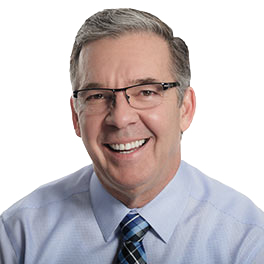
Dr. Jay Stevens
Dr. James “Jay” Stevens earned a Bachelor of Arts in Zoology from UNC-Chapel Hill and a Doctor of Medicine from East Carolina University School of Medicine. He completed a Family Practice Residency at the Fairfax Family Practice Program at the Medical College of Virginia and the first Sports Medicine Fellowship at the University of North Carolina, Chapel Hill in 1991. He is Board Certified in both Family Practice and Anti-aging Medicine. He also has a Certificate of Added Qualification in Sports Medicine. In 2003 he founded Carolina Family Practice & Sports Medicine with locations in Cary, Raleigh, and Holly Springs, NC. He has served as the Team Physician for the National Hockey League’s 2006 Stanley Cup Champion Carolina Hurricanes since their arrival in 1997. He serves as Company Physician for the Carolina Ballet as well.
In 2009, his commitment to helping his patients create healthy lifestyles for long-term wellness, along with his desire to provide the highest quality health care services, motivated Dr. Stevens to establish Essential Health & Wellness (EHW). EHW offers its patients a comprehensive health care service tailored around their busy schedules with the goal of optimizing their performance and longevity.
In 2018, he continued this commitment to long-term wellness of his patients by becoming the Medical Director at Extivita RTP, a hyperbaric oxygen therapy facility with two, twelve seat treatment chambers in the Research Triangle Park, Durham, NC.
Dr. Stevens is also a Fellow in both the American Academy of Anti-Aging and Regenerative Medicine and the American Academy of Family Practice. He is a member of the American Medical Society of Sports Medicine and Hyperbaric Medicine International.
Dr. Stevens lives in Cary, NC with his wife, Dr. Patience Stevens. They have three sons Eric, James, and Timothy. He is passionate about surfing, triathlon and almost any form of exercise.
Subscribe Now, It’s Free!
Recent HBOT News
VEGF and bFGF induction by nitric oxide is associated with hyperbaric oxygen-induced angiogenesis and muscle regeneration
Abstract: Hyperbaric oxygen (HBO) treatment promotes early recovery from muscle injury. Reactive oxygen species (ROS) upregulation is a key mechanism of HBO, which produces high O2 content in tissues through increased dissolution of oxygen at high pressure. Nitric...
Clinical Trial – Postoperative Urinary Retention in Orthopedic Patients
The objective of this study is to compare the incidence of postoperative urinary retention
related to spinal anesthesia with morphine and spinal anesthesia associated with peripheral
blockade in orthopedic procedures of lower limbs. Secondary objectives are assessing the
incidence of nausea and vomiting; postoperative pain and opioid consumption at 24 hours after
surgery with each of the techniques. A total of 52 patients submitted to a lower limb
orthopedic procedure were randomized to the intervention groups: spinal anesthesia with
morphine versus spinal anesthesia without opioid associated with peripheral nerve block.
After surgery, bladder ultrasound will be performed in post-anesthesia care unit to identify
urinary retention and patients will be followed for 24 hours to assess outcomes.
Clinical Trial – Autonomic Modulation After Spinal Anesthesia With Depth of Anesthesia and Vital Signs.
Spinal anaesthesia has the advantage that produced nerve block by the injection of local
anaesthetic into cerebrospinal fluid (CSF). However, the greatest challenge in spinal
anaesthesia is to control the spread of local anaesthetic through the CSF to provide a block
which is adequate for the proposed surgery without unnecessary extensive spread, and
increased risk of complications.