
HBOT Conversations:
Dr. Paul Harch & 8,101 Genes
He is the author of The Oxygen Revolution and is considered an International expert and pioneer in the field of Hyperbaric Oxygen Therapy (HBOT). His informative, and comprehensive guide on HBOT has helped countless souls better understand what HBOT is and how it directly affects the body at the genetic level.
This episode on 8,101 genes is the eighth in a nine episode series that will be released weekly with Dr. Harch.
Watch the Podcast
In episode 8 of 9, host Edward di Girolamo speaks with world renowned HBOT expert, Dr. Paul G. Harch, about aging and the 8,101 genes HBOT affects.
di Girolamo starts this conversation with Dr. Harch bringing up the 8,101 genes that are activated by Hyperbaric Oxygen Therapy. The discussion leads to talk of Big Pharma, telomeres, reparative gene process, patents, and successful business models for HBOT clinics.
Dr. Harch explains that Hyperbaric Oxygen Therapy affects 8,101 of our genes, and it’s doing so on a different level for the ones that are overactive and abnormal in the disease process. He speaks of a 2004 lecture he gave to A4M about the effects of HBOT on longevity; and asks, “Where is senescence and aging based?”, answering with, “It’s in our DNA”. Dr. Harch dives in to how HBOT turns on our genes to grow new tissue and stimulates cellular repair and regeneration. di Girolamo agrees and brings up a different past lecture from Dr. Harch where Harch referred to Hyperbaric Oxygen Therapy as the ‘Fountain of Youth‘.
This series ends with Dr. Harch discussing a Buffalo VA study, and how the study subjects (comprised of older veterans) literally came alive and started propositioning nurses after Hyperbaric Oxygen Therapy treatments. He explained this is why no follow-up study was ever done because they weren’t expecting such and didn’t know what to do. Makes sense…. studies have shown success in HBOT treating erectile dysfunction.
If you are searching for the Fountain of Youth and ready to activate 8,101 genes in your body —- find a Hyperbaric Oxygen Therapy clinic near you.
Subscribe Now, It’s Free!
Guest
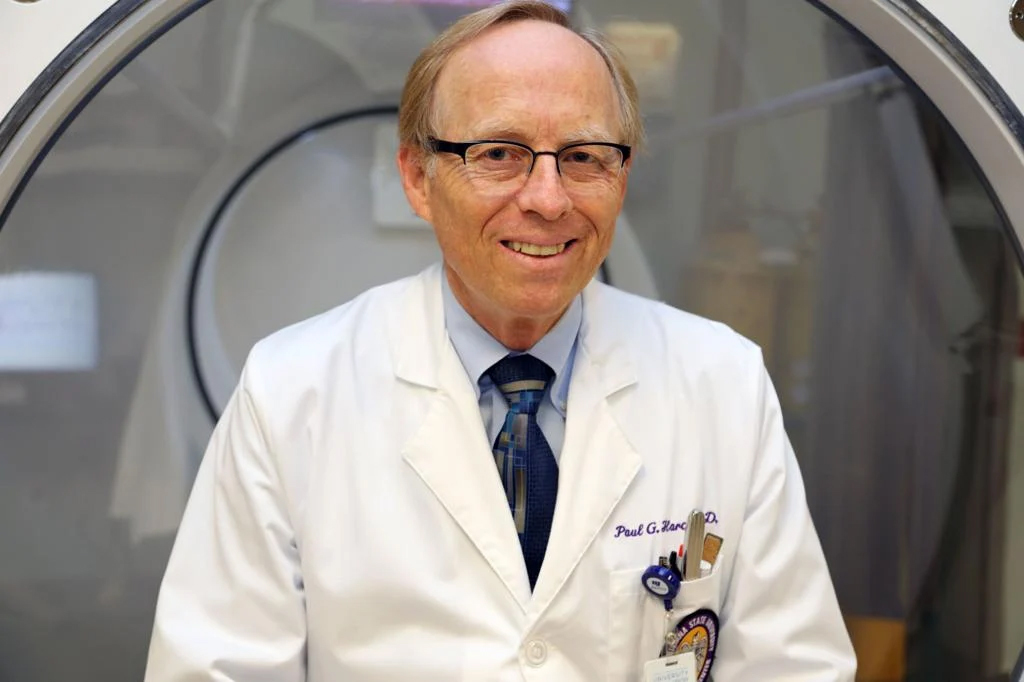
Dr. Paul G. Harch, MD
Dr. Harch initiated and continues to be a private practice that has resulted in the largest case experience in neurological hyperbaric medicine in the world. In this practice, he adapted the concepts of conventional hyperbaric oxygen therapy to wounds in the central nervous system, which spawned the subsequent academic and research practice. Harch HBOT is the best place to receive oxygen therapy treatments, and patients have traveled from more than 50 countries to be treated by Dr. Harch himself.
Harch HBOT – Hyperbaric Oxygen Therapy Clinic
5216 Lapalco Blvd.
Marrero, LA
504-309-4948
hbot@hbot.com
https://hbot.com/
Recent HBOT News
Growth Hormone Deficiency: Health and Longevity
Abstract The important role of GH in the control of mammalian longevity was first deduced from extended longevity of mice with genetic GH deficiency (GHD) or GH resistance. Mice with isolated GHD (IGHD) due to GHRH or GHRH receptor mutations, combined deficiency of...

Why is Justin Bieber Sleeping in a hyperbaric Oxygen Chamber?
Find out why pop star Justin Beiber has decided to sleep in a hyperbaric oxygen chamber. "Justin Bieber is testing out some futuristic healing technology. The pop star, 25, showed fans his new nighttime routine on his Instagram Stories on Sunday, passing his phone off...
Clinical Trial – The Role of Hyperbaric Oxygen and Neuropsychological Therapy in Cognitive Function Following Traumatic Brain Injury
Traumatic brain injury (TBI) caused by accidents is a very important public health problem in
Taiwan. There are many people with brain damage and cognitive dysfunction caused by traumatic
brain injury every year. Currently, there is no effective treatment for cognitive dysfunction
caused by traumatic brain injury. Evidence from clinical studies in recent years suggests
that hyperbaric oxygen therapy may be a treatment for repairing nerves after brain injury.
Many studies have shown that oxidative stress and inflammatory responses play an important
role in the pathogenesis of the central nervous system. In recent years, our research team
has shown that oxidative stress and inflammatory response are significantly associated with
the prognosis of patients with traumatic brain injury, cerebral hemorrhage, and stroke
patients. More and more evidences also show that oxidative stress and inflammatory response
play an important role in the neuropathological changes of mental cognitive sequelae after
traumatic brain injury. This injury may be gradual from the time of head trauma. This process
begins with the generation of oxidative stress and free radicals. When the cell repair and
free radical scavenging system can not effectively overcome the excessive production of free
radicals, an oxidative damage reaction will occur, causing a series of inflammatory cells and
cytokines to be activated. Studies have also shown that when inhibiting those free radicals
that produce oxidative stress, the neurological function and cognitive function of the head
after trauma can be significantly improved.
It is becoming widely acknowledged that the combined action of hyperoxia and hyperbaric
pressure leads to significant improvement in tissue oxygenation while targeting both
oxygenand pressure-sensitive genes, resulting in improved mitochondrial metabolism with
anti-apoptotic and anti-inflammatory effects. The investigators published an article this
year showing that hyperbaric oxygen therapy can improve the prognosis of patients with acute
stroke and increase endothelial progenitor cells in the systemic circulation.
The investigators plan to conduct this research project through hyperbaric oxygen therapy and
neuropsychological therapy, and using scientific tests and neurocognitive function
assessments. The investigators hope to answer the following questions: (1) Whether the
treatment of hyperbaric oxygen can improve oxidative stress and inflammatory response after
brain injury, and observe changes in biomarker concentration; (2) Whether hyperbaric oxygen
therapy and neuropsychological therapy can improve cognitive function after brain injury; and
(3) which biomarkers are factors that influence cognitive function prognosis.