
HBOT Conversations:
Dr. Peter Canaday (Part 1)
Dr. Peter Canaday has published work in Applied Physiology, Respiratory Medicine, and Diagnostic Radiology. He has presented at National (USA) and International meetings, and his research supported the eventual FDA approval of a new medical imaging device incorporating digital X-ray tomosynthesis. He has sat on National, State, and Local advisory committees, and given testimony at the State Legislative level in the USA.
Dr. Canaday’s experience with Hyperbaric Oxygen Therapy dates back to the 1980s when he studied HBOT under Dr. Eric Kindwall, “The Father of Hyperbaric Medicine”. Dr. Canaday also co-founded the Hyperbaric Medicine Department at St. Anthony Hospital in Lakewood, Colorado.
From 2007, Dr. Canaday spent time in community radiology practices before settling in New Zealand in 2013 as a Consultant Radiologist. Since 2016, he was employed at a Midlands region DHB and served as Head of Department before retiring in March 2021.
Watch the Podcast
HBOT News welcomes Dr. Peter Canaday. Dr. Canaday now lives primarily in New Zealand, but his history with medicine and Hyperbaric Oxygen Therapy dates back over 40 years to the United States.
In this HBOT News Network Conversations, Dr. Canaday spends the first several minutes providing listeners with his biography and medical background. He also dives into his experience with Hyperbaric Oxygen Therapy in the 1980s.
The subject of PTSD and recent Hyperbaric research arises, and Dr. Canaday expands on the topic by referencing two research articles from Dr. Paul G. Harch –
Dr. Canaday further explains, “There is a recruitment of the anti-inflammatory enzymes and a suppression of the pro-inflammatory enzymes that can be achieved through even these lower pressure units. And so we’re beginning to see now the potential mechanism for which Hyperbaric Therapy, whether with or without oxygen, may be effective.”
The remainder of this HBOT News Conversation is specific to the topic of COVID-19. di Girolamo starts the conversation discussing the struggles for long-hauler COVID patients and the growing number of vaccine injuries as a result of the COVID-19 vaccine. Dr. Canaday agrees that the scientific inquiry for COVID-19 and the available information for associated vaccines has been widely suppressed. He continues that even the data which represent conclusions from peer-reviewed literature has been simply ignored, or set aside without discussion.
In response, Dr. Canaday provides viewers with direct links on how they can learn more about some of the data and information he’s shared with the public regarding the COVID-19 vaccine roll-outs:
Dr Peter Canaday – Pfizer Vaccine Discussion At The Town Hall
Courageous Convos with Special Guest Peter Canaday
Voices of Freedom on Odysee : search Peter Canaday
Dr. Canaday’s HBOT News Conversations is a two part series. Part 2 will air on Friday, December 16, 2022.
This HBOT News Conversation was filmed on October 4, 2022
Guest
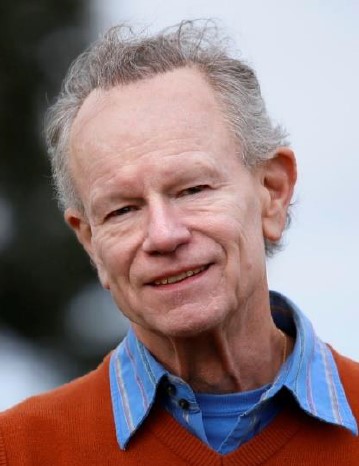
Dr. Peter Canaday
Following completion of medical school at the University of Massachusetts in 1976, Dr. Peter Canaday took up training as an Internal Medicine specialist at the University of Michigan, followed by sub-specialist training in Respiratory and Intensive Care at the University of North Carolina. He began his medical career in a busy trauma hospital in Denver, Colorado in 1981 and practiced for 12 years. During his time there, he managed many of the types of patients now seen with severe COVID-19, co-founded a sleep disorders laboratory and a hyperbaric medicine department. As well, he participated in a dozen committee assignments, and rose to Chairman of the Department of Internal Medicine. In 1993, Dr Canaday changed career and completed training as a Radiologist at the University of Wisconsin in 1997. During an 8-year period at Creighton University Medical School in Nebraska, he became tenured as an Assistant Professor of Radiology, and head of the section of Pulmonary Radiology. He also served on or chaired over a dozen hospital and medical school committees and was appointed Clinical Coordinator for the Radiology Department during his time there. Dr Canaday has also published work in applied physiology, respiratory medicine, and diagnostic radiology, has presented at national (USA) and international meetings, and his research supported the eventual FDA approval of a new medical imaging device incorporating digital X-ray tomosynthesis. He has sat on national, state, and local level advisory committees and given testimony at the state legislative level in the USA. From 2007, Dr Canaday spent time in community radiology practices before settling in New Zealand in 2013 as a Consultant Radiologist. Since 2016, he was employed at the Taranaki District Health Board and served as Head of Department before retiring in March 2021.
Subscribe Now, It’s Free!
Recent HBOT News
Clinical Trial – 1% Chloroprocaine(PF) vs. Bupivacaine Spinals
The use of 1% Chloroprocaine (PF) spinal anesthesia will reduce the recovery times and
discharge time of patients undergoing hemorrhoidectomies as compared to 0.75% bupivacaine
spinal. The primary objective is to compare the recovery times (return of motor and sensory
function) and discharge time (voiding time) between 2-Chloroprocaine and 0.75% bupivacaine
spinal anesthesia for hemorrhoidectomies. This is a randomized, prospective study assigning
patients to either 2-Chloroprocaine (PF) or 0.75% bupivacaine spinal anesthesia group.
Clinical Trial – RCT of Epinephrine (None, 100mcg, and 200mcg) in a Hyperbaric Bupivacaine, Fentanyl and Morphine Spinal in C-sections.
This is a prospective, randomized, double blind study of 75 patients (n=25 for each group) in
which epinephrine (100mcg or 200mcg) or normal saline vehicle is added to intrathecal
hyperbaric bupivacaine (0.75% bupivacaine hydrochloride in 8.25% dextrose), fentanyl, and
morphine to prolong the duration of the spinal anesthetic in scheduled cesarean deliveries.
The primary outcome of duration will be the time to T10 level sensory regression as well as
motor level regression that will be graded via the modified Bromage scale.
Repeat cesarean sections, in particular, are associated with increased operative time and
thus often performed with a spinal-epidural (CSE) technique. The epidural component is,
however, untested and may not provide adequate anesthesia, thus the higher risk of conversion
to a general anesthesia. Epinephrine is routinely used to prolong spinal anesthesia. If
effective for the duration of a repeat cesarean section it would obviate the additional time
and risks of performing the epidural and still avoid sufficient duration to avoid conversion
to a general anesthetic.
Current treatment of central retinal artery occlusion: a national survey.
Central retinal artery occlusion (CRAO) is an ophthalmological emergency, the retinal analog of a stroke. To date there is no consensus or national guidelines on how this disorder should be managed. As academic neurologists and ophthalmologists treat CRAO frequently, we set out to understand how these clinicians approach patients with CRAO with a national survey. We identified university-associated teaching hospitals offering vascular neurology, neuro-ophthalmology and/or retina fellowships in the US and asked the directors of the programs to respond to questions in an open response format to profile the acute management of CRAO at their institution.