
HBOT Conversations:
Dr. Peter Canaday (Part 1)
Dr. Peter Canaday has published work in Applied Physiology, Respiratory Medicine, and Diagnostic Radiology. He has presented at National (USA) and International meetings, and his research supported the eventual FDA approval of a new medical imaging device incorporating digital X-ray tomosynthesis. He has sat on National, State, and Local advisory committees, and given testimony at the State Legislative level in the USA.
Dr. Canaday’s experience with Hyperbaric Oxygen Therapy dates back to the 1980s when he studied HBOT under Dr. Eric Kindwall, “The Father of Hyperbaric Medicine”. Dr. Canaday also co-founded the Hyperbaric Medicine Department at St. Anthony Hospital in Lakewood, Colorado.
From 2007, Dr. Canaday spent time in community radiology practices before settling in New Zealand in 2013 as a Consultant Radiologist. Since 2016, he was employed at a Midlands region DHB and served as Head of Department before retiring in March 2021.
Watch the Podcast
HBOT News welcomes Dr. Peter Canaday. Dr. Canaday now lives primarily in New Zealand, but his history with medicine and Hyperbaric Oxygen Therapy dates back over 40 years to the United States.
In this HBOT News Network Conversations, Dr. Canaday spends the first several minutes providing listeners with his biography and medical background. He also dives into his experience with Hyperbaric Oxygen Therapy in the 1980s.
The subject of PTSD and recent Hyperbaric research arises, and Dr. Canaday expands on the topic by referencing two research articles from Dr. Paul G. Harch –
Dr. Canaday further explains, “There is a recruitment of the anti-inflammatory enzymes and a suppression of the pro-inflammatory enzymes that can be achieved through even these lower pressure units. And so we’re beginning to see now the potential mechanism for which Hyperbaric Therapy, whether with or without oxygen, may be effective.”
The remainder of this HBOT News Conversation is specific to the topic of COVID-19. di Girolamo starts the conversation discussing the struggles for long-hauler COVID patients and the growing number of vaccine injuries as a result of the COVID-19 vaccine. Dr. Canaday agrees that the scientific inquiry for COVID-19 and the available information for associated vaccines has been widely suppressed. He continues that even the data which represent conclusions from peer-reviewed literature has been simply ignored, or set aside without discussion.
In response, Dr. Canaday provides viewers with direct links on how they can learn more about some of the data and information he’s shared with the public regarding the COVID-19 vaccine roll-outs:
Dr Peter Canaday – Pfizer Vaccine Discussion At The Town Hall
Courageous Convos with Special Guest Peter Canaday
Voices of Freedom on Odysee : search Peter Canaday
Dr. Canaday’s HBOT News Conversations is a two part series. Part 2 will air on Friday, December 16, 2022.
This HBOT News Conversation was filmed on October 4, 2022
Guest
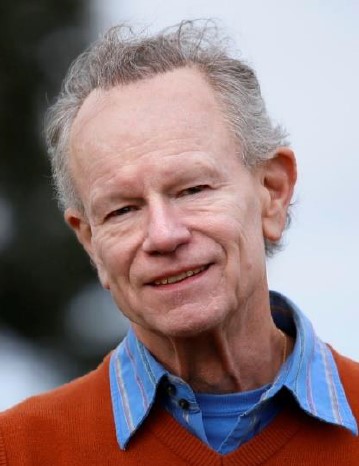
Dr. Peter Canaday
Following completion of medical school at the University of Massachusetts in 1976, Dr. Peter Canaday took up training as an Internal Medicine specialist at the University of Michigan, followed by sub-specialist training in Respiratory and Intensive Care at the University of North Carolina. He began his medical career in a busy trauma hospital in Denver, Colorado in 1981 and practiced for 12 years. During his time there, he managed many of the types of patients now seen with severe COVID-19, co-founded a sleep disorders laboratory and a hyperbaric medicine department. As well, he participated in a dozen committee assignments, and rose to Chairman of the Department of Internal Medicine. In 1993, Dr Canaday changed career and completed training as a Radiologist at the University of Wisconsin in 1997. During an 8-year period at Creighton University Medical School in Nebraska, he became tenured as an Assistant Professor of Radiology, and head of the section of Pulmonary Radiology. He also served on or chaired over a dozen hospital and medical school committees and was appointed Clinical Coordinator for the Radiology Department during his time there. Dr Canaday has also published work in applied physiology, respiratory medicine, and diagnostic radiology, has presented at national (USA) and international meetings, and his research supported the eventual FDA approval of a new medical imaging device incorporating digital X-ray tomosynthesis. He has sat on national, state, and local level advisory committees and given testimony at the state legislative level in the USA. From 2007, Dr Canaday spent time in community radiology practices before settling in New Zealand in 2013 as a Consultant Radiologist. Since 2016, he was employed at the Taranaki District Health Board and served as Head of Department before retiring in March 2021.
Subscribe Now, It’s Free!
Recent HBOT News
Cerebellar infarction presenting as inner ear decompression sickness following scuba diving: a case report.
Abstract: Inner ear decompression sickness following scuba diving is not uncommon and the characteristic features of this disorder are acute peripheral vestibular syndrome, sometimes associated with cochlear signs, requiring urgent hyperbaric oxygen therapy....
Clinical Trial – Hyperbaric Oxygen Stimulation for Patients With Brain Malignancies After Radiation Therapy.
Radiotherapy is the mainstay of treatment for brain malignancies and is associated with
significant neurotoxicity. Due to continuous increase in patient’s survival, the long term
risk for radiation-induced brain inflammation and necrosis inducing secondary cognitive
impairments are increasing concerns. Currently there is no effective treatment for preventing
long term radiation-induced brain damage.
Hyperbaric oxygen therapy (HBOT) is the administration of high oxygen concentrations within a
pressurized chamber to increase the cellular/mitochondrial delivery of oxygen. Oxygen
stimulation by HBOT has become the definitive therapy for radiation-induced damage to soft
tissues and bone due to its ability to stimulate healing processes by supplying the
energy/oxygen needed while down-regulating genes involved in inflammation. Oxygen stimulation
by HBOT is currently indicated for patients with overt radiation-induced neurotoxicity and
was proven to reduce further development of radiation damage while stimulating "idling"
neurons to return to function. Since HBOT is considered safe, we hypothesize that its
application following radiation, before the manifestation of neurological side effects, may
help avert development of early/delayed onset radiation-induced neurotoxicity.
In the proposed study, for the first time, HBOT will be applied early after radiation to
prevent the expected decrease in patients neurocognitive functions (NCF) and improve their
quality of life (QOL). The study is designed to provide statistically significant assessment,
in a prospective randomized clinical trial, of the effect of oxygen stimulation applied soon
after brain radiotherapy, for patients with primary and secondary brain tumors, on patients
QOL and NCF. In addition, advanced imaging methodologies will be applied to study the
feasibility of quantifying oxygen stimulation effects on the tumor and surrounding brain
tissue.
Successful treatment of rhino-orbital mucormycosis with posaconazole and hyperbaric oxygen therapy.
Abstract: Mucormycosis is a rare, but invasive infection caused by ubiquitous molds. Amphotericin B and surgery have been known to help improve the outcome. Sporadic case reports support the use of posaconazole in adults. We report a toddler with acute lymphoblastic...