
HBOT Conversations:
Dr. Peter Canaday (Part 2)
Dr. Peter Canaday has published work in Applied Physiology, Respiratory Medicine, and Diagnostic Radiology. He has presented at National (USA) and International meetings, and his research supported the eventual FDA approval of a new medical imaging device incorporating digital X-ray tomosynthesis. He has sat on National, State, and Local advisory committees, and given testimony at the State Legislative level in the USA.
Dr. Canaday’s experience with Hyperbaric Oxygen Therapy dates back to the 1980s when he studied HBOT under Dr. Eric Kindwall, “The Father of Hyperbaric Medicine”. Dr. Canaday also co-founded the Hyperbaric Medicine Department at St. Anthony Hospital in Lakewood, Colorado.
From 2007, Dr. Canaday spent time in community radiology practices before settling in New Zealand in 2013 as a Consultant Radiologist. Since 2016, he was employed at a Midlands region DHB and served as Head of Department before retiring in March 2021.
Watch the Podcast
HBOT News Network welcomes Dr. Peter Canaday.
This is Part 2 of Conversations with Dr. Peter Canaday. Part 1 can be viewed here. Dr. Canaday now lives primarily in New Zealand, but his history with medicine and Hyperbaric Oxygen Therapy dates back over 40 years to the United States.
In this HBOT News Network Conversations, Dr. Canaday continues the discussion on COVID-19 vaccines and the suppression of medical data. di Girolamon asks the question, “where do we go from here?”. Dr. Canaday explains that Hyperbaric Oxygen Therapy is one of the most exciting things that has piqued his interest in the medical field. He explains that huge numbers are really starting to be revealed of people who have been negatively affected by COVID, either from the point of long-COVID or from a vaccine injury; and Hyperbaric Oxygen could be potentially very helpful to this population, as it is a natural therapy involving oxygen and pressure that upregulates the anti-inflammatory gene and down regulates the inflammatory gene.
However, Hyperbaric Oxygen Therapy threatens the pharmaceutical companies bottom line and when that happens we all start to see some pretty disturbing things start surfacing — such as the science being buried, fake studies being published showing HBOT to be ineffective, major medical Journals rejecting scientific articles outlining all the adverse affects from the vaccine.
The spirit of humanity needs to be embraced here, and it is not.
Dr. Canaday encourages viewers to learn more at www.nzdsos.com — it’s “New Zealand Doctors Speaking Out with Science“. The NZDSOS is very similar to America’s Frontline Doctors and there is a plethora of educational information that can be learned regarding what happened during the COVID-19 pandemic and is still happening today. Dr. Canaday further encourages us all to open our eyes, hearts and ears as we listen and digest to all of this information. Often times, it’s when doctors keep getting shut down and censored that we all need to be listening closer instead of turning the other cheek.
Dr. Canaday and di Girolamo stresses that everyone should be looking into the God-given miracle of Hyperbaric Oxygen Therapy. Be sure to find a treatment center near you if you are experiencing effects of long-COVID or a vaccine injury.
This HBOT News Conversation was filmed on October 4, 2022
Guest
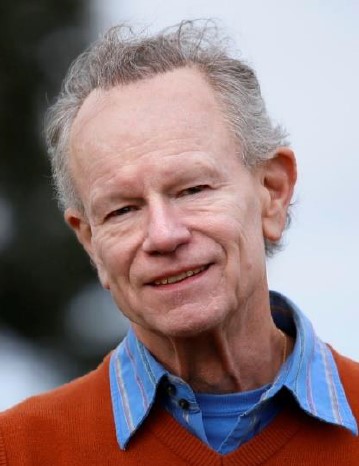
Dr. Peter Canaday
Following completion of medical school at the University of Massachusetts in 1976, Dr. Peter Canaday took up training as an Internal Medicine specialist at the University of Michigan, followed by sub-specialist training in Respiratory and Intensive Care at the University of North Carolina. He began his medical career in a busy trauma hospital in Denver, Colorado in 1981 and practiced for 12 years. During his time there, he managed many of the types of patients now seen with severe COVID-19, co-founded a sleep disorders laboratory and a hyperbaric medicine department. As well, he participated in a dozen committee assignments, and rose to Chairman of the Department of Internal Medicine. In 1993, Dr Canaday changed career and completed training as a Radiologist at the University of Wisconsin in 1997. During an 8-year period at Creighton University Medical School in Nebraska, he became tenured as an Assistant Professor of Radiology, and head of the section of Pulmonary Radiology. He also served on or chaired over a dozen hospital and medical school committees and was appointed Clinical Coordinator for the Radiology Department during his time there. Dr Canaday has also published work in applied physiology, respiratory medicine, and diagnostic radiology, has presented at national (USA) and international meetings, and his research supported the eventual FDA approval of a new medical imaging device incorporating digital X-ray tomosynthesis. He has sat on national, state, and local level advisory committees and given testimony at the state legislative level in the USA. From 2007, Dr Canaday spent time in community radiology practices before settling in New Zealand in 2013 as a Consultant Radiologist. Since 2016, he was employed at the Taranaki District Health Board and served as Head of Department before retiring in March 2021.
Subscribe Now, It’s Free!
Recent HBOT News
Growth Hormone Deficiency: Health and Longevity
Abstract The important role of GH in the control of mammalian longevity was first deduced from extended longevity of mice with genetic GH deficiency (GHD) or GH resistance. Mice with isolated GHD (IGHD) due to GHRH or GHRH receptor mutations, combined deficiency of...

Why is Justin Bieber Sleeping in a hyperbaric Oxygen Chamber?
Find out why pop star Justin Beiber has decided to sleep in a hyperbaric oxygen chamber. "Justin Bieber is testing out some futuristic healing technology. The pop star, 25, showed fans his new nighttime routine on his Instagram Stories on Sunday, passing his phone off...
Clinical Trial – The Role of Hyperbaric Oxygen and Neuropsychological Therapy in Cognitive Function Following Traumatic Brain Injury
Traumatic brain injury (TBI) caused by accidents is a very important public health problem in
Taiwan. There are many people with brain damage and cognitive dysfunction caused by traumatic
brain injury every year. Currently, there is no effective treatment for cognitive dysfunction
caused by traumatic brain injury. Evidence from clinical studies in recent years suggests
that hyperbaric oxygen therapy may be a treatment for repairing nerves after brain injury.
Many studies have shown that oxidative stress and inflammatory responses play an important
role in the pathogenesis of the central nervous system. In recent years, our research team
has shown that oxidative stress and inflammatory response are significantly associated with
the prognosis of patients with traumatic brain injury, cerebral hemorrhage, and stroke
patients. More and more evidences also show that oxidative stress and inflammatory response
play an important role in the neuropathological changes of mental cognitive sequelae after
traumatic brain injury. This injury may be gradual from the time of head trauma. This process
begins with the generation of oxidative stress and free radicals. When the cell repair and
free radical scavenging system can not effectively overcome the excessive production of free
radicals, an oxidative damage reaction will occur, causing a series of inflammatory cells and
cytokines to be activated. Studies have also shown that when inhibiting those free radicals
that produce oxidative stress, the neurological function and cognitive function of the head
after trauma can be significantly improved.
It is becoming widely acknowledged that the combined action of hyperoxia and hyperbaric
pressure leads to significant improvement in tissue oxygenation while targeting both
oxygenand pressure-sensitive genes, resulting in improved mitochondrial metabolism with
anti-apoptotic and anti-inflammatory effects. The investigators published an article this
year showing that hyperbaric oxygen therapy can improve the prognosis of patients with acute
stroke and increase endothelial progenitor cells in the systemic circulation.
The investigators plan to conduct this research project through hyperbaric oxygen therapy and
neuropsychological therapy, and using scientific tests and neurocognitive function
assessments. The investigators hope to answer the following questions: (1) Whether the
treatment of hyperbaric oxygen can improve oxidative stress and inflammatory response after
brain injury, and observe changes in biomarker concentration; (2) Whether hyperbaric oxygen
therapy and neuropsychological therapy can improve cognitive function after brain injury; and
(3) which biomarkers are factors that influence cognitive function prognosis.