
HBOT Conversations:
Dr. Peter Canaday (Part 2)
Dr. Peter Canaday has published work in Applied Physiology, Respiratory Medicine, and Diagnostic Radiology. He has presented at National (USA) and International meetings, and his research supported the eventual FDA approval of a new medical imaging device incorporating digital X-ray tomosynthesis. He has sat on National, State, and Local advisory committees, and given testimony at the State Legislative level in the USA.
Dr. Canaday’s experience with Hyperbaric Oxygen Therapy dates back to the 1980s when he studied HBOT under Dr. Eric Kindwall, “The Father of Hyperbaric Medicine”. Dr. Canaday also co-founded the Hyperbaric Medicine Department at St. Anthony Hospital in Lakewood, Colorado.
From 2007, Dr. Canaday spent time in community radiology practices before settling in New Zealand in 2013 as a Consultant Radiologist. Since 2016, he was employed at a Midlands region DHB and served as Head of Department before retiring in March 2021.
Watch the Podcast
HBOT News Network welcomes Dr. Peter Canaday.
This is Part 2 of Conversations with Dr. Peter Canaday. Part 1 can be viewed here. Dr. Canaday now lives primarily in New Zealand, but his history with medicine and Hyperbaric Oxygen Therapy dates back over 40 years to the United States.
In this HBOT News Network Conversations, Dr. Canaday continues the discussion on COVID-19 vaccines and the suppression of medical data. di Girolamon asks the question, “where do we go from here?”. Dr. Canaday explains that Hyperbaric Oxygen Therapy is one of the most exciting things that has piqued his interest in the medical field. He explains that huge numbers are really starting to be revealed of people who have been negatively affected by COVID, either from the point of long-COVID or from a vaccine injury; and Hyperbaric Oxygen could be potentially very helpful to this population, as it is a natural therapy involving oxygen and pressure that upregulates the anti-inflammatory gene and down regulates the inflammatory gene.
However, Hyperbaric Oxygen Therapy threatens the pharmaceutical companies bottom line and when that happens we all start to see some pretty disturbing things start surfacing — such as the science being buried, fake studies being published showing HBOT to be ineffective, major medical Journals rejecting scientific articles outlining all the adverse affects from the vaccine.
The spirit of humanity needs to be embraced here, and it is not.
Dr. Canaday encourages viewers to learn more at www.nzdsos.com — it’s “New Zealand Doctors Speaking Out with Science“. The NZDSOS is very similar to America’s Frontline Doctors and there is a plethora of educational information that can be learned regarding what happened during the COVID-19 pandemic and is still happening today. Dr. Canaday further encourages us all to open our eyes, hearts and ears as we listen and digest to all of this information. Often times, it’s when doctors keep getting shut down and censored that we all need to be listening closer instead of turning the other cheek.
Dr. Canaday and di Girolamo stresses that everyone should be looking into the God-given miracle of Hyperbaric Oxygen Therapy. Be sure to find a treatment center near you if you are experiencing effects of long-COVID or a vaccine injury.
This HBOT News Conversation was filmed on October 4, 2022
Guest
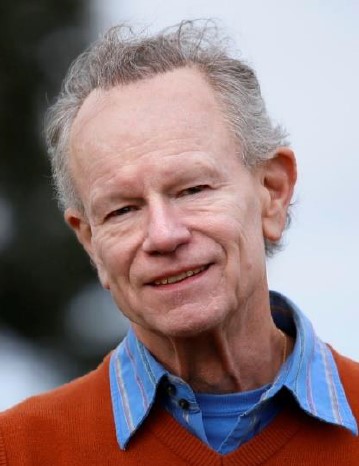
Dr. Peter Canaday
Following completion of medical school at the University of Massachusetts in 1976, Dr. Peter Canaday took up training as an Internal Medicine specialist at the University of Michigan, followed by sub-specialist training in Respiratory and Intensive Care at the University of North Carolina. He began his medical career in a busy trauma hospital in Denver, Colorado in 1981 and practiced for 12 years. During his time there, he managed many of the types of patients now seen with severe COVID-19, co-founded a sleep disorders laboratory and a hyperbaric medicine department. As well, he participated in a dozen committee assignments, and rose to Chairman of the Department of Internal Medicine. In 1993, Dr Canaday changed career and completed training as a Radiologist at the University of Wisconsin in 1997. During an 8-year period at Creighton University Medical School in Nebraska, he became tenured as an Assistant Professor of Radiology, and head of the section of Pulmonary Radiology. He also served on or chaired over a dozen hospital and medical school committees and was appointed Clinical Coordinator for the Radiology Department during his time there. Dr Canaday has also published work in applied physiology, respiratory medicine, and diagnostic radiology, has presented at national (USA) and international meetings, and his research supported the eventual FDA approval of a new medical imaging device incorporating digital X-ray tomosynthesis. He has sat on national, state, and local level advisory committees and given testimony at the state legislative level in the USA. From 2007, Dr Canaday spent time in community radiology practices before settling in New Zealand in 2013 as a Consultant Radiologist. Since 2016, he was employed at the Taranaki District Health Board and served as Head of Department before retiring in March 2021.
Subscribe Now, It’s Free!
Recent HBOT News
Clinical Trial – ED50 and ED95 of Isobaric Bupivacaine for Post-Partum Bilateral Tubal Ligation
Spinal anesthesia is one of the preferred anesthetic techniques for post-partum bilateral
tubal ligation (PBTL). Bupivacaine is the most commonly used local anesthetic for neuraxial
anesthesia for post-partum tubal ligation. Typically, hyperbaric bupivacaine would be
injected into the spinal (intrathecal) space via a spinal needle; however, ongoing medication
shortages have resulted in limited availability on a local and national level. One proposed
alternative is isobaric bupivacaine; however, studies investigating its use for post-partum
bilateral tubal ligation are limited.
The purpose of this prospective study is to determine the minimal effective dose (ED50 and
ED95) of isobaric bupivacaine for adequate anesthesia during post-partum tubal ligation after
vaginal delivery.
A Case of Refractory Hemorrhagic Cystitis in which Bleeding Control was Finally Achieved by Cystectomy.
A 60-year-old man presented at our hospital with gross hematuria. He had been treated for nephrotic syndrome with cyclophosphamide and steroids since he was in his 20s. We detected diffuse hemorrhagic cystitis on cystoscopy and diagnosed him with cyclophosphamide-induced hemorrhagic cystitis. He was hospitalized due to clot retention. We treated him with blood transfusion for severe anemia and conducted continuous bladder irrigation. We performed hyperbaric oxygen therapy and transurethral electric coagulation, and increased the steroid dose. However, we could not control the hematuria. Finally, we performed cystectomy, and he is now well without hematuria. Although cystectomy is the final option, it is important to decide it in a timely manner because a delay decreases the quality of life.
Erratum: Effect of hyperbaric oxygenation therapy on post-concussion syndrome.
The present review evaluated the effect of hyperbaric oxygenation (HBO) therapy on post-concussion syndrome (PCS). Searches for publications from the earliest date possible up until the first week of 2016 were conducted using the electronic databases Cochrane, EBSCOhost, Embase, Ovid MEDLINE, PubMed and Web of Science. Additional trials were identified through reference list scanning. Randomized controlled trials assessing the effectiveness of HBO therapy in PCS were selected and tested for eligibility for inclusion in the present review.