
HBOT Conversations:
Elena Schertz & Extivita RTP
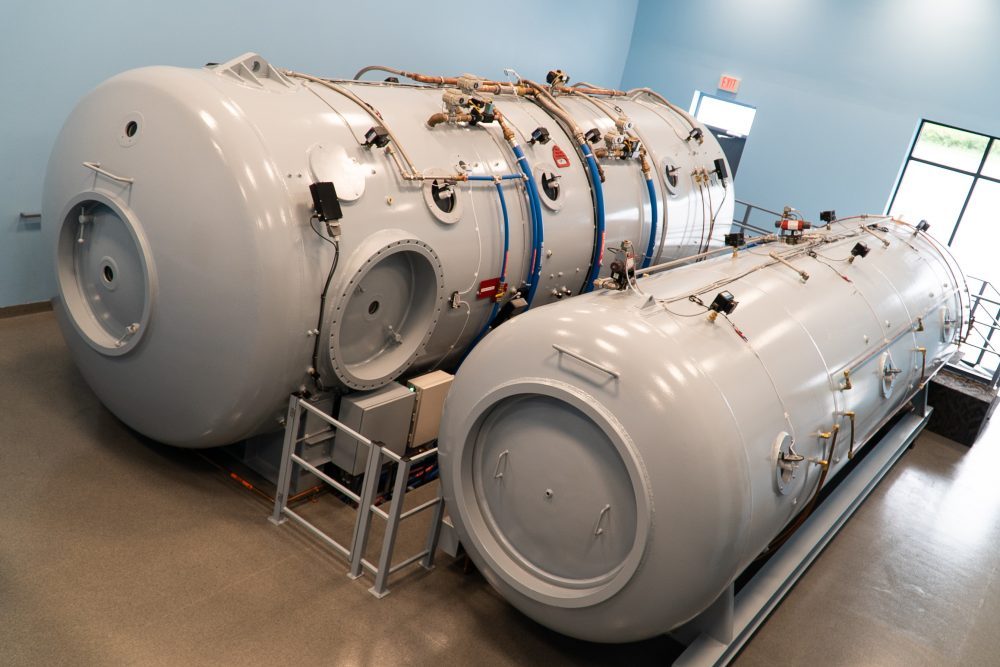
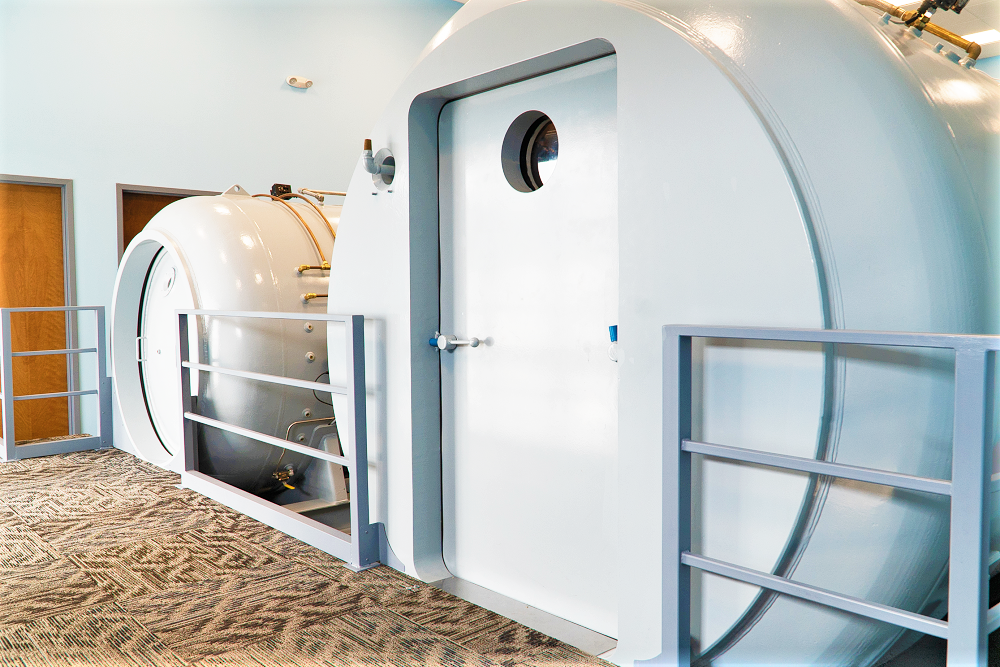
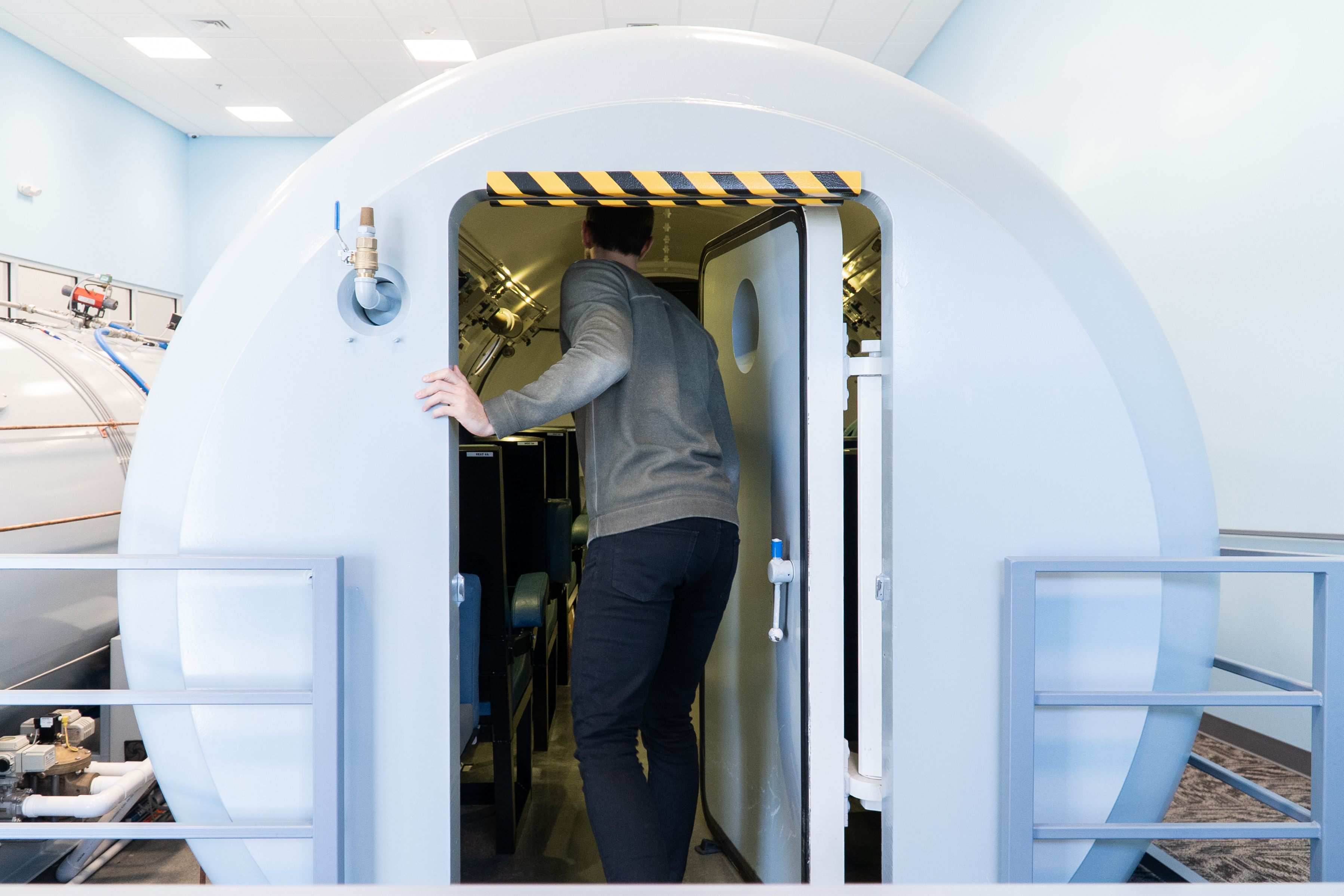
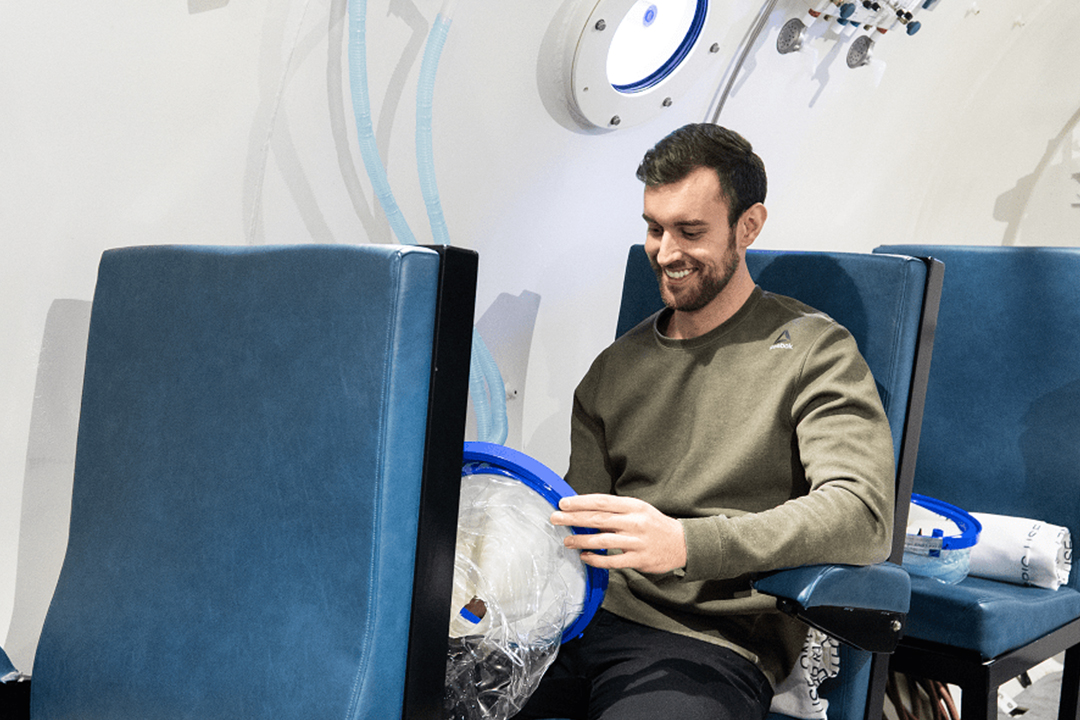
Elena Schertz, NP of Extivita-RTP in North Carolina, discusses how her clinic is actively healing the injured and sick with hyperbaric oxygen therapy (HBOT), including veterans, sports athletes and COVID long-haulers. She explains the proven benefits of HBOT – what it is, who are candidates for the therapy, and how each session saturates a patient’s blood plasma with oxygen for ultimate healing powers.
Extivita-RTP offers a positive environment for healing, and she encourages anyone seeking a better quality of life to come visit them and experience the wonder of hyperbaric oxygen therapy.
Watch the Podcast
HBOT News podcast host, Edward diGirolamo, talks with guest, Elena Schertz, NP of Extivita-RTP, about how her clinic is actively healing the injured and sick with hyperbaric oxygen therapy (HBOT), including veterans, sports athletes and COVID long-haulers. She explains the proven benefits of HBOT – what it is, who are candidates for the therapy, and how each session saturates a patient’s blood plasma with oxygen for ultimate healing powers.
Elena reveals their successes treating TBI and PTSD, and why the therapies at Extivita are even leading to the patient’s elimination of suicidal thoughts. Since veterans are at high risk of suicide due to the grave nature of combat, priority is being taken to treat these American heroes with HBOT at low or no cost. North Carolina’s veteran funding is discussed, while Elena expresses her hope that the state will eventually expand funding to include other beneficial therapies.
The topic of treating COVID long-haulers arise, and Elena makes a claim with absolute certainty that 99% of the COVID long-haulers who come through their doors are significantly better after going through HBOT sessions and nutritional IV regiments, with 95% of them eventually returning to their baseline.
Elena ends the podcast interview raving about her experienced clinical staff, explaining how they celebrate every milestone with their patients relishing in the rewards of making a difference and saving lives. They offer a positive environment for healing, and she encourages anyone seeking a better quality of life to come experience Extivita-RTP and the wonder of hyperbaric oxygen therapy.
Guest

Elena Schertz, NP - Clinic Manager at Extivita RTP
Elena attained her Bachelors of Science in Nursing from Michigan State University and received her Masters of Science in Nursing from Simmons University in Boston, MA. She has been practicing integrative medicine since 2010 and is currently working on her certification in functional medicine from the Institute of Functional Medicine.
Elena worked as a nurse in the pediatric oncology, cardiac, and surgical units at UNC hospitals for 15 years before deciding to work in integrative medicine. After years of working as a nurse, she decided to pursue her graduate degree, completing her masters with honors. She is board certified as a Family Nurse Practitioner (FNP) through the American Nurses Credentialing Center.
Elena’s passion for integrative medicine comes from her knowledge that the mind, body and psych/social/spiritual systems are not separate. The focus of Elena’s practice is to approach each of her patient’s healing process from the perspective of the whole, supported and grounded in safety and evidence-based medicine. She also maintains close consultative relationships with experts in the field to promote and enhance wellness for her patients. Elena joined the wonderful Extivita team in March 2019 and is thrilled to be a part of advancing health and wellness through hyperbaric medicine.
Extivita-RTP – Hyperbaric Oxygen Therapy Clinic
2012-D TW Alexander Drive
Durham, NC 27709
919-354-3775
919-354-3776
contact@extivita.org
https://www.extivita.org/
Subscribe Now, It’s Free !
Recent HBOT News
Cerebral hypoperfusion in autism spectrum disorder
Cerebral hypoperfusion, or insufficient blood flow in the brain, occurs in many areas of the brain in patients diagnosed with autism spectrum disorder (ASD). Hypoperfusion was demonstrated in the brains of individuals with ASD when compared to normal healthy control brains either using positron emission tomography (PET) or single‑photon emission computed tomography (SPECT). The affected areas include, but are not limited to the: prefrontal, frontal, temporal, occipital, and parietal cortices; thalami; basal ganglia; cingulate cortex; caudate nucleus; the limbic system including the hippocampal area; putamen; substantia nigra; cerebellum; and associative cortices. Moreover, correlations between symptom scores and hypoperfusion in the brains of individuals diagnosed with an ASD were found indicating that the greater the autism symptom pathology, the more significant the cerebral hypoperfusion or vascular pathology in the brain. Evidence suggests that brain inflammation and vascular inflammation may explain a part of the hypoperfusion. There is also evidence of a lack of normal compensatory increase in blood flow when the subjects are challenged with a task. Some studies propose treatments that can address the hypoperfusion found among individuals diagnosed with an ASD, bringing symptom relief to some extent. This review will explore the evidence that indicates cerebral hypoperfusion in ASD, as well as the possible etiological aspects, complications, and treatments.
Clinical Trial – Spinal Anesthesia in Caesarean Section
Spinal anesthesia is a safe technique, widely used and tested in the gynecological field, so
as to be considered the first choice technique in cesarean section, which allows to quickly
obtain a valid sensor and motor block. Bupivacaine is one of the most widely used drug for
obtaining spinal anesthesia in pregnant women undergoing caesarean section. Bupivacaine is a
local anesthetic available as a racemic mixture of its two enantiomers, the R (+)-
dextrobupivacaine and the S (-) – levobupivacaine, whose clinical use is widely validated.
Racemic bupivacaine is available as a simple or hyperbaric solution, the latter being the
most commonly used for spinal anesthesia. Levobupivacaine, which is the pure levorotatory
enantiomer of racemic bupivacaine, is a slightly hypobaric solution compared to liquor and
has shown less heart and nerve toxicity, probably due to its ability to bind proteins more
rapidly, and a greater selectivity towards the sensory component compared to Bupivacaine,
presents action and effects better predictable. Its baricity would also offer the advantage
of providing a less sensitive block to the position.
Hypotension is one of the most common complications of spinal anesthesia and is particularly
relevant in caesarean section because, in addition to the adverse effects on the parturient,
it can have repercussions on the fetus through a reduction of placental perfusion.
Some studies have showed a similar incidence of hypotension in patients treated with
bupivacaine compared to those treated with levobupivacaine, while others assert an
equivalence between the two drugs. In most studies, however, a significantly lower incidence
of hypotension and a greater hemodynamic stability were reported in pregnant patients
undergoing spinal anesthesia by caesarean section with levobupivacaine.
Being both hyperbaric bupivacaine and levobupivacaine routinely used at the "G. Rodolico"
Universitary Hospital of Catania for the spinal anesthesia of pregnant women undergoing
caesarean section and being their use decided exclusively at discretion of the treating
anesthesiologist, in the light of the discrepant data in the literature about the incidence
of hypotension with the two drugs, the main objective of this observational study is to
evaluate the hemodynamic effects mediated by levobupivacaine on pregnant women subjected to
elective cesarean section and to compare them with those mediated by hyperbaric bupivacaine
in an historical court of pregnant women subjected to caesarean section in the period between
April 2017 and April 2018. The hemodynamic parameters will be monitored in real time with a
non-invasive hemodynamic monitoring system (EV1000® platform + Clearsight® system – Edwards
LifeSciences), routinely used in the "G. Rodolico" Universitary Hospital of Catania, allowing
to obtain greater accuracy and veracity of the results compared to previous studies conducted
on such anesthetics.
Role of Hyperbaric Oxygen Therapy in Trauma Care
Article from Bio Spectrum Media discusses how technological advancements have made the use of HBOT more efficient in Trauma Care: Head Trauma is one of the major causes of death and disabilities across the world. This can be caused due a contusion (bruise),...