
HBOT Conversations:
Elena Schertz & Tom Fox (Part 1) – PTSD
Elena Schertz, NP and Tom Fox of Extivita-RTP in Raleigh, NC join us in a 5-part series to discuss the extraordinary healing they’ve witnessed through the God-given natural therapy of HBOT. This is Part 1, with a focus on how Hyperbaric Oxygen Therapy is helping the veteran community heal from PTSD, while eliminating suicidal ideations.
Elena Schetz, NP is the nurse practitioner, and Tom Fox is the Safety Director at Extivita-RTP. Extivita-RTP offers a positive environment for healing, and they encourage anyone seeking a better quality of life to come visit them and experience for themselves the wonder of Hyperbaric Oxygen Therapy.
Watch the Podcast
In a Special 5-part series with Extivita’s Nurse Practitioner, Elena Schertz, and Safety Director, Tom Fox, we dive into the extraordinary HBOT healing they have witnessed for a variety of conditions. In Part 1 of 5, we discuss PTSD among the veteran community.
Tom Fox has been involved in the hyperbaric field for 31 years, and is considered an International historian for Hyperbaric Oxygen Therapy. He has extensive experience treating severely injured veterans, with his first experiences dating back to the landmine wounds of the first Persian Gulf War. With his wife, Claudine, by his side they have treated up to 42,000 individuals (for all conditions) with Hyperbaric Oxygen Therapy. He explains that there is nothing quite like getting hugs from veteran family members who have seen their loved ones “come back to life” after having suffered from PTSD for a long period of time. Tom has spent his career educating others on the power of Hyperbaric Oxygen Therapy, with the veteran community being very near and dear to his heart. Tom explains that during combat these troops see extraordinary pressure changes, especially with primary blast injuries that are not visible. He has written many articles on this subject matter and has been called upon as an expert in governmental presentations relative to the effects of pressure on the human body.
- WOUNDED WARRIORS: BLAST INJURY, PTSD, AND HBOT… WHAT ARE WE REALLY TREATING?
- COMBAT STRESS: HBOT: Brain Healing Hidden in Plain Sight
- SPECIAL OPERATIONS TECHNOLOGY: Hyperbarics
- WHITE PAPER: Hyperbaric Oxygen Therapy: A Therapy Capable of Significant Improvements in the care of Veterans with Signature (Silent) Wounding
Elena Schertz, the Nurse Practitioner and clinic manager at Extivita-RTP, is no stranger to HBOT News and has been interviewed on HBOT News previously. She has been a nurse for 25 years, and has a background in primarily Pediatric Oncology, with some experience in the Cardiology field. 13 years ago, Elena became involved with integrative medicine, which eventually landed her at Extivita for the past four years where she has treated over 1,000 patients with Hyperbaric Oxygen Therapy.
Both Tom and Elena continue to be heavily involved with the veteran community. In fact, Extivita treats veterans under a program that funds North Carolina veterans to receive HBOT treatments for free. By using HBOT, they have been successful in treating PTSD, post-concussion symptoms, sleep disorders, quality & quantity of life, cognitive function, executive function, anxiety and depression — all of which are known symptoms that HBOT helps, and has been acknowledged in medical journals. Elena states that probably 99% of the veterans that are treated at their clinic have improved significantly.
Tom and Elena explain how Hyperbaric Oxygen helps veterans overcome PTSD symptoms – allowing them better sleep, improved relationships, and diminished suicidal thoughts. They also stress the importance of family, and how it’s truly critical for a veteran to have a caregiver helping and encouraging them through the entire process of care when they return home from the battlefield.
Tom tells a story of General Patt Maney. General Maney was injured in an IED explosion that destroyed the entire vehicle, and he suffered severe invisible injuries. General Maney had a very serious brain injury that left him with almost no short-term memory, and he was at mercy of his wife for almost a year. He was a laywer on the bench in the state of Florida, but his injury was preventing him from reentering. He was eventually treated by Dr. Eddie Zant with Hyperbaric Oxygen Therapy. His recovery was so amazing that he was able to reenter the law practice and sit as a judge! He established a veterans court system, and remains an integral piece in reforming the legislative approaches to the management of those veterans that have gone astray in the legal world.
PTSD can be completely life-altering for veterans, but Hyperbaric Oxygen Therapy is proving that it can and will give them their lives back. HBOT allows military service members to finally be able to sit at Thanksgiving dinner and not have to leave because the noise and stimulation is too much. Seeing our veterans finally heal has been one of the most rewarding things for Elena and Tom.
If only HBOT could be available to the active warfighter, someone that’s in the field and just got rattled by an IED. We would not only be sending our troops home with a healthier and clearer mind, we’d be healing the invisible battle wounds of war in a fraction of the time.
Join us next week for Part 2, when Tom and Elena will dive into a discussion about concussions.
Guests

Elena Schertz, NP - Clinic Manager at Extivita RTP
Elena attained her Bachelors of Science in Nursing from Michigan State University and received her Masters of Science in Nursing from Simmons University in Boston, MA. She has been practicing integrative medicine since 2010 and is currently working on her certification in functional medicine from the Institute of Functional Medicine.
Elena worked as a nurse in the pediatric oncology, cardiac, and surgical units at UNC hospitals for 15 years before deciding to work in integrative medicine. After years of working as a nurse, she decided to pursue her graduate degree, completing her masters with honors. She is board certified as a Family Nurse Practitioner (FNP) through the American Nurses Credentialing Center.
Elena’s passion for integrative medicine comes from her knowledge that the mind, body and psych/social/spiritual systems are not separate. The focus of Elena’s practice is to approach each of her patient’s healing process from the perspective of the whole, supported and grounded in safety and evidence-based medicine. She also maintains close consultative relationships with experts in the field to promote and enhance wellness for her patients. Elena joined the wonderful Extivita team in March 2019 and is thrilled to be a part of advancing health and wellness through hyperbaric medicine.
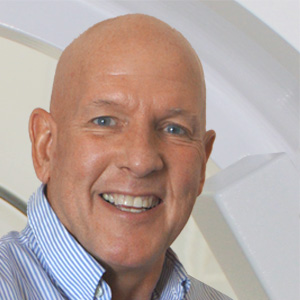
Thomas M. Fox, MAS,MS, CHT - Safety Director at Extivita RTP
Tom is the Research Physiologist for the Hyperbaric Institute for Research and Training, a division of Island Hyperbaric Centre in Pincourt QC. He has worked in the field of Clinical Hyperbaric Oxygen for the last 30 years. During this time, he has been intimately involved with the implementation and the development of the US Army’s Clinical Hyperbaric Service at Dwight David Eisenhower Army Medical Center. He has provided contract hyperbaric services since 1997. Prior to accepting his current position in Quebec, Canada, Mr. Fox served as the Chief of the Atmospherics Branch of the U.S. Army School of Aviation Medicine, Fort Rucker Alabama. In this capacity, he was responsible for hyperbaric/ hypobaric operations and training of US and NATO aviators, flight surgeons and flight medics. Mr. Fox is a senior army aviator and flew twelve years as a Medical Evacuation Pilot for the US Army.
Tom joined the Extivita team in 2022 as the Safety Director, helping Extivita to maintain a healthy and safe environment for exceptional patient care.
Extivita-RTP – Hyperbaric Oxygen Therapy Clinic
2012-D TW Alexander Drive
Durham, NC 27709
919-354-3775
919-354-3776
contact@extivita.org
https://www.extivita.org/
Subscribe Now, It’s Free!
Recent HBOT News
The wound/burn guidelines – 3: Guidelines for the diagnosis and treatment for diabetic ulcer/gangrene.
Abstract: We aimed to prepare guidelines for the management of diabetic ulcer/gangrene with emphasis on the diagnosis and treatment of skin symptoms. They serve as a tool to improve the quality of the diagnosis and treatment in each patient and, further, to improve...
Clinical Trial – HBOT Global Functioning After Stroke
Stroke is one of the leading causes of disability and death in North America and Europe. Up
to 30% of stroke survivors never recuperate completely and suffer from loss of function and
poor quality of life. To improve recovery after stroke, innovative interventions should be a
priority.
Hyperbaric oxygen therapy (HBOT) is an intermittent inhalation of 100% oxygen in a hyperbaric
chamber at a pressure higher than 1 absolute atmosphere (ATA). There is a growing body of
evidence that HBOT can enhance ability of brain to changes its structure (neuroplasticity) in
order to recover. Exercise program during HBOT can augment the effect. Although, recent
randomized controlled trials in patients with chronic brain injury showed promising results,
there are no studies demonstrating combine effect HBOT and exercise rehabilitation program on
stroke recovery.
The proposed study investigates feasibility, safety and efficacy of using a combination of
HBOT and exercise program to improve arm function recovery in chronic stroke patients. In
this pilot randomized control trial, investigators will compare the combination of HBOT and
the focused rehabilitation exercise program versus exercise program alone on recovery of arm
function in patients with chronic stroke.
Clinical Trial – Hyperbaric Oxygen Therapy and Acute Kidney Injury
Kidney injury is a serious complication of cardiac surgery that occurs in up to 30% of
patients and increases the risk of adverse outcomes. Kidney injury initiates when oxygen
supply to the kidney drops below levels that are needed for normal cellular function, causing
tissue oxygen deficiency (hypoxia), activation of the inflammatory cascade, and oxidative
stress. Together, these events further impair tissue oxygenation, culminating in impaired
kidney function due to cellular injury and death.
There are no effective therapies for kidney injury after cardiac surgery, but there is
evidence that recovery is possible if the processes of injury – i.e., impaired oxygen
delivery, increased inflammatory response, and oxidative stress – are ameliorated soon after
the onset of injury. Hyperbaric oxygen therapy (HBOT) – which entails the intermittent
inhalation of 100% oxygen in a hyperbaric chamber at a pressure higher than one absolute
atmosphere (> 760 mmHg) – has been shown to positively affect all of these processes (i.e.,
to improve tissue oxygenation, reduce inflammation, and reduce oxidative stress). Thus, we
hypothesized that HBOT will reduce the severity of kidney injury after cardiac surgery if it
is initiated soon after onset of injury. This hypothesis has not been tested in humans, but
is supported by animal studies.
In this first-in-human, unblinded, controlled pilot trial, 20 adult patients who develop
severe kidney injury soon after cardiac surgery will be randomized (after obtaining informed
consent from the patient or surrogate) to standard-of-care or early HBOT. Severe kidney
injury will be defined as a ≥30% drop in kidney function within 6 hours of surgery (as
determined by change in creatinine from before surgery to Intensive Care Unit (ICU)
admission). This degree of injury occurs in ~ 2% of patients and is associated with a 12-fold
increase in the risk of complete kidney failure (requiring dialysis) or death. Patients will
be excluded if they have any relative or absolute contraindications to HBOT (e.g., severe
ventricular dysfunction, ventricular assist device, severe respiratory dysfunction,
pneumothorax, bronchospasm).