
HBOT Conversations:
Elena Schertz & Tom Fox (Part 2) – Concussion
Elena Schertz, NP and Tom Fox of Extivita-RTP in Raleigh, NC join us in a 5-part series to discuss the extraordinary healing they’ve witnessed through the God-given natural therapy of HBOT. This is Part 2, with a focus on how Hyperbaric Oxygen Therapy is helping people of all ages heal from concussions.
Elena Schetz, NP is the nurse practitioner, and Tom Fox is the Safety Director at Extivita-RTP. Extivita-RTP offers a positive environment for healing, and they encourage anyone seeking a better quality of life to come visit them and experience for themselves the wonder of Hyperbaric Oxygen Therapy.
Watch the Podcast
In a Special 5-part series with Extivita’s Nurse Practitioner, Elena Schertz, and Safety Director, Tom Fox, we dive into the extraordinary powers of HBOT, and the healing they have witnessed for a variety of conditions. Part 1 was released on 3/17/2023 with a focus on PTSD for veterans.
In Part 2 of 5, we discuss concussions, and the importance of treating concussions with Hyperbarics within days of the injury.
Host di Girolamo starts the conversation talking about the adolescent group in Wake County, North Carolina and stating that it’s his understanding there are approximately 3,000 adolescent concussions from sport injuries in this county alone (the country HBOT News studio and the clinic, Extivita-RTP is located at). This opens a door to discuss concussions and how critical it is to treat a head injury in the acute (very early) stage.
It’s a classic prognosis we’ve all heard regarding healing from concussions, ‘Rest your brain. Time will heal’.
Tom Fox explains, “Time also makes things worse”.
He uses a defensive back, Shazier, as an example. Shazier was injured and had a neurological injury with a contusion to the spinal cord. His prognosis was not good, and he was expected to become a quadriplegic. What’s critical in a case like this is the implementation of hyperbarics in a timely fashion, before any swelling can cause a scar to form.; as this can be the difference between whether the patient will be able to walk again, or if he/she is going to spend the rest of their days in a wheelchair. Shazier played for the Pittsburgh Steelers, and was under the care of Dr. Joseph Maroon (who was portrayed as a character in the movie, Concussion). Thanks to Dr. Maroon’s passion to treat with HBOT, Shazier received HBOT quickly, and is walking today! It’s a fascinating story of healing!
Since hypoxia and inflammation are the root cause of injury and illness, Fox expresses that it’s beyond time the medical community works together and starts asking the question, ‘Hey, which one of your patients would benefit from use of oxygen to relieve hypoxia and inflammation?’. Fox also mentions that concussions and strokes are similar in the way that they need to be treated with Hyperbaric Oxygen Therapy immediately before brain damage can be done.
It’s only evolving if you let it evolve, but if you actually have a timely implementation of therapeutic hyperbarics, then it may not be evolving. It may be stopped in its tracks. We as a community need to be better at communicating with the mainstream medicine and saying, ‘Hey, listen, we have a therapy that can make the difference in your patient’. You know, it’s not an alternative. It’s actually the drugs that are the alternative. So let’s try to reestablish and take care of the hypoxia that’s causing the injury.
Elena stresses that she’s seen many concussions in the clinic, and that if they can treat with HBOT preferably within 24 hours (although that’s not realistic many times), but at least within the acute phase, which is 72 hours, then it’s only two or three hyperbaric dives that the patient needs in order to return back to their baseline. In addition, she reiterates that even if the patient is in a subacute or chronic stage of concussion there’s still hope.
I also want to emphasize that even if it’s ten weeks out or a year out or ten years out, we’ve also seen benefits in those folks. But if we get them right away, it can bring them right back to baseline immediately. Like within three dives, like I said, 3 to 5, and I’ve seen that.
The number of treatments a patient would typically need is discussed, with Tom and Elena stressing that a 40 dives is excessive for concussions in the acute stage — even multiple concussions. Other factors come into play with a 40 dive protocol, including comorbidities. Tom Fox makes an excellent point in regards to the 40 dive treatment protocol that so many medical providers think is needed for a patient to complete HBOT dives and heal.
The thing with hyperbarics is it’s gotten a bad rap for extended protocols like 40 treatments. 60 treatments. Who can do that? Who can afford to do that? You know, why doesn’t insurance companies reimburse for this? Because usually it’s an extended course of therapy that requires an extraordinary amount of money. And that’s one of the chief things that holds us back.
Treat early and you will often eliminate the need for 40 or 60 treatments. If the concussed patient can get hyperbaric treatment immediately, then they will likely only need a handful of treatments. If you do this, HBOT treatments can be very affordable since the patient can return to their base line very quickly; eliminating the need to sit in a dark room and rest the brain, or deal with the migraines and dreaded post-concussive syndrome that typically follows a bad concussion. Like everything in the medical field, the treatment in Hyperbaric Oxygen Therapy is no different.
Early intervention is key.
Guests

Elena Schertz, NP - Clinic Manager at Extivita RTP
Elena attained her Bachelors of Science in Nursing from Michigan State University and received her Masters of Science in Nursing from Simmons University in Boston, MA. She has been practicing integrative medicine since 2010 and is currently working on her certification in functional medicine from the Institute of Functional Medicine.
Elena worked as a nurse in the pediatric oncology, cardiac, and surgical units at UNC hospitals for 15 years before deciding to work in integrative medicine. After years of working as a nurse, she decided to pursue her graduate degree, completing her masters with honors. She is board certified as a Family Nurse Practitioner (FNP) through the American Nurses Credentialing Center.
Elena’s passion for integrative medicine comes from her knowledge that the mind, body and psych/social/spiritual systems are not separate. The focus of Elena’s practice is to approach each of her patient’s healing process from the perspective of the whole, supported and grounded in safety and evidence-based medicine. She also maintains close consultative relationships with experts in the field to promote and enhance wellness for her patients. Elena joined the wonderful Extivita team in March 2019 and is thrilled to be a part of advancing health and wellness through hyperbaric medicine.
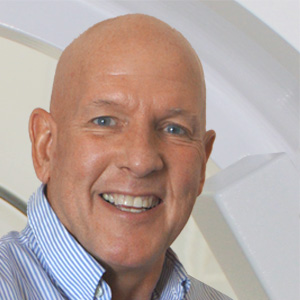
Thomas M. Fox, MAS,MS, CHT - Safety Director at Extivita RTP
Tom is the Research Physiologist for the Hyperbaric Institute for Research and Training, a division of Island Hyperbaric Centre in Pincourt QC. He has worked in the field of Clinical Hyperbaric Oxygen for the last 30 years. During this time, he has been intimately involved with the implementation and the development of the US Army’s Clinical Hyperbaric Service at Dwight David Eisenhower Army Medical Center. He has provided contract hyperbaric services since 1997. Prior to accepting his current position in Quebec, Canada, Mr. Fox served as the Chief of the Atmospherics Branch of the U.S. Army School of Aviation Medicine, Fort Rucker Alabama. In this capacity, he was responsible for hyperbaric/ hypobaric operations and training of US and NATO aviators, flight surgeons and flight medics. Mr. Fox is a senior army aviator and flew twelve years as a Medical Evacuation Pilot for the US Army.
Tom joined the Extivita team in 2022 as the Safety Director, helping Extivita to maintain a healthy and safe environment for exceptional patient care.
Extivita-RTP – Hyperbaric Oxygen Therapy Clinic
2012-D TW Alexander Drive
Durham, NC 27709
919-354-3775
919-354-3776
contact@extivita.org
https://www.extivita.org/
Subscribe Now, It’s Free!
Recent HBOT News
Senate VA Committee Passes Legislation on Hyperbaric Oxygen Therapy
Back in October 2019, at Senator Cramer’s invitation, VA Secretary Robert Wilkie and the Senator toured Healing with Hyperbarics of North Dakota, a Fargo-based HBOT clinic. Cramer states, “The primary point of the federal government is the defense of our nation. Part...
Clinical Trial – the Use of Magnesium Sulfate for Prevention of Postspinal Shivering
Shivering is an unpleasant experience after spinal anesthesia. Shivering is defined as an
involuntary, repetitive activity of skeletal muscles. The mechanisms of shivering in patients
undergoing surgery are mainly intraoperative heat loss, increased sympathetic tone, pain, and
systemic release of pyrogens. Spinal anesthesia significantly impairs the thermoregulation
system by inhibiting tonic vasoconstriction, which plays a significant role in temperature
regulation. Spinal anesthesia also causes redistribution of core heat from the trunk (below
the block level) to the peripheral tissues. These two effects predispose patients to
hypothermia and shivering. The median incidence of shivering related to regional anesthesia
observed in a review of 21 studies is 55%. Shivering increases oxygen consumption, lactic
acidosis, carbon dioxide production, and metabolic rate by up to 400%. Therefore, shivering
may cause problems in patients with low cardiac and pulmonary reserves. The best way to avoid
these intraoperative and postoperative shivering-induced increases in hemodynamic and
metabolic demands is to prevent shivering in the first place. Although magnesium is among
several pharmacological agents used for the treatment of shivering, its effects on prevention
of shivering during central neuraxial blockade have not been evaluated to date. Henceforth,
the aim of this study was to evaluate the effect of magnesiume on shivering during spinal
anesthesia.
Aim:
to compare the efficacy of intravenous versus intrathecal magnesium sulphate for prevention
of post spinal shivering in adult patients undergoing elective lower limb orthopedic
surgeries.
Clinical Trial – Comparing the Effects of Levobupivacaine and Bupivacaine in Saddle Spinal Anesthesia
İn this study; it was aimed to investigate the effects of equipotent doses of hyperbaric
bupivacaine and hyperbaric levobupivacaine in outpatient anorectal surgery under saddle
block. Sixty patients between the age of 18- 50 and in the risk group of ASA I-II included in
the study. 7,5 mg of 0,5% hyperbaric bupivacaine or 7,5 mg of 0,5% hyperbaric levobupivacaine
injected into the intrathecal space in sitting position through L4-L5 or L5-S1 intervertebral
space in 30 seconds. All patients kept in sitting position for 5 minutes with aid after
intrathecal injection and than layed in supine position, finally they positioned in prone
jack-knife. Hemodynamic parameters like NIBP, HR, SpO2, sensory and motor block
characteristics, duration of analgesia, time of first voiding, mobilization time, patient and
surgeon satisfaction, adverse effects and discharge time were recorded during and after
surgery.