
HBOT Conversations:
Elena Schertz & Tom Fox (Part 3) – Heart Disease
Elena Schetz, NP is the nurse practitioner, and Tom Fox is the Safety Director at Extivita-RTP. Extivita-RTP offers a positive environment for healing, and they encourage anyone seeking a better quality of life to come visit them and experience for themselves the wonder of Hyperbaric Oxygen Therapy.
Watch the Podcast
In a Special 5-part series with Extivita’s Nurse Practitioner, Elena Schertz, and Safety Director, Tom Fox, we dive into the extraordinary powers of HBOT, and the healing they have witnessed for a variety of conditions. The following segments preluding are as follows:
Part 1 – HBOT for PTSD (veteran focus)
Part 2 – Concussions & HBOT
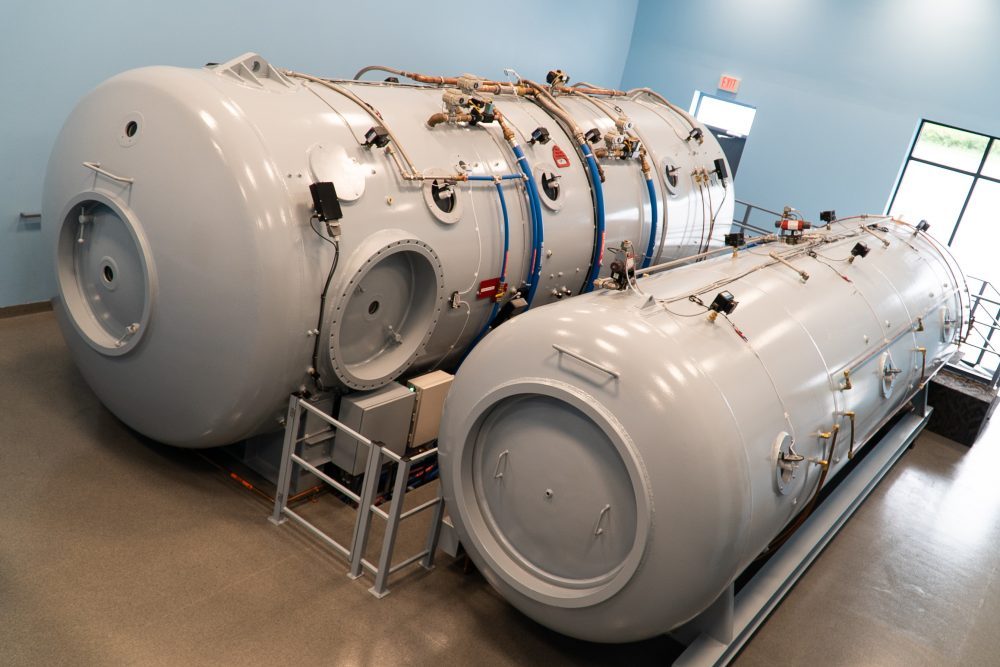
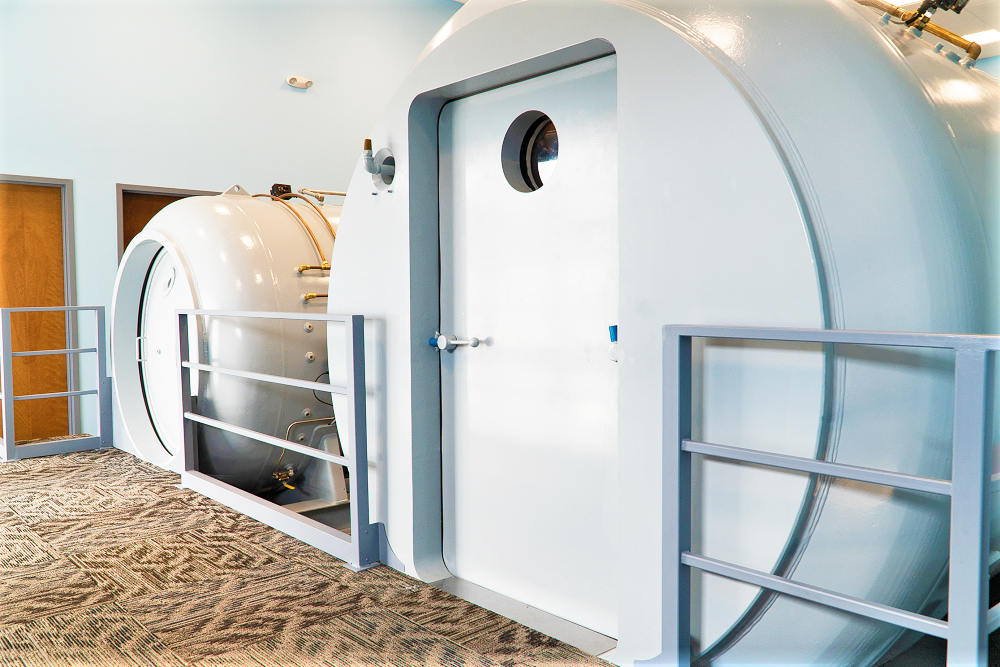
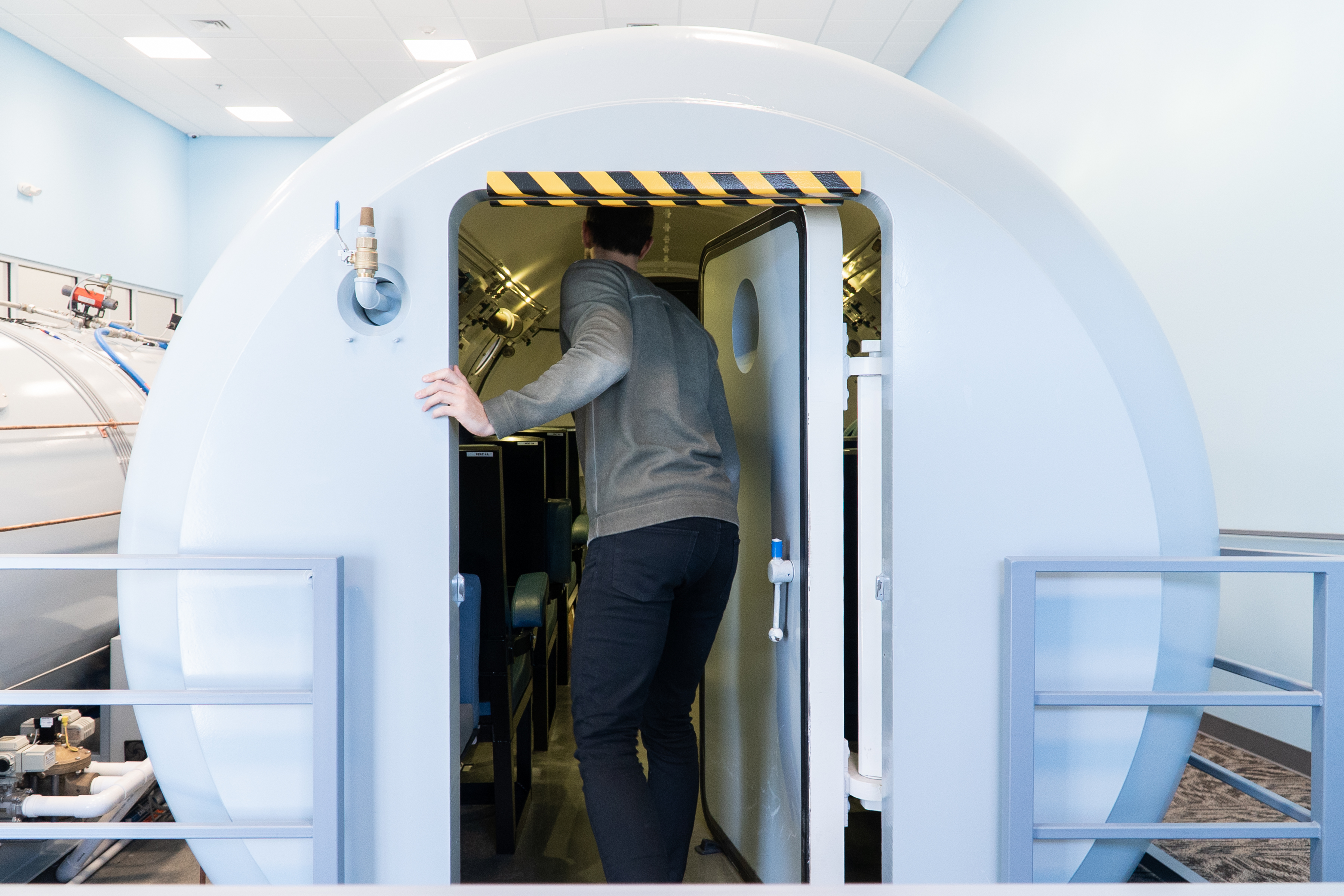
In Part 3 of 5, we discuss heart disease and how HBOT can help. Tom explains that one of the first cardiac patients he treated with HBOT was a necrosing cardiac surgical patient who had a necrosing sternum. The patient’s sternum was black before treatment, and after it was a fuchsia from the returned blood flow! The cardiac surgeon’s face was priceless as he witness this patient have such an incredible response to HBOT.
Tom states, “I think a lot of the physicians that are out there today, their reason why they haven’t considered hyperbarics is because they haven’t been exposed to it. If they were exposed and they could see what it was capable of doing, it would make the difference.”
Elena informs our host that she hasn’t had anyone come to Extivita to receive HBOT specifically for heart disease, but she has witnessed patients who were getting treated for other conditions benefit from HBOT for heart health. This is known through ejection fraction measurement, as Elena describes…
“I could say from about three people who have have reported improved ejection fraction from doing hyperbarics alone.”
di Girolamo reflects on a story where he heard from two HBOT patients in their late 60s, who had less than 50% heart function. They started to use hyperbarics for other reasons, and discovered that after 28 HBOT treatments they now had 70% heart function. When the Cardiologist asked with amazement, “What did you do?!”, they said we didn’t do anything — just HBOT diving.
The topic of myocarditis arises, and how HBOT can help. Myocarditis is inflammation around the heart, and in this case, hyperbaric oxygen therapy could have an intimate role in bringing about improvement to the condition. Tom continues to explain how people want to see studies, but most of the studies out there on HBOT are simply not good.
There’s never been a lot of studies about hyperbarics, and the structure of the studies comes into question. Because when we look at the hyperbaric studies that are out there, you look and see that they’re always comparing hyperbarics to slightly pressurized room air. You’ll see that traditionally how they write it up and it could be cerebral palsy, it could be post-traumatic stress disorder, the same write up, just replace the words. Both groups improved from baseline. However, there was no differentiation between the groups.
Tom goes into a discussion about a PhD student at the University of Wisconsin who went the extra mile and looked at the therapeutic effects of hyperbaric air – hyperbaric air at 1.3, slightly pressurized room air. And what he was able to do is document mobilization of stem cells. By doing so, that encouraged the medical community to rethink hyperbaric studies using hyperbaric air as the “control”.
Tom continues to dive into HBOT and heart health in general….
“Just by basis of how hyperbarics works, you can see why that did work, how that was very helpful for these folks who had myocardial infarctions. So with with the re-oxygenation of the heart, with the stem cell mobilization, with growth of new blood vessels, you could see how the heart does start to basically regenerate and get better and heal.”
When your heart is damaged from a heart attack, it’s like a wound in one of your organs or muscle. Hyperbarics is known to be incredibly beneficial for wound care, 1500 hospitals across our nation have HBOT chambers that are used often simply for wound care. So, if hypoxia and the inflammation resulting from a cardiac event is causing damage to the heart, hyperbaric oxygen therapy will work to naturally resolve and remove those two things. di Girolamo stresses that you don’t have to be an expert in HBOT to understand this, and if he had a bad heart he’d most certainly be getting hyperbaric treatments, and encourages you to do the same.
They mention that if you were to have a heart attack, inside a hyperbaric chamber is exactly where you’d want to be so you’re supersaturated with oxygen. This leads into the reasons why it’s important to pre-condition your body with oxygen prior to heart surgery, or really even any surgery. Tom references a study, “Research report: the effects of hyperbaric oxygen preconditioning on myocardial biomarkers of cardioprotection in patients having coronary artery bypass graft surgery” and explains that prepping your body for surgery can be critical in achieving a better outcome.
Tom explains, “The number one complication out of cardiac bypass surgery is post-cardiac surgical stroke. If you can actually precondition, you can avoid this.”
Cost savings and money for health and wellness remains a hot topic. Tom educates us that one of the chief things that has always been identified with how health care is practiced in the United States and Canada is it’s a for-profit industry. But, if we looked at reinstituting a payment process that actually rewarded people for being healthy, managing patients, and avoiding conditions, then we could transition the current medical industrial to be incentivized to make people healthier. If there was a way to ever do that, using hyperbaric oxygen therapy as one of the key treatments would surely be a huge leap in the right direction.
Guests

Elena Schertz, NP - Clinic Manager at Extivita RTP
Elena worked as a nurse in the pediatric oncology, cardiac, and surgical units at UNC hospitals for 15 years before deciding to work in integrative medicine. After years of working as a nurse, she decided to pursue her graduate degree, completing her masters with honors. She is board certified as a Family Nurse Practitioner (FNP) through the American Nurses Credentialing Center.
Elena’s passion for integrative medicine comes from her knowledge that the mind, body and psych/social/spiritual systems are not separate. The focus of Elena’s practice is to approach each of her patient’s healing process from the perspective of the whole, supported and grounded in safety and evidence-based medicine. She also maintains close consultative relationships with experts in the field to promote and enhance wellness for her patients. Elena joined the wonderful Extivita team in March 2019 and is thrilled to be a part of advancing health and wellness through hyperbaric medicine.

Thomas M. Fox, MAS,MS, CHT - Safety Director at Extivita RTP
Tom joined the Extivita team in 2022 as the Safety Director, helping Extivita to maintain a healthy and safe environment for exceptional patient care.
Extivita-RTP – Hyperbaric Oxygen Therapy Clinic
2012-D TW Alexander Drive
Durham, NC 27709
919-354-3775
919-354-3776
contact@extivita.org
https://www.extivita.org/
Subscribe Now, It’s Free!
Recent HBOT News
Clinical Trial – HBOT Late Radiation Tissue Injury
Background: Radiotherapy is a common treatment for many malignancies. Radiation-related
complications developing months or years after radiation treatment are known as late
radiation tissue injury (LRTI) and are estimated to effect 5%-15% of all long-term survivors
who have received radiation.
Hyperbaric oxygen therapy (HBOT) is a well established treatment of LRTI. Most of the studies
evaluating effect of HBOT on LRTI are focused on survival, resolution of tissue damage and
improvement in LENT-SOMA scale. Very few studies have addressed effect of HBOT on pain in
LTRI. Krahn and colleagues were the first to report the analgesic effect of HBOT in 3 cases
of refractory pain in oncological patients with radiation soft tissue injury. Other studies
showed significant improvement in pain intensity in patients with breast cancer and pelvic
malignancies treated with HBOT for LTRI. In patients that had developed radiation- induced
brachial plexopathy, HBOT elicited an increase in warm pain thresholds and a reduction in
lymphoedema. A prospective case study of 16 patients with gynecological cancer found no
changes with respect to pain and depression outcomes. A trial in patients with radiation
induced proctopathy showed that 75% of patients with rectal pain had some improvement,
although none experienced a complete resolution of pain symptoms.
There are several mechanisms by which HBOT may elicit analgesic effects. There is a growing
body of evidence that HBOT’s analgesic effect related to nitric oxide metabolism and
endogenous opioid secretion. Furthermore, the inhibition of tumor necrosis factor alph
(TNF-α), the production of substance P, and the modulation of serotonergic pathways have all
demonstrated a modification in the pain response following HBOT. In animal studies HBOT
decreased allodynia and hyperalgesia in different models of neuropathic and inflammatory
pain. The long lasting antinociceptive effect of HBOT was found to be dose-dependent in
non-injured tissues.
In human studies, HBOT decreased pain and edema and improved function in patients suffering
from the complex regional pain syndrome, and improved pain scores and range of motion in
patients with idiopathic femoral head necrosis. Women suffering from interstitial cystitis
demonstrated a reduction in pelvic pain following weeks and months of HBOT treatment. In
patients suffering from idiopathic trigeminal neuralgia HBOT produced a rapid reduction in
symptoms and these effects were lasting for 6 months following treatment. HBOT was also found
to be an effective treatment for cluster headaches and migraines and alleviated muscle and
bone pains in patients with myofascial syndrome, fibromyalgia, and biphosphonate-related
osteonecrosis of the jaw.
Based on the evidence presented above and HBOT’s known analgesic effect in many conditions,
the investigators designed this study with the objective to evaluate if HBOT reduces pain,
improves depression and impacts on patients quality of life in patients suffering from late
radiation tissue injury.
Study Design: Prospective observational study (n=300). Patients that have had radiation
therapy for malignancy, developed late radiation injury and suffer from chronic pain.
Clinical Trial – HBOT in Fibromyalgia
Fibromyalgia (FM) is a chronic pain condition affecting several millions of Canadians.
Although the etiology and pathophysiology are poorly understood, there is a well-recognized
association between muscular pain in fibromyalgia and muscular hypoperfusion, hypoxia,
abnormal muscle metabolism and oxidative stress. Currently there is no cure for FM.
Pharmacological and non-pharmacological strategies are directed to control symptoms such as
pain, fatigue, non-restorative sleep and depression.
Hyperbaric oxygen therapy (HBOT) is an intermittent inhalation of 100% oxygen in a hyperbaric
chamber at a pressure higher than 1 absolute atmosphere. Physiological effect of HBOT is
based on a dramatic increase in the amount of dissolved oxygen carried by the blood which
enables oxygenation of ischemic areas with compromised circulation. It also activates
oxidant-antioxidant system, stimulates angio- and neurogenesis, modulates inflammatory
response, induces brain neuroplasticity and possesses analgesic effect.
While some interventions offer benefit for some patients, additional treatment alternatives
are needed for patients with FM in whom currently available options are either ineffective or
poorly tolerated. Given its physiological effect, HBOT could be considered as a potential
therapy for treatment of underlying muscular hypoxia, optimizing oxidant- antioxidant system
and controlling FM symptoms. The results from this study could therefore provide new
information supporting the basic science underling the pathophysiology of this disease and
stimulate novel therapies for patients suffering with FM.
Thoracic spinal anesthesia is safe for patients undergoing abdominal cancer surgery.
Abstract: A double-blinded randomized controlled study to compare discharge time and patient satisfaction between two groups of patients submitted to open surgeries for abdominal malignancies using segmental thoracic spinal or general anesthesia. Open surgeries for...