
HBOT Conversations:
Elena Schertz & Tom Fox
(Part 5) – COVID
Elena Schetz, NP is the nurse practitioner, and Tom Fox is the Safety Director at Extivita-RTP. Extivita-RTP offers a positive environment for healing, and they encourage anyone seeking a better quality of life to come visit them and experience for themselves the wonder of Hyperbaric Oxygen Therapy.
Watch the Podcast
In a Special 5-part series with Extivita’s Nurse Practitioner, Elena Schertz, and Safety Director, Tom Fox, we dive into the extraordinary powers of HBOT, and the healing they have witnessed for a variety of conditions. The following segments prelude this episode:
Part 1 – HBOT for PTSD (veteran focus)
Part 2 – Concussions & HBOT
Part 3 – Healing Heart Disease with HBOT
Part 4 – Cancer & Cerebral Palsy
In this final episode, we discuss COVID, and how long-haulers are finally finding relief in Hyperbaric Oxygen Therapy.
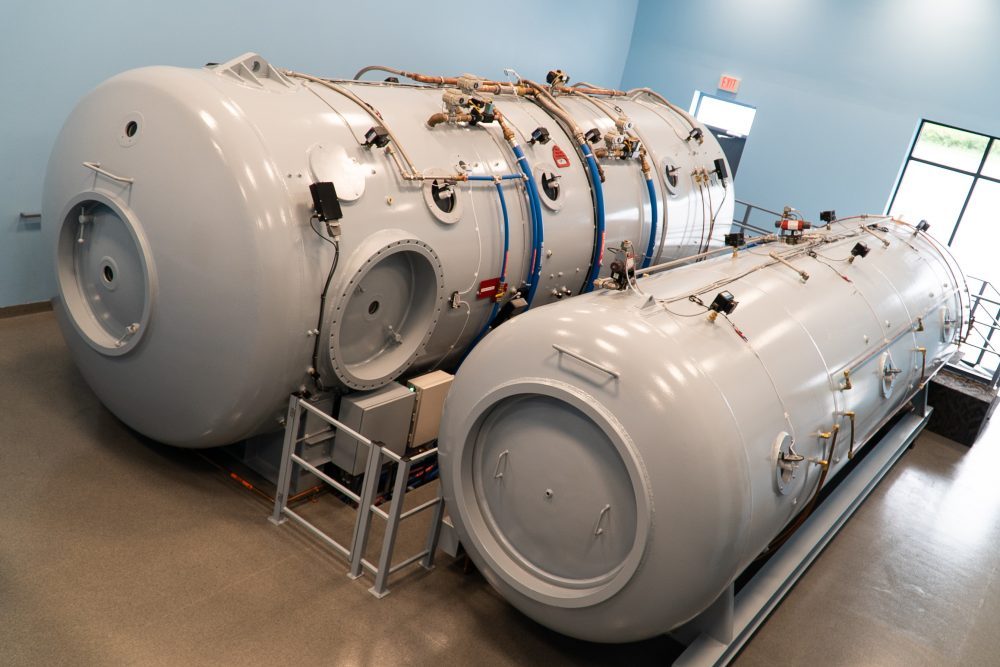
Host di Girolamo starts the conversation explaining that people who suffer from brain fog, oxygen shortages, and fatigue are discovering that HBOT is providing them relief. Tom chimes in that early oxygen delivery and pre-hospitalization was something the Italians saw in COVID as it progressed, and they discovered the role of HBOT in the acute care stage of COVID. The Italians witnessed patients who were heading in the wrong direction being released from the hospital after only 5 hyperbaric oxygen therapy treatments. The role of hyperbaric oxygen in COVID cases is incredible. Tom reminds us that only about 1,400 of the 6,500 hospital in the US have HBOT chambers, meaning that it is not a standard of care.
Studies out of Britain state ten HBOT treatments are ideal for COVID patients to witness a complete turn-around, and they get their lives back in two weeks. Tom explains that 40% of their patients are long-haul COVID and they’re coming to a HBOT clinic because there’s no other option. Hyperbaric Oxygen Therapy DOES return a COVID patient back to their baseline.
Chronic, or long-haul COVID patients (someone who has been dealing with symptoms for months or years) will likely need more treatments, but there is still so much hope. Elena says that the long-haul COVID patients who have come to see her have all improved. Elena has seen some long-haul COVID patients get better in as little as 4 treatments, and then there are some patients who need 40 treatments. Just like how everyone responds to COVID differently, the same goes for HBOT to treat COVID. There’s no magic number; but if you get in quicker then it’s more likely you won’t need as many treatments. In the end, it’s important to simply know that HBOT hands-down does help COVID patients, and it’s worth a try.
“Elena states, “I want to say it’s kind of easily fixed, you know, the fatigue. I’ve seen it over and over again. Until somebody comes in and disputes that or I see that, then I’ll keep saying, yeah, it really is very effective. I’ve seen it 100% of the time. It really is 100%”
And then there are the vaccine injuries. Tom stresses that he believes in the power of vaccines, he his definitely not an anti-vaxxer. But, when he looks at what’s going on in the world today it’s concerning. If you were to document a vaccine injury right now, it’s almost like the kiss of death to anybody that reaches out to challenge vaccines.
“We’re downplaying the VAER system. You know, in the current vaccine, with the number of reactions that we’ve seen with the current vaccine, previous vaccines would have been taken off the market.
HBOT News appreciates Tom and Elena joining us in our Conversations podcast and invites you to check out their clinic, Extivita-RTP if you are ever in the Raleigh, NC area.
Guests

Elena Schertz, NP - Clinic Manager at Extivita RTP
Elena worked as a nurse in the pediatric oncology, cardiac, and surgical units at UNC hospitals for 15 years before deciding to work in integrative medicine. After years of working as a nurse, she decided to pursue her graduate degree, completing her masters with honors. She is board certified as a Family Nurse Practitioner (FNP) through the American Nurses Credentialing Center.
Elena’s passion for integrative medicine comes from her knowledge that the mind, body and psych/social/spiritual systems are not separate. The focus of Elena’s practice is to approach each of her patient’s healing process from the perspective of the whole, supported and grounded in safety and evidence-based medicine. She also maintains close consultative relationships with experts in the field to promote and enhance wellness for her patients. Elena joined the wonderful Extivita team in March 2019 and is thrilled to be a part of advancing health and wellness through hyperbaric medicine.
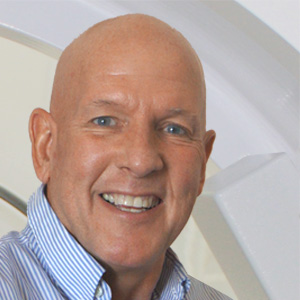
Thomas M. Fox, MAS,MS, CHT - Safety Director at Extivita RTP
Tom joined the Extivita team in 2022 as the Safety Director, helping Extivita to maintain a healthy and safe environment for exceptional patient care.
Extivita-RTP – Hyperbaric Oxygen Therapy Clinic
2012-D TW Alexander Drive
Durham, NC 27709
919-354-3775
919-354-3776
contact@extivita.org
https://www.extivita.org/
Subscribe Now, It’s Free!
Recent HBOT News
The wound/burn guidelines – 3: Guidelines for the diagnosis and treatment for diabetic ulcer/gangrene.
Abstract: We aimed to prepare guidelines for the management of diabetic ulcer/gangrene with emphasis on the diagnosis and treatment of skin symptoms. They serve as a tool to improve the quality of the diagnosis and treatment in each patient and, further, to improve...
Clinical Trial – HBOT Global Functioning After Stroke
Stroke is one of the leading causes of disability and death in North America and Europe. Up
to 30% of stroke survivors never recuperate completely and suffer from loss of function and
poor quality of life. To improve recovery after stroke, innovative interventions should be a
priority.
Hyperbaric oxygen therapy (HBOT) is an intermittent inhalation of 100% oxygen in a hyperbaric
chamber at a pressure higher than 1 absolute atmosphere (ATA). There is a growing body of
evidence that HBOT can enhance ability of brain to changes its structure (neuroplasticity) in
order to recover. Exercise program during HBOT can augment the effect. Although, recent
randomized controlled trials in patients with chronic brain injury showed promising results,
there are no studies demonstrating combine effect HBOT and exercise rehabilitation program on
stroke recovery.
The proposed study investigates feasibility, safety and efficacy of using a combination of
HBOT and exercise program to improve arm function recovery in chronic stroke patients. In
this pilot randomized control trial, investigators will compare the combination of HBOT and
the focused rehabilitation exercise program versus exercise program alone on recovery of arm
function in patients with chronic stroke.
Clinical Trial – Hyperbaric Oxygen Therapy and Acute Kidney Injury
Kidney injury is a serious complication of cardiac surgery that occurs in up to 30% of
patients and increases the risk of adverse outcomes. Kidney injury initiates when oxygen
supply to the kidney drops below levels that are needed for normal cellular function, causing
tissue oxygen deficiency (hypoxia), activation of the inflammatory cascade, and oxidative
stress. Together, these events further impair tissue oxygenation, culminating in impaired
kidney function due to cellular injury and death.
There are no effective therapies for kidney injury after cardiac surgery, but there is
evidence that recovery is possible if the processes of injury – i.e., impaired oxygen
delivery, increased inflammatory response, and oxidative stress – are ameliorated soon after
the onset of injury. Hyperbaric oxygen therapy (HBOT) – which entails the intermittent
inhalation of 100% oxygen in a hyperbaric chamber at a pressure higher than one absolute
atmosphere (> 760 mmHg) – has been shown to positively affect all of these processes (i.e.,
to improve tissue oxygenation, reduce inflammation, and reduce oxidative stress). Thus, we
hypothesized that HBOT will reduce the severity of kidney injury after cardiac surgery if it
is initiated soon after onset of injury. This hypothesis has not been tested in humans, but
is supported by animal studies.
In this first-in-human, unblinded, controlled pilot trial, 20 adult patients who develop
severe kidney injury soon after cardiac surgery will be randomized (after obtaining informed
consent from the patient or surrogate) to standard-of-care or early HBOT. Severe kidney
injury will be defined as a ≥30% drop in kidney function within 6 hours of surgery (as
determined by change in creatinine from before surgery to Intensive Care Unit (ICU)
admission). This degree of injury occurs in ~ 2% of patients and is associated with a 12-fold
increase in the risk of complete kidney failure (requiring dialysis) or death. Patients will
be excluded if they have any relative or absolute contraindications to HBOT (e.g., severe
ventricular dysfunction, ventricular assist device, severe respiratory dysfunction,
pneumothorax, bronchospasm).