
HBOT Conversations:
Elena Schertz & Tom Fox
(Part 5) – COVID
Elena Schetz, NP is the nurse practitioner, and Tom Fox is the Safety Director at Extivita-RTP. Extivita-RTP offers a positive environment for healing, and they encourage anyone seeking a better quality of life to come visit them and experience for themselves the wonder of Hyperbaric Oxygen Therapy.
Watch the Podcast
In a Special 5-part series with Extivita’s Nurse Practitioner, Elena Schertz, and Safety Director, Tom Fox, we dive into the extraordinary powers of HBOT, and the healing they have witnessed for a variety of conditions. The following segments prelude this episode:
Part 1 – HBOT for PTSD (veteran focus)
Part 2 – Concussions & HBOT
Part 3 – Healing Heart Disease with HBOT
Part 4 – Cancer & Cerebral Palsy
In this final episode, we discuss COVID, and how long-haulers are finally finding relief in Hyperbaric Oxygen Therapy.
Host di Girolamo starts the conversation explaining that people who suffer from brain fog, oxygen shortages, and fatigue are discovering that HBOT is providing them relief. Tom chimes in that early oxygen delivery and pre-hospitalization was something the Italians saw in COVID as it progressed, and they discovered the role of HBOT in the acute care stage of COVID. The Italians witnessed patients who were heading in the wrong direction being released from the hospital after only 5 hyperbaric oxygen therapy treatments. The role of hyperbaric oxygen in COVID cases is incredible. Tom reminds us that only about 1,400 of the 6,500 hospital in the US have HBOT chambers, meaning that it is not a standard of care.
Studies out of Britain state ten HBOT treatments are ideal for COVID patients to witness a complete turn-around, and they get their lives back in two weeks. Tom explains that 40% of their patients are long-haul COVID and they’re coming to a HBOT clinic because there’s no other option. Hyperbaric Oxygen Therapy DOES return a COVID patient back to their baseline.
Chronic, or long-haul COVID patients (someone who has been dealing with symptoms for months or years) will likely need more treatments, but there is still so much hope. Elena says that the long-haul COVID patients who have come to see her have all improved. Elena has seen some long-haul COVID patients get better in as little as 4 treatments, and then there are some patients who need 40 treatments. Just like how everyone responds to COVID differently, the same goes for HBOT to treat COVID. There’s no magic number; but if you get in quicker then it’s more likely you won’t need as many treatments. In the end, it’s important to simply know that HBOT hands-down does help COVID patients, and it’s worth a try.
“Elena states, “I want to say it’s kind of easily fixed, you know, the fatigue. I’ve seen it over and over again. Until somebody comes in and disputes that or I see that, then I’ll keep saying, yeah, it really is very effective. I’ve seen it 100% of the time. It really is 100%”
And then there are the vaccine injuries. Tom stresses that he believes in the power of vaccines, he his definitely not an anti-vaxxer. But, when he looks at what’s going on in the world today it’s concerning. If you were to document a vaccine injury right now, it’s almost like the kiss of death to anybody that reaches out to challenge vaccines.
“We’re downplaying the VAER system. You know, in the current vaccine, with the number of reactions that we’ve seen with the current vaccine, previous vaccines would have been taken off the market.
HBOT News appreciates Tom and Elena joining us in our Conversations podcast and invites you to check out their clinic, Extivita-RTP if you are ever in the Raleigh, NC area.
Guests

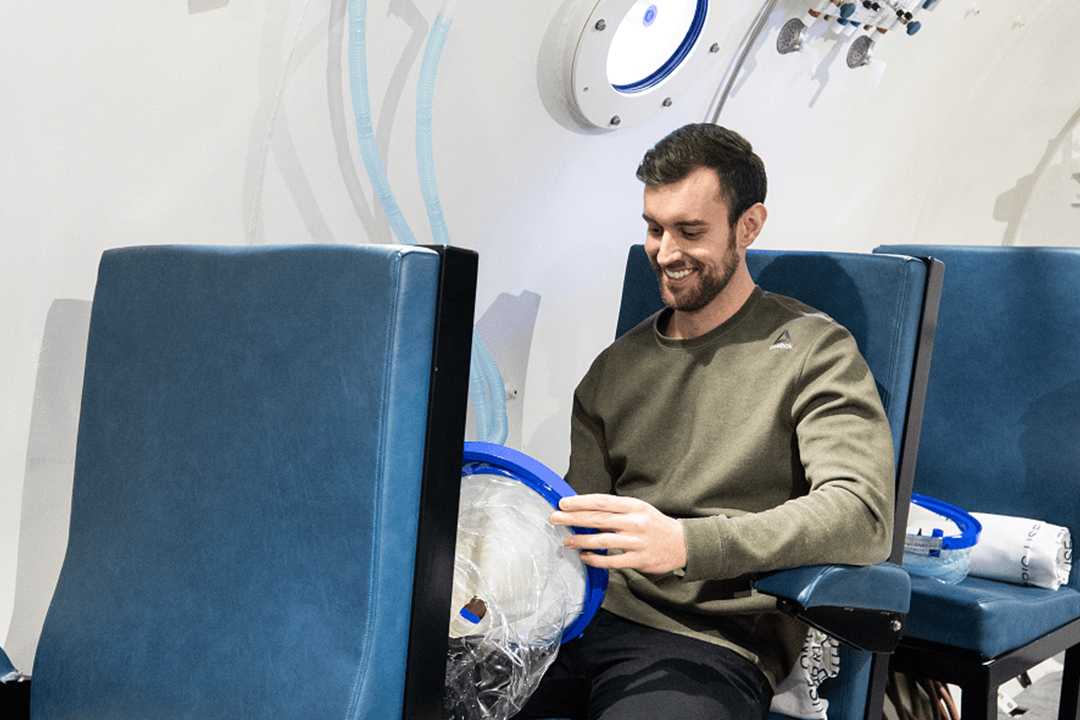
Elena Schertz, NP - Clinic Manager at Extivita RTP
Elena worked as a nurse in the pediatric oncology, cardiac, and surgical units at UNC hospitals for 15 years before deciding to work in integrative medicine. After years of working as a nurse, she decided to pursue her graduate degree, completing her masters with honors. She is board certified as a Family Nurse Practitioner (FNP) through the American Nurses Credentialing Center.
Elena’s passion for integrative medicine comes from her knowledge that the mind, body and psych/social/spiritual systems are not separate. The focus of Elena’s practice is to approach each of her patient’s healing process from the perspective of the whole, supported and grounded in safety and evidence-based medicine. She also maintains close consultative relationships with experts in the field to promote and enhance wellness for her patients. Elena joined the wonderful Extivita team in March 2019 and is thrilled to be a part of advancing health and wellness through hyperbaric medicine.
Thomas M. Fox, MAS,MS, CHT - Safety Director at Extivita RTP
Tom joined the Extivita team in 2022 as the Safety Director, helping Extivita to maintain a healthy and safe environment for exceptional patient care.
Extivita-RTP – Hyperbaric Oxygen Therapy Clinic
2012-D TW Alexander Drive
Durham, NC 27709
919-354-3775
919-354-3776
contact@extivita.org
https://www.extivita.org/
Subscribe Now, It’s Free!
Recent HBOT News
Orbital implant placement using a computer-aided design and manufacturing (CAD/CAM) stereolithographic surgical template protocol.
Abstract: Surgical implant placement in the orbital region for the support of a prosthesis is challenging due to the thin orbital rim and proximity to vital structures. This article reports the use of a computer-aided design and manufacturing (CAD/CAM)...
Clinical Trial – Haemodynamic Effects During Anorectal Surgery: a Comparison of the Jack -Knife and Lithotomy Position
Background and Goal of Study: Minimal dose of spinal hyperbaric bupivacaine is commonly
performed for adult anorectal surgery. This kind of anaesthesia can cause sinus bradycardia
and hypotension wich reason is body position, autonomic nervus system reaction, reflex
reaction even with low levels of sensory block. However, neither the publication of minimal
doses of spinal hyperbaric bupivacaine effects of haemodynamic modifications nor their
accuracy was widely discussed. The aim of the study is to make a comparison of the
haemodynamic modifications due to minimal dose of spinal hyperbaric bupivacaine for adult
anorectal surgery in lithotomy or jack knife position of steering impedance device.
Materials and Methods: Patients will be included which are over then 18 years old, who
underwent anorectal surgery of the benign pathology, requiring spinal anaesthesia, were
admitted in this clinical randomized study, hospitalized in Hospital of Lithuanian University
of Health Sciences Kaunas Clinics and agree to participate to this study (written
settlement). All patients were implicitly divided in to 4 groups by the position will be
operating (lithotomy or jack knife position and by American Society of Anaesthesiologists
(ASA) clas I-II and III-IV). Technique of anaesthesia were strictly standardized by protocol.
All patients were premedicated with oral diazepam 5mg and diclofenac 100mg 60min before
operation. After arrival in the operating theater peripheral vein 18 or 20G catheter was
inserted, infusion therapy were started with crystalloid 5-7ml/kg/hour. Standard monitoring
was used, including noninvasive arterial blood pressure (BP), electrocardiography (ECG),
heart rate, peripheral oxygenation. Circulatory changes were recorded impedance device. 2
single-neck sensors connected vertically on both sides of the neck just below the ears lobe.
Another pair of sensors attached on both sides of the chest processus xiphoid axillary line
level. Thorax allows a variable electrical current, it travels through the lowest resistance
(blood-filled aorta) and resistance is measured. For each heart contraction during changes in
blood volume and velocity. Accordingly, replacing the resistors obtained by impedance
settings.
Haemodynamic variables were recorded in patients in the use of impedance cardiograph:
1. arrives in the operating room;
2. seating on the operating table;
3. following the puncture;
4. 10 min after spinal puncture;
5. was laid in lithotomy or jack knife position;
6. in the beginning and the end of the operation;
7. patient was placed in the bed.
Each measurement was monitoring and recorded the following data( ar findings):
– Cardiac output (CO);
– Systemic vascular resistance (SVR);
– Systolic index (SI)
– Cardiac index (CI);
– Acceleration index (ACI);
– Heart rate (HR);
– Non-invasive systolic (SAP), diastolic (DAP) and mean (MAP) blood pressure;
– Peripheral oxygenation (SpO2); Patients were placed in the sitting position on the slab
(operating table) back to the doctor. Dural puncture was made at L3-L4 or L4-L5 with 27G
Tamanho spinal needle ( BBraun, Germany) by medial punction in aseptic condition, before
the punction was injected lidocaine 1% subcutaneous. 0.5% 4mg of heavy bupivacaine and
0.01% 10µg fentanyl were injected over 2 minutes after free flow of cerebrospinal fluid
was obtained. After sitting for 10 minutes ( sensory block was checked by the dermatomes
with the methods of cold sensitivity) patients were asked to lie in the position wich
operation will be done (lithotomy or jack knife position).
After 20 min. surgery was started. When anaesthesia was imperfect, 25-100µg of fentanyl was
given IV. General anaesthesia will be give in case of failure . These cases will be value
like a failure, patients will be exclude from the study.
Clinically significant hypotension will be define as a mean arterial blood pressure and heart
rate decrease of 20% below baseline values. Systolic arterial blood pressure will reduce to
90mmHG limit, intravenous ephedrine 5-10 mg will be injected. If heart rate will reduce to 45
bpm, bradycardia will be treated with atropine 0,5 mg IV.
Combined free tissue transfer for the management of composite Achilles defects: functional outcomes and patient satisfaction following thigh-based vascularized reconstruction with a neotendon construct.
Abstract: Functional outcomes and quality-of-life measures following salvage reconstruction of composite Achilles/posterior leg defects are limited. We present our experience with combined Achilles defect reconstruction utilizing free tissue transfer with...