
HBOT Conversations:
A Story of Hope with Ernie Harrison
Watch the Podcast
HBOT News Network welcomes Army veteran, Ernie Harrison. Ernie is here to share with us his story of hope and how Hyperbaric Oxygen Therapy has breathed new life into him.
Ernie’s story of combat starts with his deployment to Afghanistan. The first week there, an IED goes off while he’s in the vehicle and other members of his unit hit a pressure petal landmine that killed one guy and blew off another guy’s leg. At that moment, Ernie knew they were in the heat of it.
His first Traumatic Brain Injury (TBI) occurred when he fell into an old abandoned well trying to navigate the darkness of the desert. He fell head first into a hole that was about 10 foot deep, 18 foot wide, and full of bricks and concrete. When he was coming to he couldn’t feel his fingers or his toes, and felt paralyzed. By the grace of God, Ernie was able to crawl out of the hole and a medic saw him and helped. Ernie was left with nerve damage in his neck and back, and had six staples placed in his frontal lobe. Of course, he had a concussion too, but because he was in the middle of a combat zone he only had 30-days of rehab before getting back on the battlefield.
His second concussion happened after deployment, during a routine jump in the 82nd Airborne. His parachute was “cigarette rolled”. When this happens, you are falling at an extremely fast speed and you have to take appropriate measures in the sky to swing your way out of it. By the time Ernie was able to complete the spin and open his chute, he was already at tree level. He hit the ground at a drastic speed, hitting his temporal lobe in the back, causing yet another TBI.
Ernie was then suffering from a frontal & rear concussion!! It was immediately after he learned of his sister’s hospital visits and concerning struggles with spinal bifida, that Ernie decided to get out of the Army on a hardship.
Due to his multiple concussions, Ernie noticed that he couldn’t concentrate like he used to. He would have to read something over and over to understand it. He decided the next step he’d like to take in his career is to join the fire service. He became a Fireman serving his local municipality. Yet, wearing all the gear, the high speed rides to the calls, the darkness and smoke during the call, and the trauma triggered something in Ernie that he never thought was possible. Ernie started to have panic attacks for the first time ever, and he learned through those panic attacks that being a Fireman is triggering post-traumatic stress from his time in combat. However, he continued in the fire service serving his community for close to a decade in Greenville, NC.
When a position opened up for a paramedic, he decided that would be a good move for him because he was dedicated to helping people, yet needed something that wasn’t quite so triggering. It indeed did prove to be a good fit, and he is still doing that job today. Ernie currently works 24 hours on and 72 hours off; he likes that it’s not quite so demanding and allows him more time at home. But, he still was having PTSD and TBI issues.
Ernie thanks Henry Hinton’s morning radio talk show out in Eastern North Carolina for the opportunity to learn about the HBOT for veterans program. He believes Jim Hooker was the one who was being interviewed and chatting about it. Ernie couldn’t believe what he was hearing…. There’s something out there that wasn’t a pill and more medication that could not only help his PTSD, but also maybe even cure the post-concussion syndrome problems that he’s had for years?! It sounds too simple; sounds too good to be true.
This information really peaked Ernie’s interest to know more about Hyperbaric Oxygen Therapy and how it works to heal the symptoms of TBIs and PTSD. Ernie listened to a podcast by Damian Porter in Australia, who just happened to have a doctor in Florida on who was a former Navy diver for 28 years talking about the effects of HBOT in helping to cure TBI and related issues. Ernie was in a place where he needed a change. He submitted the application through HBOT for Vets, and he started his 40-dive protocol over at Extivita-RTP, with ANAM testing throughout to monitor his progress.
At the time of this interview, Ernie was half-way through his 40-dives. After the first week (10 dives in) Ernie reports having more energy, sleeping better, less frequent spouts of anger and anxiety. His wife was noticing a big, positive difference in Ernie. Then, the second week (20 dives in) Ernie reports that his sense of smell started to return, he hasn’t been able to smell anything since he has COVID. He contributes all the positive changes to completing the Hyperbaric Oxygen Therapy treatments, because he hasn’t been doing anything else but two dives a day, for five days straight; while returning home to Eastern NC on the weekends to see his family. He is completely focused on his treatment, and says he took FMLA to do this and is staying at a hotel only a few miles from the clinic Monday – Thursday.
Ernie has started to read The Oxygen Revolution, and recommends the book to anyone wanting to know more about what’s happening in your body when you combine oxygen + pressure in the form of Hyperbaric Oxygen Therapy. Dr. Harch lays it all out in a way that is very easy for the general public to understand.
Ernie says there’s a great need here, not only for veterans to heal with hyperbarics, but for the paramedics, firemen, doctors, and nurses to go in the chamber and get this therapy. They are all burnt out from the pandemic, and he absolutely thinks this could be a game-changer to give them the same peace, rest, and healing that he’s experienced.
Guest
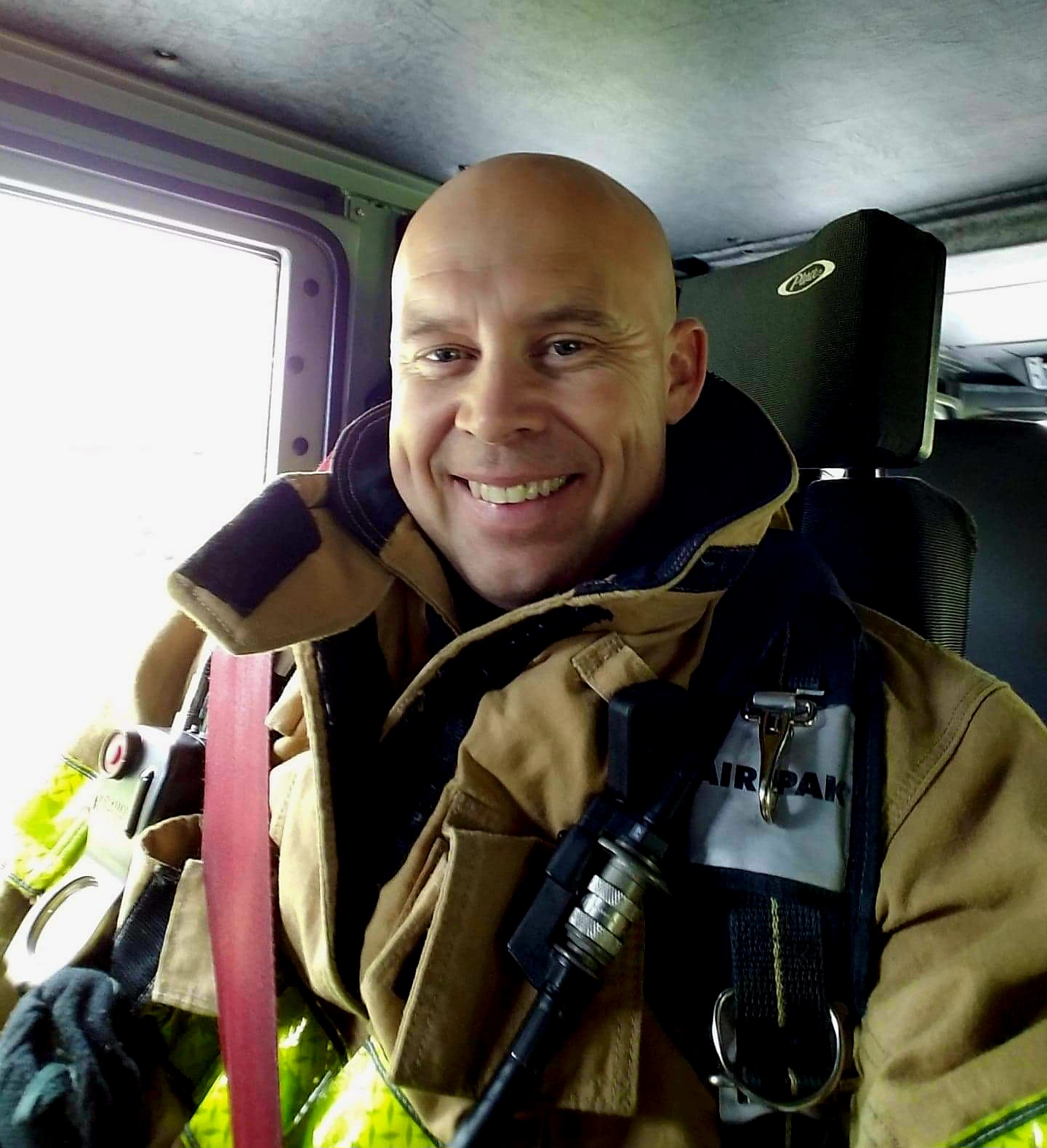
Ernie Harrison
Ernie has struggled with anxiety, depression, brain fog and migraines that stemmed from his head injuries. He claims that Hyperbaric Oxygen Therapy has helped him tremendously to relieve many of these debilitation symptoms. He has now completed over 40 treatments of Hyperbaric Oxygen Therapy at Extivita-RTP.
Ernie is passionate about helping others, and has started a podcast. The Balanced Man is an insightful way to gain wisdom on navigating life while seeking balance spiritually, physically, emotionally, mentally, and financially.
Subscribe Now, It’s Free!
Recent HBOT News
Can a pin-tract infection cause an acute generalized soft tissue infection and a compartment syndrome?
Abstract: A patient who developed soft tissue infection and osteomyelitis secondary to pin tract infection after skeletal traction was evaluated. Tibial traction was performed on a patient who had exposed to a femoral pertrochanteric fracture after falling from a tree...
Clinical Trial – Hyperbaric Oxygen in Lower Leg Trauma
Study hypothesis :Hyperbaric Oxygen may prevent complications and improve outcomes in severe
lower limb trauma. We propose to investigate this hypothesis by conducting an International
multi centre randomised control trial of standard trauma/orthopaedic care with or without a
concurrent course of hyperbaric oxygen treatments.
Clinical Trial – Can Erythropoietin Protect the Cerebral Blood Flow and Oxygenation During Simulated Dive?
During facial cooling and especially during breath hold, can mammals – and also humans –
elicit a so called dive reflex, causing bradycardia, peripheral vasoconstriction and
centralization of blood flow to brain, lungs and heart but the reflex is suppressed by
physical activity. The dive reflex can be elicited by breath hold alone and will be more
pronounced during simultaneously facial cooling, but not by stimulation of other skin
receptors.
The dive reflex has an oxygen conserving effect, because of intense vasoconstriction in both
viscera and muscles, and simultaneously with reduction in cardiac output (CO). Therefore
plasma lactate will rise, to compensate for the lesser regional blood flow. If one
hyperventilates with 100 % oxygen, then the reflex can still be elicited, but it is more
pronounced during asphyxia. Experienced sports divers, who has been diving for more than 7-10
years have reduced post apnea acidosis and oxidational stress, but probably also less
sensitivity for progressive hypoxia and hypercapnia, because these individuals have a more
pronounced dive reflex.
Transcranial Doppler ultrasonography (TCD) gives a reproducibly value for brain perfusion by
continuously non-invasive real-time sampling. A single piezo-electrical transducer sends and
collects ultrasound through the temporal region of the scull, where it is the thinnest.
Hereby can the blood flow of arteria cerebri anterior, media (MCA) and posterior and
basilaris be estimated.
With TCD it can be shown that the cerebral blood flow rises in MCA in healthy subjects during
facial cooling, with normal ventilation, when resting in a supine position without affecting
the systemic blood pressure. Single Photon Emission Computerized Tomography (SPECT)-scanning
during normo-baric and hyperbaric pressure of professional divers breathing 100 % oxygen has
shown to reduce the cerebral blood flow in several regions of the brain.
But it is yet unknown how brain blood flow and metabolism are affected by an "face immersion
dive" and simultaneously prolonged physical activity, and hence a rise in lactate under
hyperbaric pressure (3 meters), breathing atmospheric air, similar to the circumstances for
trained scuba divers work.
Presumably it will cause a fall in brain blood flow and in time cognitive deficits.
Erythropoietin (rhEPO) is a well known drug, used as doping in sports for about 15 years. So
far the only known enhancement in athletic achievement by rhEPO is caused by peripheral
improvements and especially blood capability to transport oxygen to the working muscles; this
has been documented by a rise in haematocrit. rhEPO has also a neuroprotective effect on
neurons in patients with neuron damage caused by cerebral hypoxic ischeamia.
rhEPO work also on a series of cerebral mechanisms, including enhanced motor and spatial
learning and more. Enhanced motor learning may improve the professional divers choices during
work and may be also physical performance and mechanical efficiency. Intravenous injection of
rhEPO will increase rhEPO in cerebrospinal fluids, since rhEPO is capable of crossing blood
brain. All together this may indicate that rhEPO, not only works on physical performance, but
also has effects on the brain. rhEPO has also an effect on the condition of cancer and
dialysis patients, not only explained by merely increased hematocrit.
This project will add new knowledge in the understanding of the mechanisms of clinical use of
rhEPO.
The purpose of this study is to investigate, how brain blood flow and metabolism are affected
by face immersion dive and simultaneously breath hold during normo-baric and hyperbaric
pressure (3 m depth) when breathing atmospheric air in trained sports divers. IL-6, HSP-72,
lactate, ammonium and body-temperature will be measured. Brain and muscle oxygenation will be
measured by near-infrared spectroscopi (NIRS). Furthermore we will investigate whether a
small dose of rhEPO affects mentioned parameters during simulated dive in pressure chamber
with facial cooling.
Hypothesis Brain blood flow in trained divers will be diminished during prolonged physical
activity during simultaneously face immersion dive and breath hold under hyperbaric pressure.
There will be a release of IL-6 and HSP-72. Pretreatment with a small amount of rhEPO before
prolonged physical activity during simulated dive has a protective effect on brain blood flow
and oxygenation.