
HBOT Conversations:
A Story of Hope with Ernie Harrison
Watch the Podcast
HBOT News Network welcomes Army veteran, Ernie Harrison. Ernie is here to share with us his story of hope and how Hyperbaric Oxygen Therapy has breathed new life into him.
Ernie’s story of combat starts with his deployment to Afghanistan. The first week there, an IED goes off while he’s in the vehicle and other members of his unit hit a pressure petal landmine that killed one guy and blew off another guy’s leg. At that moment, Ernie knew they were in the heat of it.
His first Traumatic Brain Injury (TBI) occurred when he fell into an old abandoned well trying to navigate the darkness of the desert. He fell head first into a hole that was about 10 foot deep, 18 foot wide, and full of bricks and concrete. When he was coming to he couldn’t feel his fingers or his toes, and felt paralyzed. By the grace of God, Ernie was able to crawl out of the hole and a medic saw him and helped. Ernie was left with nerve damage in his neck and back, and had six staples placed in his frontal lobe. Of course, he had a concussion too, but because he was in the middle of a combat zone he only had 30-days of rehab before getting back on the battlefield.
His second concussion happened after deployment, during a routine jump in the 82nd Airborne. His parachute was “cigarette rolled”. When this happens, you are falling at an extremely fast speed and you have to take appropriate measures in the sky to swing your way out of it. By the time Ernie was able to complete the spin and open his chute, he was already at tree level. He hit the ground at a drastic speed, hitting his temporal lobe in the back, causing yet another TBI.
Ernie was then suffering from a frontal & rear concussion!! It was immediately after he learned of his sister’s hospital visits and concerning struggles with spinal bifida, that Ernie decided to get out of the Army on a hardship.
Due to his multiple concussions, Ernie noticed that he couldn’t concentrate like he used to. He would have to read something over and over to understand it. He decided the next step he’d like to take in his career is to join the fire service. He became a Fireman serving his local municipality. Yet, wearing all the gear, the high speed rides to the calls, the darkness and smoke during the call, and the trauma triggered something in Ernie that he never thought was possible. Ernie started to have panic attacks for the first time ever, and he learned through those panic attacks that being a Fireman is triggering post-traumatic stress from his time in combat. However, he continued in the fire service serving his community for close to a decade in Greenville, NC.
When a position opened up for a paramedic, he decided that would be a good move for him because he was dedicated to helping people, yet needed something that wasn’t quite so triggering. It indeed did prove to be a good fit, and he is still doing that job today. Ernie currently works 24 hours on and 72 hours off; he likes that it’s not quite so demanding and allows him more time at home. But, he still was having PTSD and TBI issues.
Ernie thanks Henry Hinton’s morning radio talk show out in Eastern North Carolina for the opportunity to learn about the HBOT for veterans program. He believes Jim Hooker was the one who was being interviewed and chatting about it. Ernie couldn’t believe what he was hearing…. There’s something out there that wasn’t a pill and more medication that could not only help his PTSD, but also maybe even cure the post-concussion syndrome problems that he’s had for years?! It sounds too simple; sounds too good to be true.
This information really peaked Ernie’s interest to know more about Hyperbaric Oxygen Therapy and how it works to heal the symptoms of TBIs and PTSD. Ernie listened to a podcast by Damian Porter in Australia, who just happened to have a doctor in Florida on who was a former Navy diver for 28 years talking about the effects of HBOT in helping to cure TBI and related issues. Ernie was in a place where he needed a change. He submitted the application through HBOT for Vets, and he started his 40-dive protocol over at Extivita-RTP, with ANAM testing throughout to monitor his progress.
At the time of this interview, Ernie was half-way through his 40-dives. After the first week (10 dives in) Ernie reports having more energy, sleeping better, less frequent spouts of anger and anxiety. His wife was noticing a big, positive difference in Ernie. Then, the second week (20 dives in) Ernie reports that his sense of smell started to return, he hasn’t been able to smell anything since he has COVID. He contributes all the positive changes to completing the Hyperbaric Oxygen Therapy treatments, because he hasn’t been doing anything else but two dives a day, for five days straight; while returning home to Eastern NC on the weekends to see his family. He is completely focused on his treatment, and says he took FMLA to do this and is staying at a hotel only a few miles from the clinic Monday – Thursday.
Ernie has started to read The Oxygen Revolution, and recommends the book to anyone wanting to know more about what’s happening in your body when you combine oxygen + pressure in the form of Hyperbaric Oxygen Therapy. Dr. Harch lays it all out in a way that is very easy for the general public to understand.
Ernie says there’s a great need here, not only for veterans to heal with hyperbarics, but for the paramedics, firemen, doctors, and nurses to go in the chamber and get this therapy. They are all burnt out from the pandemic, and he absolutely thinks this could be a game-changer to give them the same peace, rest, and healing that he’s experienced.
Guest
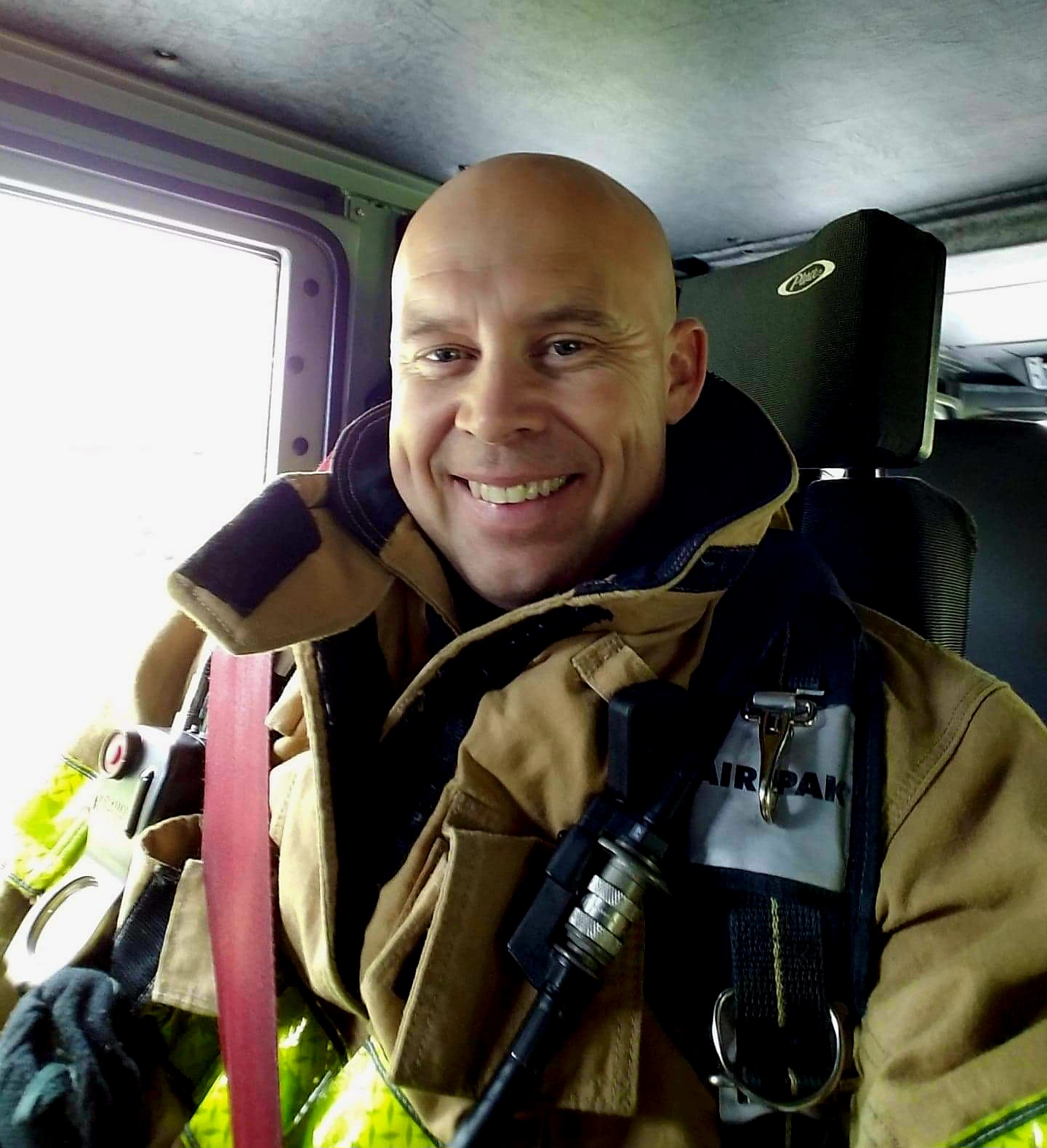
Ernie Harrison
Ernie has struggled with anxiety, depression, brain fog and migraines that stemmed from his head injuries. He claims that Hyperbaric Oxygen Therapy has helped him tremendously to relieve many of these debilitation symptoms. He has now completed over 40 treatments of Hyperbaric Oxygen Therapy at Extivita-RTP.
Ernie is passionate about helping others, and has started a podcast. The Balanced Man is an insightful way to gain wisdom on navigating life while seeking balance spiritually, physically, emotionally, mentally, and financially.
Subscribe Now, It’s Free!
Recent HBOT News
Senate VA Committee Passes Legislation on Hyperbaric Oxygen Therapy
Back in October 2019, at Senator Cramer’s invitation, VA Secretary Robert Wilkie and the Senator toured Healing with Hyperbarics of North Dakota, a Fargo-based HBOT clinic. Cramer states, “The primary point of the federal government is the defense of our nation. Part...
Clinical Trial – the Use of Magnesium Sulfate for Prevention of Postspinal Shivering
Shivering is an unpleasant experience after spinal anesthesia. Shivering is defined as an
involuntary, repetitive activity of skeletal muscles. The mechanisms of shivering in patients
undergoing surgery are mainly intraoperative heat loss, increased sympathetic tone, pain, and
systemic release of pyrogens. Spinal anesthesia significantly impairs the thermoregulation
system by inhibiting tonic vasoconstriction, which plays a significant role in temperature
regulation. Spinal anesthesia also causes redistribution of core heat from the trunk (below
the block level) to the peripheral tissues. These two effects predispose patients to
hypothermia and shivering. The median incidence of shivering related to regional anesthesia
observed in a review of 21 studies is 55%. Shivering increases oxygen consumption, lactic
acidosis, carbon dioxide production, and metabolic rate by up to 400%. Therefore, shivering
may cause problems in patients with low cardiac and pulmonary reserves. The best way to avoid
these intraoperative and postoperative shivering-induced increases in hemodynamic and
metabolic demands is to prevent shivering in the first place. Although magnesium is among
several pharmacological agents used for the treatment of shivering, its effects on prevention
of shivering during central neuraxial blockade have not been evaluated to date. Henceforth,
the aim of this study was to evaluate the effect of magnesiume on shivering during spinal
anesthesia.
Aim:
to compare the efficacy of intravenous versus intrathecal magnesium sulphate for prevention
of post spinal shivering in adult patients undergoing elective lower limb orthopedic
surgeries.
Clinical Trial – Comparing the Effects of Levobupivacaine and Bupivacaine in Saddle Spinal Anesthesia
İn this study; it was aimed to investigate the effects of equipotent doses of hyperbaric
bupivacaine and hyperbaric levobupivacaine in outpatient anorectal surgery under saddle
block. Sixty patients between the age of 18- 50 and in the risk group of ASA I-II included in
the study. 7,5 mg of 0,5% hyperbaric bupivacaine or 7,5 mg of 0,5% hyperbaric levobupivacaine
injected into the intrathecal space in sitting position through L4-L5 or L5-S1 intervertebral
space in 30 seconds. All patients kept in sitting position for 5 minutes with aid after
intrathecal injection and than layed in supine position, finally they positioned in prone
jack-knife. Hemodynamic parameters like NIBP, HR, SpO2, sensory and motor block
characteristics, duration of analgesia, time of first voiding, mobilization time, patient and
surgeon satisfaction, adverse effects and discharge time were recorded during and after
surgery.