
HBOT Conversations:
Evan Fernandez
Warriors on the Water
Evan served in the US Marine Corp, and is currently the President and Founder of Warriors on the Water, USA. Warriors on the Water is a non-profit chartered fishing company that seeks to change a veteran’s perspective on life through natural remedies of healing being on the ocean and surrounded by nature. They offer veterans an opportunity to view their struggles through an alternate perspective; teaching that we cannot change the things that happen, but we can change our reaction.
Watch the Podcast
HBOT News Network welcomes Evan Fernandez with Warriors on the Water. Evan is an Iraq & Afghanistan Marine Corps combat veteran. He exited the Marine Corps honorably in 2007, but not before he sustained substantial injuries while in combat. He is currently going through Hyperbaric Oxygen Therapy treatments.
Evan tells us how he sustained another head injury about four years ago, and the result of that injury brought back a lot of painful memories and even more cognitive mental decline. He noticed that the multiple TBIs (traumatic brain injuries) have caused him difficulty in concentration & focus, and he was making a lot of mistakes. The injuries affected his sleep and also caused him to feel a debilitating sense of stress and frustration.
He has now completed 29 HBOT treatments, and gives insight into how he is feeling. After his first HBOT dive, Evan tells us that he was in tears. The very first treatment was emotionally overwhelming as it felt like his body was finally starting to come alive. He was feeling free, like he was breaking free of the chains that held him back and made him feel like he was stuck in his own head. After the first dive, he could even already start to feel the pain diminish.
Evan claims that HBOT has given him an opportunity to regain and sharpen his cognitive abilities, and with a much clearer mind. He is finding that he is able to enjoy things and events more, and is allowing himself to simply be present in the moment. Evan even started exercising after noticing his energy levels were ramping up after the HBOT dives, something else he hasn’t has the desire to do in years.
Evan is extremely grateful for the positive changes HBOT has already given him, as he’s feeling like he’s finally getting his life back.
Beyond his personal testimony, Evan is also here to tell us about Warriors on the Water. Warriors on the Water is a non-profit organization that Evan started leaving the military. They run fishing charters across the entire state of Florida — everywhere from the panhandle, northeast Saint Augustine, and down the East Coast into the Keys. The organization helps veterans and military service members who are experiencing PTSD, depression or anxiety as a result of service enjoy some R&R time, while becoming one with nature and the ocean. It’s an experience that becomes so much more than just a deep-sea fishing trip (where, by the way, they always guarantee you’re going to catch some fish because some of the best charter captains in the state are running their charters).
Once you board the boat, you start to immediately build camaraderie with the other veterans onboard, and you are then transported into this extremely positive environment where you can celebrate your triumphs and feel like you’re part of a team and a mission. The entire experience is designed to leave a beautiful, everlasting impact on a veteran’s memory and soul. Evan explains that Warriors on the Water is running more veteran trips out of North Carolina now, and they have also have plans to grow and expand across the coast.
di Girolamo asks how the program is funded, and Evan stresses that there has unfortunately been a lack of funding for the program over the past couple of years. The program is currently seeking funding through donations and sponsorships. If you’d like to donate to the cause or sponsor a fishing tournament for this wonderful organization that helps veterans have an experience of a lifetime, please visit Warriors on the Water at https://warriorsfish.org/donate/.
Guest
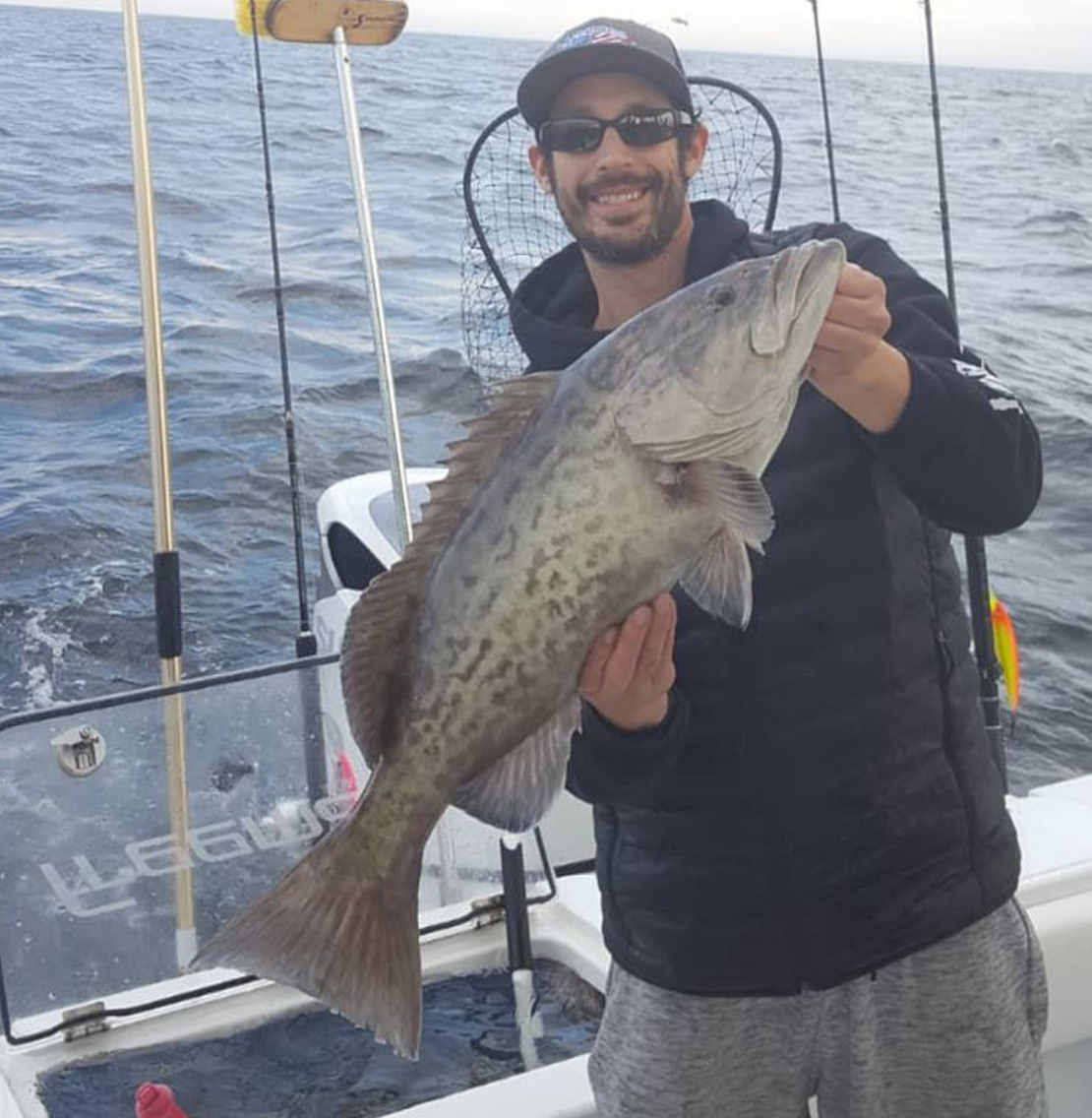
Evan Fernandez
Evan served in the US Marine Corp, and is currently the President and Founder of Warriors on the Water, USA.
Warriors on the Water, USA is an official 501(c)(3) veteran, non-profit organization based in Sarasota, Florida. Their primary focus is to facilitate and fund a positive outlet through fishing charters for veterans and military service members that experience anxiety, depression, or PTSD related issues as a result of their military service. Warriors on the Water offers our military service members a chance to meet other veterans from all branches and occupations to network and team build with a sense of camaraderie.
Due to the alarming veteran suicide rate, Warriors on the Water, USA seeks to change a veteran’s perspective on life through natural remedies of healing being on the ocean and surrounded by nature. They offer veterans opportunities to view their struggles through an alternate perspective; teaching that we cannot change the things that happen, but we can change our reaction.
Warriors on the Water USA, Inc. is committed to ensuring a positive environment coupled with an amazing experience that will have an everlasting impact on the veteran. Please consider donating to this wonderful non-profit organization.
Subscribe Now, It’s Free!
Recent HBOT News
Clinical Trial – Quality of Recovery After General or Spinal Anesthesia for Inguinal Hernia Repair
Different anesthetic techniques have been proposed for carrying out Inguinal hernia repair,
including local anesthesia, regional and general. There are no recent data on the application
of a validated questionnaire to assess which anesthetic technique, local infiltration under
general anesthesia or spinal anesthesia, would provide better quality of recovery in the
opinion of the patients undergoing inguinal hernia repair. The aim of the study is to perform
a randomized clinical trial comparing the quality of recovery (QoR-40) after local
infiltration under general anesthesia via laryngeal mask (LMA) or spinal anesthesia for
unilateral inguinal hernia repair. METHODS – Seventy patients aged 18 to 65 years old, who
were scheduled to undergo unilateral inguinal hernia repair at Santa Lucinda Hospital will be
enrolled in the study. The anesthesia will be performed according to the following sequence:
L Group – intravenous (I.V.) propofol and alfentanyl, followed by LMA positioning. The
anesthesia will be maintained by propofol. For local anesthesia, approximately 50 ml of 0.5%
ropivacaine will be infiltrated along the line of incision in the subcutaneous plane,
followed by peripheral nerve block technique (e.g., ilioinguinal-hypogastric nerve block) and
local wound infiltration at the fascial level. S Group – spinal puncture followed by
intrathecal 15 mg of 0.5% hyperbaric bupivacaine injection and sedation with propofol by
continuous infusion. Pain will be assessed every 15 minutes at Post-anesthesia Care Unit
(PACU) using a 0-10 numeric pain rating scale and I.V. morphine will be administered to
maintain the pain score below 4. The QoR-40 will be administered by a blind investigator 24
hours after surgery.
Clinical Trial – Fascia Iliaca Compartment Block for Proximal-end Femur Fractures
Fracture femur is a common injury which is associated with excruciating pain. Positioning for
neuraxial blocks is always challenging because even slight overriding of the fracture ends is
intensely painful .It can causing major patient distress which accompanied by well-known
physiological sequelae such as sympathetic activation causing tachycardia, hypotension, and
increased cardiac work that may compromise high-risk cardiac patients.
Fascia iliaca compartment block is highly effective in blocking lateral cutaneous nerve of
the thigh and femoral nerve. Fascia iliaca compartment block is not only easy to perform but
it is also associated with minimal risk as the local anesthetic is injected at a safe
distance from the femoral artery and femoral nerve. It is always safe to perform the fascia
iliaca compartment block prior to spinal anesthesia as the patient can respond during
administration of the local anesthetic and can prevent intra-neuronal injections
MicroRNA-148b is a potential prognostic biomarker and predictor of response to radiotherapy in non-small-cell lung cancer.
Abstract: miR-148b has been found to be aberrantly expressed in various tumor types. It has recently been reported to be involved in regulating radioresistance in non-small cell lung cancer (NSCLC) cells. However, its expression level and association with...