
HBOT Conversations:
Jim Hooker & HBOT for Vets (Part 2)
Mr. Hooker founded Stratford, Wayne & Associates LTD, a Virginia based corporation in 1982 after completing a 20-year career in the U.S. Navy. He is a specialist in government financial management and systems acquisition with extensive experience in contracting, acquisition strategy, pricing strategy, business and source selection processes. Since 2007 Mr. Hooker has been focused on supporting injured combat veteran families returning home.
In early 2010 Mr. Hooker cofounded, and served as the Chief Operating Officer of a foundation which had as its mission to support the successful transition of Wounded In Action (WIA) military families into the civilian community. As a result of his work in support of seriously injured veterans being treated at the Walter Reed National Military Medical Center (WRNMMC) at Bethesda, Maryland, Mr. Hooker has become proficient in understanding and the treatment of Traumatic Brain Injury (TBI) and Post Traumatic Stress Disorder (PTSD).
Mr. Hooker also directed the preparation of a video describing a “Soldiers Combat Experience and Homecoming” with a retired, TBI hyperbaric oxygen therapy (HBOT) recovered, U.S. Army Major. He initiated and executed interactions with a marine corps wounded warrior battalion medical staff, stimulating the prescribed use of HBOT for TBI/PTSD wounded marine families; while identifying, resourcing and supporting several TBI/PTSD injured active duty and veteran personnel through successful HBOT. Mr. Hooker is a known author on several articles published in the North Carolina Medical Journal on TBI and PTSD veteran care in North Carolina, and he authored NC Law 2019-175 authorizing prescribed HBOT for veterans with TBI and PTSD injuries, signed into law by the North Carolina Governor on 26 July, 2019.
Watch the Podcast
HBOT News continues our discussion with Jim Hooker, a 83 year old retired Navy Vietnam veteran, who served our country for 20 years.
Part 1 of our HBOT News Conversation with Jim Hooker was released last week.
Jim Hooker and host, Ed di Girolamo continue to speak about the veteran suicide crisis that is clearly going on in our country, and the awareness that continues to broaden to use alternative medicine to ease or alleviate symptoms of PTSD and TBI. However, there’s still an ongoing struggle to get doctors, the VA and others onboard to understand and use HBOT for healing.
It’s no surprise that the drug industry has almost total control over the medical community when it comes to brain injuries and brain-related conditions. Our veterans end up being prescribed a handful of pills they need to take everyday. Jim explains that there are 40-some odd symptoms of a TBI and PTSD, and for every one of those symptoms, there’s a drug or multiple drugs to treat that symptom. Pain and sleep disorders being an example of two symptoms that are typically treated with a variety of different medications. Hyperbaric Oxygen Therapy is safe and effective, and because it’s non invasive and works, it’s often seen as a threat by Big Pharma.
Plus, the prescribed medications for veterans to treat PCS, TBI or PTSD seems to be adding to the suicide crisis. One example is the prescription of opioids and how easy it is to be addicted or overdose. The side effects of these medications is also very concerning, as some even promote suicidal ideation. We are, and have been for a long time, witnessing a suicide epidemic with our soldiers.
Thankfully we now have science and personal testimony in our corner when it comes to promoting HBOT as a treatment, or cure, to PTSD, TBI, PCS and suicidal thoughts. HBOT mitigates suicidal ideations to the point where the patient is no longer thinking about killing him or herself. Jim classifies HBOT as a permanent fix for the veterans, especially for the suicide. They notice they get better, even if it’s slow. They start to have hope that maybe they can get off all the pills and they don’t have to live in agony forever.
But, HBOT healing doesn’t happen overnight, and even with all this data and personal stories it’s still a daily battle to get the decision makers to listen. Jim explained it hasn’t always been easy, but he’s been persistent and he’s relied on his faith that the right people will eventually listen. In 2021, the funding he helped secure from the state of NC provided 22 injured veterans with free Hyperbaric Oxygen Therapy sessions. Additional funds were secured in 2022, and so far eight veterans have been approved to be treated with those funds. Additional funds are still available, so if you’re a veteran living in North Carolina you could qualify.
Ernie Harrison, a former podcast guest of HBOT News Network, is a North Carolina veteran who completed the program at Extivita- RTP under those funds and Jim’s approval. For Ernie, HBOT gave him back the ability to be around crowds of people again, sleep better, and have more patience. The only thing that Ernie did differently recently was Hyperbaric Oxygen Therapy, so he lays claim that the change he’s witnessed has been solely from the combination of oxygen and pressure. Ernie ended up completing 40 dives, and has had a few follow-up sessions since.
Dr. Harch, another former podcast guest of HBOT News Network, is a legend in the world of Hyperbaric Oxygen Therapy. He is mentioned a few times throughout this episode, and his podcast on HBOT for head injuries is referenced as a way to better understand the science.
However, beyond the science we need to remember to keep listening to those who have tried HBOT and who are now living the beautiful life they never thought they could have. The stories of the veterans need to be told, and the world needs to hear them. It’s like a witness in a courtroom — the most compelling evidence comes from personal testimony.
Jim has completely dedicated himself to the HBOTforVets program and finds great satisfaction knowing that through his persistence to secure this funding he is helping the heroes of NC save lives. But, lobbying for funding at the state level is really just the start. Jim has a wish that the President of the United States would act on this…. see the data…. listen to the stories… and understand that Hyperbaric Oxygen Therapy WORKS. At a national level, Jim prays that all veterans will eventually have access to HBOT.
Guest
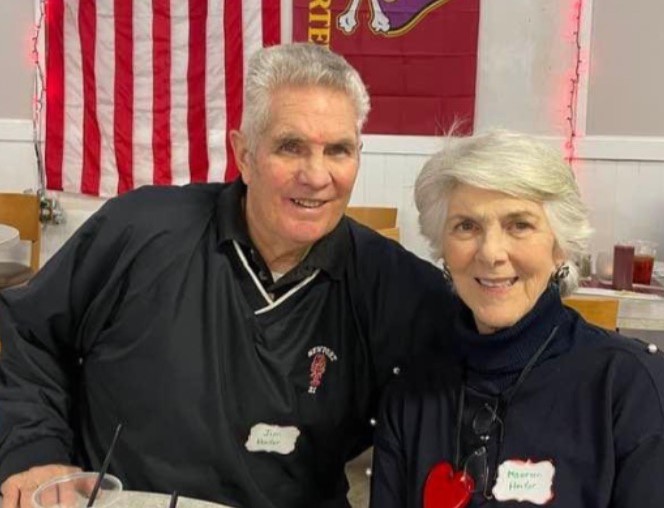
Jim Hooker
During his last several years in the Navy, Mr. Hooker was assigned to several positions in the Joint (Navy/Air Force) Cruise Missiles Project Office (JCMPO). Initially, Mr. Hooker was the Director of Organization and Management. During this assignment he was responsible for the creation and staffing of the joint program, a 360-person organization composed of both military and civilian personnel. Subsequently, Mr. Hooker was the Director of Resources Management executing JCMPO financial management, budgeting, resources management, and cost analysis responsibilities. In this capacity, he served as the principal advisor to the Director of the JCMPO on all financial matters including preparation and presentation of budget justifications to the Navy, Air Force, DoD and congress. For the two years prior to his departure from the Navy, Mr. Hooker was the Director of Contracts. In this position, Mr. Hooker supervised 46 personnel, including 26 contracting officers. The division awarded approximately two billion dollars worth of contracts annually to over 50 different contractors. During this period, Mr. Hooker authored a number of unique and complex terms and conditions including special incentive arrangements requiring congressional approval. In early 2010 Mr. Hooker cofounded, and served as the Chief Operating Officer of a foundation which had as its mission to support the successful transition of Wounded In Action (WIA) military families into the civilian community. As a result of his work in support of seriously injured veterans being treated at the Walter Reed National Military Medical Center (WRNMMC) at Bethesda, Maryland, Mr. Hooker has become proficient in understanding and the treatment of Traumatic Brain Injury (TBI) and Post Traumatic Stress Disorder (PTSD).
Examples of work accomplished include: Prepared a detailed strategy and plan to implement accessibility of effective treatment for veterans with Traumatic Brain (TBI) and Post Traumatic Stress Disorder (PTSD) injuries. Directed the preparation of a video describing a “Soldiers Combat Experience and Homecoming” with a retired, TBI hyperbaric oxygen therapy (HBOT) recovered, U.S. Army Major. Initiated and executed interactions with a marine corps wounded warrior battalion medical staff, stimulating the prescribed use of HBOT for TBI/PTSD wounded marine families. Identified, resourced and supported several TBI/PTSD injured active duty and veteran personnel through successful HBOT. Authored several articles published in the North Carolina Medical Journal on TBI and PTSD veteran care in North Carolina. Authored NC Law 2019-175 authorizing prescribed HBOT for veterans with TBI and PTSD injuries, signed into law by the North Carolina Governor on 26 July, 2019. Supported North Carolina budget legislation resulting in the appropriation of funds to treat TBI/PTSD wounded Veterans with HBOT. Assisted in the implementation of the North Carolina HBOT program to treat veteran families with TBI and PTSD injuries. This program was funded by the 2021 and 2022 North Carolina legislatures and over 40 veterans have been treated or are in therapy as a result.
Mr. Hooker received a Bachelor of Science Degree, in Commerce and Finance, from Villanova University and an M.B.A. from the U.S. Naval Post Graduate School, Monterey, California.
Subscribe Now, It’s Free!
Recent HBOT News
[Recent progress in diagnosis and treatment of the injury to the peripheral nerve].
Abstract: To investigate the latest development in diagnosis and treatment of the injury to the peripheral nerve. The literature at home and abroad was reviewed, and the research findings with clinical experience in diagnosis and treatment for the injury to the...
Hyperbaric oxygen therapy for delayed radiation injuries in gynecological cancers.
Abstract: Delayed radiation-induced injuries are difficult to treat. The treatment of delayed radiation injuries with hyperbaric oxygen therapy (HBOT) is reported in small case series and case reports. This study reports the experience of a single institution with...
Clinical Trial – Effects of Hyperbaric Oxygen Therapy in Autistic Children: A Pilot Study
Autism is a neurodevelopmental disorder that currently affects as many as 1 out of 166
children in the United States. Autism is considered by many to be a permanent condition with
little hope for improvement. Treatment for autism is centered on special schooling and
behavioral therapy; medical science currently has little to offer.
Recent research has discovered that some autistic individuals have decreased blood flow to
the brain, evidence of inflammation in the brain, and increased markers of oxidative stress.
Multiple independent single photon emission computed tomography (SPECT) and positron emission
tomography (PET) research studies have revealed hypoperfusion to several areas of the
autistic brain, most notably the temporal regions and areas specifically related to language
comprehension and auditory processing. Several studies show that diminished blood flow to
these areas correlates with many of the clinical features associated with autism including
repetitive, self-stimulatory and stereotypical behaviors, and impairments in communication,
sensory perception, and social interaction. Hyperbaric oxygen therapy (HBOT) has been used
with clinical success in several cerebral hypoperfusion syndromes including cerebral palsy,
fetal alcohol syndrome, closed head injury, and stroke. HBOT can compensate for decreased
blood flow by increasing the oxygen content of plasma and body tissues and can even normalize
oxygen levels in ischemic tissue. In addition, animal studies have shown that HBOT has potent
anti-inflammatory effects and reduces oxidative stress. Furthermore, recent evidence
demonstrates that HBOT mobilizes stem cells from human bone marrow which may aid recovery in
neurodegenerative diseases. Based upon these findings, it is hypothesized that HBOT will
improve symptoms in autistic individuals.
The purpose of this study is to determine if HBOT improves clinical outcomes in children with
autism. The study will also determine if HBOT changes markers of inflammation and oxidative
stress in autistic children.