
HBOT Conversations:
Jim Hooker & HBOT for Vets (Part 2)
Mr. Hooker founded Stratford, Wayne & Associates LTD, a Virginia based corporation in 1982 after completing a 20-year career in the U.S. Navy. He is a specialist in government financial management and systems acquisition with extensive experience in contracting, acquisition strategy, pricing strategy, business and source selection processes. Since 2007 Mr. Hooker has been focused on supporting injured combat veteran families returning home.
In early 2010 Mr. Hooker cofounded, and served as the Chief Operating Officer of a foundation which had as its mission to support the successful transition of Wounded In Action (WIA) military families into the civilian community. As a result of his work in support of seriously injured veterans being treated at the Walter Reed National Military Medical Center (WRNMMC) at Bethesda, Maryland, Mr. Hooker has become proficient in understanding and the treatment of Traumatic Brain Injury (TBI) and Post Traumatic Stress Disorder (PTSD).
Mr. Hooker also directed the preparation of a video describing a “Soldiers Combat Experience and Homecoming” with a retired, TBI hyperbaric oxygen therapy (HBOT) recovered, U.S. Army Major. He initiated and executed interactions with a marine corps wounded warrior battalion medical staff, stimulating the prescribed use of HBOT for TBI/PTSD wounded marine families; while identifying, resourcing and supporting several TBI/PTSD injured active duty and veteran personnel through successful HBOT. Mr. Hooker is a known author on several articles published in the North Carolina Medical Journal on TBI and PTSD veteran care in North Carolina, and he authored NC Law 2019-175 authorizing prescribed HBOT for veterans with TBI and PTSD injuries, signed into law by the North Carolina Governor on 26 July, 2019.
Watch the Podcast
HBOT News continues our discussion with Jim Hooker, a 83 year old retired Navy Vietnam veteran, who served our country for 20 years.
Part 1 of our HBOT News Conversation with Jim Hooker was released last week.
Jim Hooker and host, Ed di Girolamo continue to speak about the veteran suicide crisis that is clearly going on in our country, and the awareness that continues to broaden to use alternative medicine to ease or alleviate symptoms of PTSD and TBI. However, there’s still an ongoing struggle to get doctors, the VA and others onboard to understand and use HBOT for healing.
It’s no surprise that the drug industry has almost total control over the medical community when it comes to brain injuries and brain-related conditions. Our veterans end up being prescribed a handful of pills they need to take everyday. Jim explains that there are 40-some odd symptoms of a TBI and PTSD, and for every one of those symptoms, there’s a drug or multiple drugs to treat that symptom. Pain and sleep disorders being an example of two symptoms that are typically treated with a variety of different medications. Hyperbaric Oxygen Therapy is safe and effective, and because it’s non invasive and works, it’s often seen as a threat by Big Pharma.
Plus, the prescribed medications for veterans to treat PCS, TBI or PTSD seems to be adding to the suicide crisis. One example is the prescription of opioids and how easy it is to be addicted or overdose. The side effects of these medications is also very concerning, as some even promote suicidal ideation. We are, and have been for a long time, witnessing a suicide epidemic with our soldiers.
Thankfully we now have science and personal testimony in our corner when it comes to promoting HBOT as a treatment, or cure, to PTSD, TBI, PCS and suicidal thoughts. HBOT mitigates suicidal ideations to the point where the patient is no longer thinking about killing him or herself. Jim classifies HBOT as a permanent fix for the veterans, especially for the suicide. They notice they get better, even if it’s slow. They start to have hope that maybe they can get off all the pills and they don’t have to live in agony forever.
But, HBOT healing doesn’t happen overnight, and even with all this data and personal stories it’s still a daily battle to get the decision makers to listen. Jim explained it hasn’t always been easy, but he’s been persistent and he’s relied on his faith that the right people will eventually listen. In 2021, the funding he helped secure from the state of NC provided 22 injured veterans with free Hyperbaric Oxygen Therapy sessions. Additional funds were secured in 2022, and so far eight veterans have been approved to be treated with those funds. Additional funds are still available, so if you’re a veteran living in North Carolina you could qualify.
Ernie Harrison, a former podcast guest of HBOT News Network, is a North Carolina veteran who completed the program at Extivita- RTP under those funds and Jim’s approval. For Ernie, HBOT gave him back the ability to be around crowds of people again, sleep better, and have more patience. The only thing that Ernie did differently recently was Hyperbaric Oxygen Therapy, so he lays claim that the change he’s witnessed has been solely from the combination of oxygen and pressure. Ernie ended up completing 40 dives, and has had a few follow-up sessions since.
Dr. Harch, another former podcast guest of HBOT News Network, is a legend in the world of Hyperbaric Oxygen Therapy. He is mentioned a few times throughout this episode, and his podcast on HBOT for head injuries is referenced as a way to better understand the science.
However, beyond the science we need to remember to keep listening to those who have tried HBOT and who are now living the beautiful life they never thought they could have. The stories of the veterans need to be told, and the world needs to hear them. It’s like a witness in a courtroom — the most compelling evidence comes from personal testimony.
Jim has completely dedicated himself to the HBOTforVets program and finds great satisfaction knowing that through his persistence to secure this funding he is helping the heroes of NC save lives. But, lobbying for funding at the state level is really just the start. Jim has a wish that the President of the United States would act on this…. see the data…. listen to the stories… and understand that Hyperbaric Oxygen Therapy WORKS. At a national level, Jim prays that all veterans will eventually have access to HBOT.
Guest
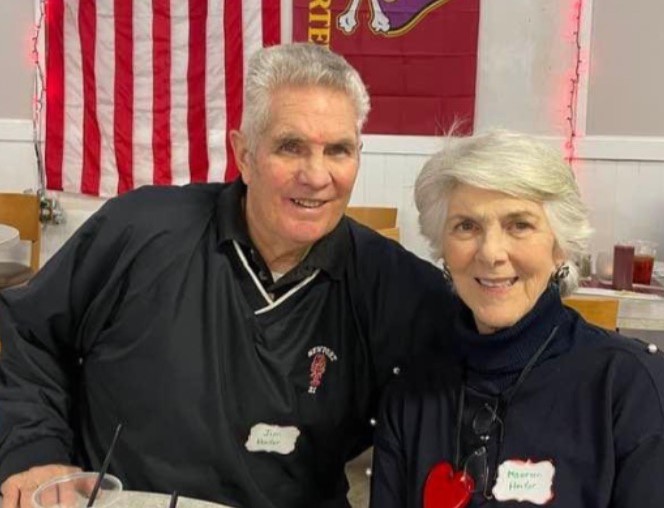
Jim Hooker
During his last several years in the Navy, Mr. Hooker was assigned to several positions in the Joint (Navy/Air Force) Cruise Missiles Project Office (JCMPO). Initially, Mr. Hooker was the Director of Organization and Management. During this assignment he was responsible for the creation and staffing of the joint program, a 360-person organization composed of both military and civilian personnel. Subsequently, Mr. Hooker was the Director of Resources Management executing JCMPO financial management, budgeting, resources management, and cost analysis responsibilities. In this capacity, he served as the principal advisor to the Director of the JCMPO on all financial matters including preparation and presentation of budget justifications to the Navy, Air Force, DoD and congress. For the two years prior to his departure from the Navy, Mr. Hooker was the Director of Contracts. In this position, Mr. Hooker supervised 46 personnel, including 26 contracting officers. The division awarded approximately two billion dollars worth of contracts annually to over 50 different contractors. During this period, Mr. Hooker authored a number of unique and complex terms and conditions including special incentive arrangements requiring congressional approval. In early 2010 Mr. Hooker cofounded, and served as the Chief Operating Officer of a foundation which had as its mission to support the successful transition of Wounded In Action (WIA) military families into the civilian community. As a result of his work in support of seriously injured veterans being treated at the Walter Reed National Military Medical Center (WRNMMC) at Bethesda, Maryland, Mr. Hooker has become proficient in understanding and the treatment of Traumatic Brain Injury (TBI) and Post Traumatic Stress Disorder (PTSD).
Examples of work accomplished include: Prepared a detailed strategy and plan to implement accessibility of effective treatment for veterans with Traumatic Brain (TBI) and Post Traumatic Stress Disorder (PTSD) injuries. Directed the preparation of a video describing a “Soldiers Combat Experience and Homecoming” with a retired, TBI hyperbaric oxygen therapy (HBOT) recovered, U.S. Army Major. Initiated and executed interactions with a marine corps wounded warrior battalion medical staff, stimulating the prescribed use of HBOT for TBI/PTSD wounded marine families. Identified, resourced and supported several TBI/PTSD injured active duty and veteran personnel through successful HBOT. Authored several articles published in the North Carolina Medical Journal on TBI and PTSD veteran care in North Carolina. Authored NC Law 2019-175 authorizing prescribed HBOT for veterans with TBI and PTSD injuries, signed into law by the North Carolina Governor on 26 July, 2019. Supported North Carolina budget legislation resulting in the appropriation of funds to treat TBI/PTSD wounded Veterans with HBOT. Assisted in the implementation of the North Carolina HBOT program to treat veteran families with TBI and PTSD injuries. This program was funded by the 2021 and 2022 North Carolina legislatures and over 40 veterans have been treated or are in therapy as a result.
Mr. Hooker received a Bachelor of Science Degree, in Commerce and Finance, from Villanova University and an M.B.A. from the U.S. Naval Post Graduate School, Monterey, California.
Subscribe Now, It’s Free!
Recent HBOT News
Combining infliximab, anti-MAP and hyperbaric oxygen therapy for resistant fistulizing Crohn’s disease.
Fistulizing Crohn’s disease (CD) presents a therapeutic challenge as fistulae are notoriously difficult to heal. Mycobacterium avium ss paratuberculosis (MAP) treatment in CD is gaining attention. We evaluated healing of CD fistula(e) using a novel combination therapy. Nine consecutive patients who failed to heal fistulae on conventional treatment including anti-TNF, were treated with at least three doses of infliximab, 18-30 courses of hyperbaric oxygen therapy and anti-MAP antibiotics comprising rifabutin, clarithromycin and clofazimine. All patients achieved complete healing of fistulae by 6-28 weeks and follow-up for mean 18 months.
Clinical Trial – Dexmedetomidine Versus Magnesium Sulphate for Caesarean Delivery
Regional anesthesia has become more popular in cesarean deliveries because most of the
parturients prefer being awake during the birth process. In addition, regional anesthesia may
be a safer method than general. In spinal anesthesia local anesthetics alone may not be
enough for an effective postoperative analgesia and hemodynamic stability of the patient wich
is crucial during cesarean section. So far many adjuvants have been used to augment the
analgesia produced by intrathecal local anesthetics and to reduce their adverse effects .
Various intrathecal adjuvants to local anaesthetics have found to improve the quality and
extend duration of spinal block. Prolongation of duration of spinal block is desirable both
for long procedures and for postoperative pain relief. Efficacy and safty of intrathecal
magnesium as analgesic adjuvant has been tested by several clinical trails in recent
years.Antinociceptive effect of magnesium appears to be relevant for the management of
chronic and post operative pain. These effects are primarily based on regulation of calcium
influx in to the cell. Magnesium blocks calcium influx and non competitively antagonizes NMDA
channels. NMDA receptor signelling plays an impartent in determining the duration of acute
pain3).) addition of magnesium to spinal anaesthesia improved postoperative analgesia in
orthopedic setting. addition of intrathecal magnesium sulfate to 10 mg bupivacaine plus 25µg
fentanyl prolonged spinal anaesthesia in patients undergoing lower extremity surgery.
Dexmedetomidine is a highly selective 2-adrenergic agonist which has been used as
pre-medication and as an adjuvant to general anesthesia.Dexmedetomidine have several
beneficial actions during perioperative period. They decrease sympathetic tone with
attenuation of the neuroendocrine and haemodynamic response to anaesthesia and surgery,
reduce anaesthetic and opiod requirement, cause sedation and analgesia. Dexmedetomidine was
first introduced into clinical practice as a short term intravenous sedative in intensive
care. Like any other adjuvant dexmedetomidine is not free from adverse effects. Use of
dexmedetomidine is often associated with a decrease in heart rate and blood
pressure.Dexmedetomidine was used to enhance the analgesic property of local anaesthetics
like lidocaine bupivacaine and ropivacaine. In vivo and in vitro studies indicated that these
local anaesthetics had significant neurotoxicity. Dexmedetomidine showed protective or growth
promoting properties in tissues, including nerve cells from cortex. Intrathecal
dexmedetomidine has a neuroprotective effect similar to methylprednisolone.
The mechanism by which intrathecal alpha 2-adrenergic agonists prolong the motor and sensory
block of local anesthetics is not clear. It may be an additive or synergistic effect
secondary to the different mechanisms of action of local anesthetic and alpha 2 adrenergic
agonist. The local anesthetics act by blocking sodium channels, whereas the alpha 2
adrenergic agonist acts by binding to pre synapyic C fibre and post synaptic dorsal horn
neurons. Intrathecal alpha 2 adrenergic agonist produce analgesia by depressing the realease
of C fibre transmission by hyperpolarization of post synaptic dorsal horn neurons. Li et al
observed that Glutamate is involved in excitatory neurotransmission nociception and plays an
essential role in relaying noxious stimuli in the spinal cord. Intrathecal injection of alpha
2 adrenergic agonists produces potent antinociceptive effects by altering spinal
neurotransmitter release and effectively treats acute pain.
Efficacy of hyperbaric oxygen therapy combined with mild hyperthermia for improving the anti-tumour effects of carboplatin.
Abstract: The aim of this study was to evaluate the effects of hyperbaric oxygen therapy (HBO) on the enhancement of hyperthermic chemosensitisation to carboplatin at mild temperatures in experimental tumours. SCCVII carcinoma in C3H/He mice was used to assess tumour...