
HBOT Conversations:
Laurie Anderson (Part 1)
Healing COVID with HBOT
Through her own journey navigating chronic illness, Dr. Laurie has explored and embraced many forms of alternative and non-traditional medicine to support her body for healing. She has gravitated towards practitioners and modalities that treat the whole patient, with the mantra that tending to mind, body and spirit is the true key to lasting health. Over the years, Dr. Laurie has discovered that this often leads to a ‘less is more’ approach. She discovered HBOT when she was struggling to heal from COVID, and now tells anyone who will listen about the power of oxygen and pressure.
Watch the Podcast
We are thrilled to have Dr. Laurie Anderson join us at the HBOT News Network. Dr. Laurie used Hyperbaric Oxygen Therapy to heal from a very serious COVID illness.
Dr. Laurie explains her background to the audience and that she received treatment in Raleigh, NC at the Extivita clinic. Her background is important and intriguing. Dr. Laurie is a Pharmacist by training, a PharmD. While she has done some clinical work in the past, her passion lies in the safety of clinical studies. She focuses on early phase clinical study work, designing risk mitigation strategies for first time in human studies. Dr. Laurie explained that in her line of work she looks at the risk profile of the assets coming out, the design risk mitigation strategies, and then follows them in the clinic to track them to help ensure that they know what’s safe and what isn’t. Essentially, she is part of the team that helps determine if certain drugs are safe and effective.
di Girolamo explains that when he first started looking at hyperbarics, he was personally trying to understand if it was indeed safe and effective. He found that it was, and was blown away that everyone wasn’t using it. This opened the door to Dr. Laurie telling her story of COVID healing with HBOT, and what led her to Extivita.
Dr. Laurie explains that she has a history of lyme diesease, and worked really hard not to get COVID in fear that she would struggle with complete healing. She had been vaccinated and boostered, and when she did get COVID she became very ill. In addition to losing her sense of smell and taste, she had a relentless cough, really awful fatigue, and some shortness of breath that that just wasn’t improving. She ended up on medical leave because she could not work, and when she started to reach the end of the medical leave she still was not improving. Dr. Laurie talked to the naturopath who had been following her for many years, and her naturopath suggested NAD infusions. Dr. Laurie had never heard of NAD infusions before, so she started to read about them and who does them locally in the Raleigh, NC area. That’s when Dr. Laurie was introduced to the Extivita clinic.
Dr. Laurie came to Extivita to start NAD infusions, but was also encouraged to try Hyperbaric Oxygen Therapy to heal from COVID. The clinic explained that they are seeing really great success using hyperbarics for COVID long-hauler patients. Dr. Laurie was hesitant due to her claustrophobia, but in the end she decided it was worth a try. She educated herself on HBOT, and found that there wasn’t a reason why she shouldn’t do it. She was desperate to heal from the COVID infection. So, she committed to 20 dives, 4 days a week and had phenomenal results; claiming significant improvement after only ten dives.
“I got to say, I was kind of blown away because I had been battling with no improvement for long enough to be concerned, and I came in and I think it was about maybe five or six dives in, and my taste and smell started returning. It was completely gone. And I started to see a change probably in maybe eight, nine or ten, that my cough started going away. I would say by 12 or 13 dives, I felt healed, I felt recovered and even better than I felt going in [the way I felt before getting COVID].”
Dr. Laurie exclaimed that she noticed a positive difference in her energy and sleep almost immediately. She was more restful, and she said she pays close attention to those things because her history with chronic illness.
“I just could tell a difference. And in my energy, mainly. My energy level and my sleep really shifted, which was a real gift.”
Dr. Laurie even shared her story in an Extivita testimonal, hopeful that others can also discover the powerful combination of oxygen and pressure to heal from COVID.
Stay tuned next week for Part 2 of Dr. Laurie’s podcast. We will talk with her about some other benefits of HBOT, and we’ll pick her brain on clinical trials involving hyperbaric oxygen therapy.
Guests
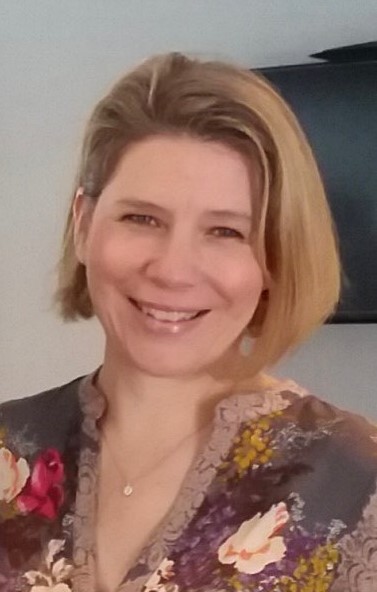
Dr. Laurie Anderson, Pharm.D.
Through her own journey navigating chronic illness, Dr. Laurie has explored and embraced many forms of alternative and non-traditional medicine to support her body for healing. She has gravitated towards practitioners and modalities that treat the whole patient, with the mantra that tending to mind, body and spirit is the true key to lasting health. Over the years, Dr. Laurie has discovered that this often leads to a ‘less is more’ approach.
When not working, Dr. Laurie is an avid gardener, ballroom dancer and traveler with her husband. Remaining curious and finding joy in every day are her super powers.
Subscribe Now, It’s Free!
Recent HBOT News
Healing under pressure: Inside a military hyperbaric chamber
At 16, she had a stroke. At 17, her town burned in the Camp Fire. Now, as her community rebuilds, she's healing thanks to hyperbaric therapy. SACRAMENTO, Calif — February 2, 2017, started off as an ordinary day for the Pipkin Family. Patrick and Stacey Pipkin just...
Clinical Trial – High-flow Oxygen for Vaso-occlusive Pain Crisis
Sickle cell disease (SCD) is characterized by recurrent vaso-occlusive pain crisis (VOC),
which may evolve to acute chest syndrome (ACS), the most common cause of death among adult
patients with SCD. Currently, there is no safe and effective treatment to abort VOC or
prevent secondary ACS. Management of VOC mostly involve a symptomatic approach including
hydration, analgesics, transfusion, and incentive spirometry, which was investigated in a
very limited number of patients (<30).
The polymerisation of HbS is one major feature in the pathogenesis of vaso-occlusion. Among
factors determining the rate and extent of HbS polymer formation, the hypoxic stimulus is one
of the most potent and readily alterable. Current guidelines recommend oxygen therapy in
patients with VOC in order to maintain a target oxygen saturation of 95%. Low-flow nasal
oxygen (LFNO) is routinely used to achieve this normoxia approach, particularly in patients
at risk of secondary ACS because they may experience acute desaturation. In contrast, various
case series suggest a potential beneficial role of intensified oxygen therapy targeting
hyperoxia for the management of VOC, particularly with the use of hyperbaric oxygen, but the
latter is difficult to implement in routine clinical practice.
A recent high-flow nasal oxygen (HFNO) technology allows the delivery of humidified gas at
high fraction of inspired oxygen (FiO2) through nasal cannula. The FiO2 can be adjusted up to
100% (allowing hyperoxia that may reverse sickling) and the flow can be increased up to 60
L/min (which generates positive airway pressure and dead space flushing, that may prevent
evolution of VOC towards ACS by alleviating atelectasis and opioid-induced hypercapnia). In
patients with acute respiratory failure, HFNO has been shown to improve patient's comfort,
oxygenation, and survival as compared to standard oxygen or non-invasive ventilation.
The aim of the present study is to test the efficacy and safety of HFNO for the management of
VOC and prevention of secondary ACS. The investigators will use a multi-arm multi-stage
(MAMS) design to achieve these goals. HFNO will be delivered through AIRVO 2 (Fisher and
Paykel Healthcare, New Zealand), a device that incorporates a turbine allowing its use in
hospital wards.
Clinical Trial – Hyperbaric Oxygen Therapy and Allogeneic Peripheral Blood Stem Cell (PBSC) Transplant
Subjects with Acute Myeloblastic Leukemia (AML) and myelodysplastic syndrome (MDS) who are
considered eligible for allogeneic stem cell transplant by the transplant team at WCI (Wilmot
Cancer Institute)will be enrolled in the study. Patients will receive Melphalan on day -2 and
HBO (Hyperbaric Oxygen) therapy on day 0 of the transplant. After neutrophil recovery is
documented, the patients will be seen in clinic at least weekly through day +100.