
HBOT Conversations:
Laurie Anderson (Part 1)
Healing COVID with HBOT
Through her own journey navigating chronic illness, Dr. Laurie has explored and embraced many forms of alternative and non-traditional medicine to support her body for healing. She has gravitated towards practitioners and modalities that treat the whole patient, with the mantra that tending to mind, body and spirit is the true key to lasting health. Over the years, Dr. Laurie has discovered that this often leads to a ‘less is more’ approach. She discovered HBOT when she was struggling to heal from COVID, and now tells anyone who will listen about the power of oxygen and pressure.
Watch the Podcast
We are thrilled to have Dr. Laurie Anderson join us at the HBOT News Network. Dr. Laurie used Hyperbaric Oxygen Therapy to heal from a very serious COVID illness.
Dr. Laurie explains her background to the audience and that she received treatment in Raleigh, NC at the Extivita clinic. Her background is important and intriguing. Dr. Laurie is a Pharmacist by training, a PharmD. While she has done some clinical work in the past, her passion lies in the safety of clinical studies. She focuses on early phase clinical study work, designing risk mitigation strategies for first time in human studies. Dr. Laurie explained that in her line of work she looks at the risk profile of the assets coming out, the design risk mitigation strategies, and then follows them in the clinic to track them to help ensure that they know what’s safe and what isn’t. Essentially, she is part of the team that helps determine if certain drugs are safe and effective.
di Girolamo explains that when he first started looking at hyperbarics, he was personally trying to understand if it was indeed safe and effective. He found that it was, and was blown away that everyone wasn’t using it. This opened the door to Dr. Laurie telling her story of COVID healing with HBOT, and what led her to Extivita.
Dr. Laurie explains that she has a history of lyme diesease, and worked really hard not to get COVID in fear that she would struggle with complete healing. She had been vaccinated and boostered, and when she did get COVID she became very ill. In addition to losing her sense of smell and taste, she had a relentless cough, really awful fatigue, and some shortness of breath that that just wasn’t improving. She ended up on medical leave because she could not work, and when she started to reach the end of the medical leave she still was not improving. Dr. Laurie talked to the naturopath who had been following her for many years, and her naturopath suggested NAD infusions. Dr. Laurie had never heard of NAD infusions before, so she started to read about them and who does them locally in the Raleigh, NC area. That’s when Dr. Laurie was introduced to the Extivita clinic.
Dr. Laurie came to Extivita to start NAD infusions, but was also encouraged to try Hyperbaric Oxygen Therapy to heal from COVID. The clinic explained that they are seeing really great success using hyperbarics for COVID long-hauler patients. Dr. Laurie was hesitant due to her claustrophobia, but in the end she decided it was worth a try. She educated herself on HBOT, and found that there wasn’t a reason why she shouldn’t do it. She was desperate to heal from the COVID infection. So, she committed to 20 dives, 4 days a week and had phenomenal results; claiming significant improvement after only ten dives.
“I got to say, I was kind of blown away because I had been battling with no improvement for long enough to be concerned, and I came in and I think it was about maybe five or six dives in, and my taste and smell started returning. It was completely gone. And I started to see a change probably in maybe eight, nine or ten, that my cough started going away. I would say by 12 or 13 dives, I felt healed, I felt recovered and even better than I felt going in [the way I felt before getting COVID].”
Dr. Laurie exclaimed that she noticed a positive difference in her energy and sleep almost immediately. She was more restful, and she said she pays close attention to those things because her history with chronic illness.
“I just could tell a difference. And in my energy, mainly. My energy level and my sleep really shifted, which was a real gift.”
Dr. Laurie even shared her story in an Extivita testimonal, hopeful that others can also discover the powerful combination of oxygen and pressure to heal from COVID.
Stay tuned next week for Part 2 of Dr. Laurie’s podcast. We will talk with her about some other benefits of HBOT, and we’ll pick her brain on clinical trials involving hyperbaric oxygen therapy.
Guests
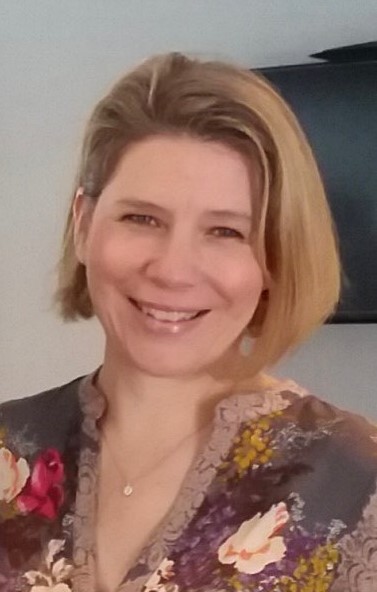
Dr. Laurie Anderson, Pharm.D.
Through her own journey navigating chronic illness, Dr. Laurie has explored and embraced many forms of alternative and non-traditional medicine to support her body for healing. She has gravitated towards practitioners and modalities that treat the whole patient, with the mantra that tending to mind, body and spirit is the true key to lasting health. Over the years, Dr. Laurie has discovered that this often leads to a ‘less is more’ approach.
When not working, Dr. Laurie is an avid gardener, ballroom dancer and traveler with her husband. Remaining curious and finding joy in every day are her super powers.
Subscribe Now, It’s Free!
Recent HBOT News
Clinical Trial – Incidence of Postoperative Delirium in Cancer Patients After Laparoscopic Surgery in Trendelenburg Position
Postoperative delirium is an acute mental syndrome that is caused by diffuse cerebral
dysfunction resulting from the action of predisposing and precipitating factors acting
together. It is associated with an increase in mortality and postoperative morbidity and
prolongs the period of hospitalization of the patient Videolaparoscopic surgery has been
increasingly used as a therapeutic and diagnostic method. In order to have a good
visualization of the anatomical structures on which it will act, it is necessary to introduce
gas into the cavity, a mandatory component known as pneumoperitoneum. This technique gives
special characteristics for the conduction of anesthesia, since the positive intra-abdominal
pressure results in changes in the patient’s physiology. Some types of laparoscopic surgery
require the position of Trendelenburg for better visualization of the operative field. Among
the changes related to this position are the increase in cardiac output and intracranial
pressure.
In order to optimize the anesthetic procedure, anesthetic blocks have been increasingly used,
especially the spinal. The association of general anesthesia with spinal anesthesia, followed
by its contraindications is advantageous, because lower doses of anesthetic agents are
necessary for the maintenance of general anesthesia. This association results in an earlier
awakening, a reduction of nausea / vomiting, postoperative pain, length of hospital stay,
cost effectiveness and greater patient satisfaction. As a disadvantage, by associating
general anesthesia with spinal anesthesia, patients become susceptible to the adverse events
of spinal anesthesia. Among these, the most common are headache, hypotension, nausea and
vomiting, pruritus, urinary retention and tremor. Performing spinal anesthesia with opioids
alone, without the use of local anesthetic is also possible, with morphine being the most
used. The benefit of this variation of technique is analgesia for a period of 12 to 24 hours,
without the cardiovascular consequences resulting from the action of the local anesthetic.
JUSTIFICATION: There are no studies in the literature evaluating The objective of this study
is to analyze if the anesthetic techniques employed, general anesthesia or general anesthesia
associated with subarachnoid block, for videolaparoscopic oncologic surgeries, in
Trendelenburg position, differ in relation to the incidence of delirium in the postoperative
period.
Incense burning smoke sensitizes lung cancer cells to EGFR TKI by inducing AREG expression.
Abstract: Incense burning is common in Asian countries due to the religious beliefs. Environmental exposure to incense burning smoke is a potential risk factor for tumor development and progression of non-small cell lung cancer (NSCLC). Eastern Asia ethnic origin is...
A diver with immersion pulmonary oedema and prolonged respiratory symptoms.
Abstract: Immersion pulmonary oedema (IPE) is particularly associated with an excessive reaction to exercise and/or cold stress. IPE usually resolves without recompression therapy within a day or two. Herein we report a diver diagnosed with IPE, in whom symptoms...