
HBOT Conversations:
Laurie Anderson (Part 1)
Healing COVID with HBOT
Through her own journey navigating chronic illness, Dr. Laurie has explored and embraced many forms of alternative and non-traditional medicine to support her body for healing. She has gravitated towards practitioners and modalities that treat the whole patient, with the mantra that tending to mind, body and spirit is the true key to lasting health. Over the years, Dr. Laurie has discovered that this often leads to a ‘less is more’ approach. She discovered HBOT when she was struggling to heal from COVID, and now tells anyone who will listen about the power of oxygen and pressure.
Watch the Podcast
We are thrilled to have Dr. Laurie Anderson join us at the HBOT News Network. Dr. Laurie used Hyperbaric Oxygen Therapy to heal from a very serious COVID illness.
Dr. Laurie explains her background to the audience and that she received treatment in Raleigh, NC at the Extivita clinic. Her background is important and intriguing. Dr. Laurie is a Pharmacist by training, a PharmD. While she has done some clinical work in the past, her passion lies in the safety of clinical studies. She focuses on early phase clinical study work, designing risk mitigation strategies for first time in human studies. Dr. Laurie explained that in her line of work she looks at the risk profile of the assets coming out, the design risk mitigation strategies, and then follows them in the clinic to track them to help ensure that they know what’s safe and what isn’t. Essentially, she is part of the team that helps determine if certain drugs are safe and effective.
di Girolamo explains that when he first started looking at hyperbarics, he was personally trying to understand if it was indeed safe and effective. He found that it was, and was blown away that everyone wasn’t using it. This opened the door to Dr. Laurie telling her story of COVID healing with HBOT, and what led her to Extivita.
Dr. Laurie explains that she has a history of lyme diesease, and worked really hard not to get COVID in fear that she would struggle with complete healing. She had been vaccinated and boostered, and when she did get COVID she became very ill. In addition to losing her sense of smell and taste, she had a relentless cough, really awful fatigue, and some shortness of breath that that just wasn’t improving. She ended up on medical leave because she could not work, and when she started to reach the end of the medical leave she still was not improving. Dr. Laurie talked to the naturopath who had been following her for many years, and her naturopath suggested NAD infusions. Dr. Laurie had never heard of NAD infusions before, so she started to read about them and who does them locally in the Raleigh, NC area. That’s when Dr. Laurie was introduced to the Extivita clinic.
Dr. Laurie came to Extivita to start NAD infusions, but was also encouraged to try Hyperbaric Oxygen Therapy to heal from COVID. The clinic explained that they are seeing really great success using hyperbarics for COVID long-hauler patients. Dr. Laurie was hesitant due to her claustrophobia, but in the end she decided it was worth a try. She educated herself on HBOT, and found that there wasn’t a reason why she shouldn’t do it. She was desperate to heal from the COVID infection. So, she committed to 20 dives, 4 days a week and had phenomenal results; claiming significant improvement after only ten dives.
“I got to say, I was kind of blown away because I had been battling with no improvement for long enough to be concerned, and I came in and I think it was about maybe five or six dives in, and my taste and smell started returning. It was completely gone. And I started to see a change probably in maybe eight, nine or ten, that my cough started going away. I would say by 12 or 13 dives, I felt healed, I felt recovered and even better than I felt going in [the way I felt before getting COVID].”
Dr. Laurie exclaimed that she noticed a positive difference in her energy and sleep almost immediately. She was more restful, and she said she pays close attention to those things because her history with chronic illness.
“I just could tell a difference. And in my energy, mainly. My energy level and my sleep really shifted, which was a real gift.”
Dr. Laurie even shared her story in an Extivita testimonal, hopeful that others can also discover the powerful combination of oxygen and pressure to heal from COVID.
Stay tuned next week for Part 2 of Dr. Laurie’s podcast. We will talk with her about some other benefits of HBOT, and we’ll pick her brain on clinical trials involving hyperbaric oxygen therapy.
Guests
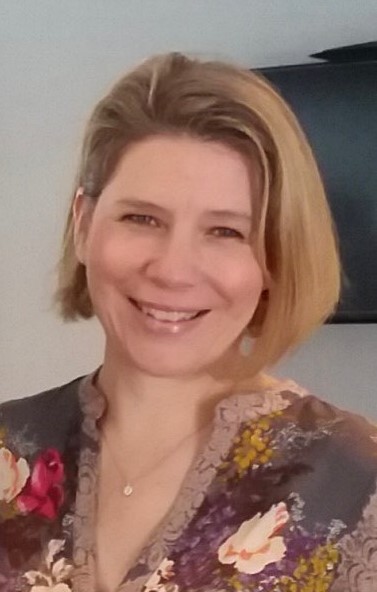
Dr. Laurie Anderson, Pharm.D.
Through her own journey navigating chronic illness, Dr. Laurie has explored and embraced many forms of alternative and non-traditional medicine to support her body for healing. She has gravitated towards practitioners and modalities that treat the whole patient, with the mantra that tending to mind, body and spirit is the true key to lasting health. Over the years, Dr. Laurie has discovered that this often leads to a ‘less is more’ approach.
When not working, Dr. Laurie is an avid gardener, ballroom dancer and traveler with her husband. Remaining curious and finding joy in every day are her super powers.
Subscribe Now, It’s Free!
Recent HBOT News
Combining infliximab, anti-MAP and hyperbaric oxygen therapy for resistant fistulizing Crohn’s disease.
Fistulizing Crohn’s disease (CD) presents a therapeutic challenge as fistulae are notoriously difficult to heal. Mycobacterium avium ss paratuberculosis (MAP) treatment in CD is gaining attention. We evaluated healing of CD fistula(e) using a novel combination therapy. Nine consecutive patients who failed to heal fistulae on conventional treatment including anti-TNF, were treated with at least three doses of infliximab, 18-30 courses of hyperbaric oxygen therapy and anti-MAP antibiotics comprising rifabutin, clarithromycin and clofazimine. All patients achieved complete healing of fistulae by 6-28 weeks and follow-up for mean 18 months.
Clinical Trial – Dexmedetomidine Versus Magnesium Sulphate for Caesarean Delivery
Regional anesthesia has become more popular in cesarean deliveries because most of the
parturients prefer being awake during the birth process. In addition, regional anesthesia may
be a safer method than general. In spinal anesthesia local anesthetics alone may not be
enough for an effective postoperative analgesia and hemodynamic stability of the patient wich
is crucial during cesarean section. So far many adjuvants have been used to augment the
analgesia produced by intrathecal local anesthetics and to reduce their adverse effects .
Various intrathecal adjuvants to local anaesthetics have found to improve the quality and
extend duration of spinal block. Prolongation of duration of spinal block is desirable both
for long procedures and for postoperative pain relief. Efficacy and safty of intrathecal
magnesium as analgesic adjuvant has been tested by several clinical trails in recent
years.Antinociceptive effect of magnesium appears to be relevant for the management of
chronic and post operative pain. These effects are primarily based on regulation of calcium
influx in to the cell. Magnesium blocks calcium influx and non competitively antagonizes NMDA
channels. NMDA receptor signelling plays an impartent in determining the duration of acute
pain3).) addition of magnesium to spinal anaesthesia improved postoperative analgesia in
orthopedic setting. addition of intrathecal magnesium sulfate to 10 mg bupivacaine plus 25µg
fentanyl prolonged spinal anaesthesia in patients undergoing lower extremity surgery.
Dexmedetomidine is a highly selective 2-adrenergic agonist which has been used as
pre-medication and as an adjuvant to general anesthesia.Dexmedetomidine have several
beneficial actions during perioperative period. They decrease sympathetic tone with
attenuation of the neuroendocrine and haemodynamic response to anaesthesia and surgery,
reduce anaesthetic and opiod requirement, cause sedation and analgesia. Dexmedetomidine was
first introduced into clinical practice as a short term intravenous sedative in intensive
care. Like any other adjuvant dexmedetomidine is not free from adverse effects. Use of
dexmedetomidine is often associated with a decrease in heart rate and blood
pressure.Dexmedetomidine was used to enhance the analgesic property of local anaesthetics
like lidocaine bupivacaine and ropivacaine. In vivo and in vitro studies indicated that these
local anaesthetics had significant neurotoxicity. Dexmedetomidine showed protective or growth
promoting properties in tissues, including nerve cells from cortex. Intrathecal
dexmedetomidine has a neuroprotective effect similar to methylprednisolone.
The mechanism by which intrathecal alpha 2-adrenergic agonists prolong the motor and sensory
block of local anesthetics is not clear. It may be an additive or synergistic effect
secondary to the different mechanisms of action of local anesthetic and alpha 2 adrenergic
agonist. The local anesthetics act by blocking sodium channels, whereas the alpha 2
adrenergic agonist acts by binding to pre synapyic C fibre and post synaptic dorsal horn
neurons. Intrathecal alpha 2 adrenergic agonist produce analgesia by depressing the realease
of C fibre transmission by hyperpolarization of post synaptic dorsal horn neurons. Li et al
observed that Glutamate is involved in excitatory neurotransmission nociception and plays an
essential role in relaying noxious stimuli in the spinal cord. Intrathecal injection of alpha
2 adrenergic agonists produces potent antinociceptive effects by altering spinal
neurotransmitter release and effectively treats acute pain.
Efficacy of hyperbaric oxygen therapy combined with mild hyperthermia for improving the anti-tumour effects of carboplatin.
Abstract: The aim of this study was to evaluate the effects of hyperbaric oxygen therapy (HBO) on the enhancement of hyperthermic chemosensitisation to carboplatin at mild temperatures in experimental tumours. SCCVII carcinoma in C3H/He mice was used to assess tumour...