
HBOT Conversations:
Laurie Anderson (Part 1)
Healing COVID with HBOT
Through her own journey navigating chronic illness, Dr. Laurie has explored and embraced many forms of alternative and non-traditional medicine to support her body for healing. She has gravitated towards practitioners and modalities that treat the whole patient, with the mantra that tending to mind, body and spirit is the true key to lasting health. Over the years, Dr. Laurie has discovered that this often leads to a ‘less is more’ approach. She discovered HBOT when she was struggling to heal from COVID, and now tells anyone who will listen about the power of oxygen and pressure.
Watch the Podcast
We are thrilled to have Dr. Laurie Anderson join us at the HBOT News Network. Dr. Laurie used Hyperbaric Oxygen Therapy to heal from a very serious COVID illness.
Dr. Laurie explains her background to the audience and that she received treatment in Raleigh, NC at the Extivita clinic. Her background is important and intriguing. Dr. Laurie is a Pharmacist by training, a PharmD. While she has done some clinical work in the past, her passion lies in the safety of clinical studies. She focuses on early phase clinical study work, designing risk mitigation strategies for first time in human studies. Dr. Laurie explained that in her line of work she looks at the risk profile of the assets coming out, the design risk mitigation strategies, and then follows them in the clinic to track them to help ensure that they know what’s safe and what isn’t. Essentially, she is part of the team that helps determine if certain drugs are safe and effective.
di Girolamo explains that when he first started looking at hyperbarics, he was personally trying to understand if it was indeed safe and effective. He found that it was, and was blown away that everyone wasn’t using it. This opened the door to Dr. Laurie telling her story of COVID healing with HBOT, and what led her to Extivita.
Dr. Laurie explains that she has a history of lyme diesease, and worked really hard not to get COVID in fear that she would struggle with complete healing. She had been vaccinated and boostered, and when she did get COVID she became very ill. In addition to losing her sense of smell and taste, she had a relentless cough, really awful fatigue, and some shortness of breath that that just wasn’t improving. She ended up on medical leave because she could not work, and when she started to reach the end of the medical leave she still was not improving. Dr. Laurie talked to the naturopath who had been following her for many years, and her naturopath suggested NAD infusions. Dr. Laurie had never heard of NAD infusions before, so she started to read about them and who does them locally in the Raleigh, NC area. That’s when Dr. Laurie was introduced to the Extivita clinic.
Dr. Laurie came to Extivita to start NAD infusions, but was also encouraged to try Hyperbaric Oxygen Therapy to heal from COVID. The clinic explained that they are seeing really great success using hyperbarics for COVID long-hauler patients. Dr. Laurie was hesitant due to her claustrophobia, but in the end she decided it was worth a try. She educated herself on HBOT, and found that there wasn’t a reason why she shouldn’t do it. She was desperate to heal from the COVID infection. So, she committed to 20 dives, 4 days a week and had phenomenal results; claiming significant improvement after only ten dives.
“I got to say, I was kind of blown away because I had been battling with no improvement for long enough to be concerned, and I came in and I think it was about maybe five or six dives in, and my taste and smell started returning. It was completely gone. And I started to see a change probably in maybe eight, nine or ten, that my cough started going away. I would say by 12 or 13 dives, I felt healed, I felt recovered and even better than I felt going in [the way I felt before getting COVID].”
Dr. Laurie exclaimed that she noticed a positive difference in her energy and sleep almost immediately. She was more restful, and she said she pays close attention to those things because her history with chronic illness.
“I just could tell a difference. And in my energy, mainly. My energy level and my sleep really shifted, which was a real gift.”
Dr. Laurie even shared her story in an Extivita testimonal, hopeful that others can also discover the powerful combination of oxygen and pressure to heal from COVID.
Stay tuned next week for Part 2 of Dr. Laurie’s podcast. We will talk with her about some other benefits of HBOT, and we’ll pick her brain on clinical trials involving hyperbaric oxygen therapy.
Guests
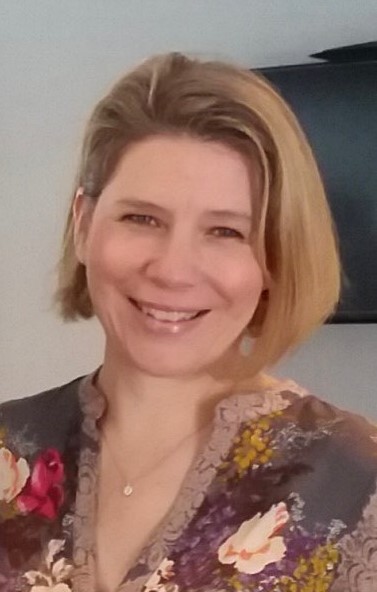
Dr. Laurie Anderson, Pharm.D.
Through her own journey navigating chronic illness, Dr. Laurie has explored and embraced many forms of alternative and non-traditional medicine to support her body for healing. She has gravitated towards practitioners and modalities that treat the whole patient, with the mantra that tending to mind, body and spirit is the true key to lasting health. Over the years, Dr. Laurie has discovered that this often leads to a ‘less is more’ approach.
When not working, Dr. Laurie is an avid gardener, ballroom dancer and traveler with her husband. Remaining curious and finding joy in every day are her super powers.
Subscribe Now, It’s Free!
Recent HBOT News
Orbital implant placement using a computer-aided design and manufacturing (CAD/CAM) stereolithographic surgical template protocol.
Abstract: Surgical implant placement in the orbital region for the support of a prosthesis is challenging due to the thin orbital rim and proximity to vital structures. This article reports the use of a computer-aided design and manufacturing (CAD/CAM)...
Clinical Trial – Haemodynamic Effects During Anorectal Surgery: a Comparison of the Jack -Knife and Lithotomy Position
Background and Goal of Study: Minimal dose of spinal hyperbaric bupivacaine is commonly
performed for adult anorectal surgery. This kind of anaesthesia can cause sinus bradycardia
and hypotension wich reason is body position, autonomic nervus system reaction, reflex
reaction even with low levels of sensory block. However, neither the publication of minimal
doses of spinal hyperbaric bupivacaine effects of haemodynamic modifications nor their
accuracy was widely discussed. The aim of the study is to make a comparison of the
haemodynamic modifications due to minimal dose of spinal hyperbaric bupivacaine for adult
anorectal surgery in lithotomy or jack knife position of steering impedance device.
Materials and Methods: Patients will be included which are over then 18 years old, who
underwent anorectal surgery of the benign pathology, requiring spinal anaesthesia, were
admitted in this clinical randomized study, hospitalized in Hospital of Lithuanian University
of Health Sciences Kaunas Clinics and agree to participate to this study (written
settlement). All patients were implicitly divided in to 4 groups by the position will be
operating (lithotomy or jack knife position and by American Society of Anaesthesiologists
(ASA) clas I-II and III-IV). Technique of anaesthesia were strictly standardized by protocol.
All patients were premedicated with oral diazepam 5mg and diclofenac 100mg 60min before
operation. After arrival in the operating theater peripheral vein 18 or 20G catheter was
inserted, infusion therapy were started with crystalloid 5-7ml/kg/hour. Standard monitoring
was used, including noninvasive arterial blood pressure (BP), electrocardiography (ECG),
heart rate, peripheral oxygenation. Circulatory changes were recorded impedance device. 2
single-neck sensors connected vertically on both sides of the neck just below the ears lobe.
Another pair of sensors attached on both sides of the chest processus xiphoid axillary line
level. Thorax allows a variable electrical current, it travels through the lowest resistance
(blood-filled aorta) and resistance is measured. For each heart contraction during changes in
blood volume and velocity. Accordingly, replacing the resistors obtained by impedance
settings.
Haemodynamic variables were recorded in patients in the use of impedance cardiograph:
1. arrives in the operating room;
2. seating on the operating table;
3. following the puncture;
4. 10 min after spinal puncture;
5. was laid in lithotomy or jack knife position;
6. in the beginning and the end of the operation;
7. patient was placed in the bed.
Each measurement was monitoring and recorded the following data( ar findings):
– Cardiac output (CO);
– Systemic vascular resistance (SVR);
– Systolic index (SI)
– Cardiac index (CI);
– Acceleration index (ACI);
– Heart rate (HR);
– Non-invasive systolic (SAP), diastolic (DAP) and mean (MAP) blood pressure;
– Peripheral oxygenation (SpO2); Patients were placed in the sitting position on the slab
(operating table) back to the doctor. Dural puncture was made at L3-L4 or L4-L5 with 27G
Tamanho spinal needle ( BBraun, Germany) by medial punction in aseptic condition, before
the punction was injected lidocaine 1% subcutaneous. 0.5% 4mg of heavy bupivacaine and
0.01% 10µg fentanyl were injected over 2 minutes after free flow of cerebrospinal fluid
was obtained. After sitting for 10 minutes ( sensory block was checked by the dermatomes
with the methods of cold sensitivity) patients were asked to lie in the position wich
operation will be done (lithotomy or jack knife position).
After 20 min. surgery was started. When anaesthesia was imperfect, 25-100µg of fentanyl was
given IV. General anaesthesia will be give in case of failure . These cases will be value
like a failure, patients will be exclude from the study.
Clinically significant hypotension will be define as a mean arterial blood pressure and heart
rate decrease of 20% below baseline values. Systolic arterial blood pressure will reduce to
90mmHG limit, intravenous ephedrine 5-10 mg will be injected. If heart rate will reduce to 45
bpm, bradycardia will be treated with atropine 0,5 mg IV.
Combined free tissue transfer for the management of composite Achilles defects: functional outcomes and patient satisfaction following thigh-based vascularized reconstruction with a neotendon construct.
Abstract: Functional outcomes and quality-of-life measures following salvage reconstruction of composite Achilles/posterior leg defects are limited. We present our experience with combined Achilles defect reconstruction utilizing free tissue transfer with...