
HBOT Conversations:
Laurie Anderson (Part 1)
Healing COVID with HBOT
Through her own journey navigating chronic illness, Dr. Laurie has explored and embraced many forms of alternative and non-traditional medicine to support her body for healing. She has gravitated towards practitioners and modalities that treat the whole patient, with the mantra that tending to mind, body and spirit is the true key to lasting health. Over the years, Dr. Laurie has discovered that this often leads to a ‘less is more’ approach. She discovered HBOT when she was struggling to heal from COVID, and now tells anyone who will listen about the power of oxygen and pressure.
Watch the Podcast
We are thrilled to have Dr. Laurie Anderson join us at the HBOT News Network. Dr. Laurie used Hyperbaric Oxygen Therapy to heal from a very serious COVID illness.
Dr. Laurie explains her background to the audience and that she received treatment in Raleigh, NC at the Extivita clinic. Her background is important and intriguing. Dr. Laurie is a Pharmacist by training, a PharmD. While she has done some clinical work in the past, her passion lies in the safety of clinical studies. She focuses on early phase clinical study work, designing risk mitigation strategies for first time in human studies. Dr. Laurie explained that in her line of work she looks at the risk profile of the assets coming out, the design risk mitigation strategies, and then follows them in the clinic to track them to help ensure that they know what’s safe and what isn’t. Essentially, she is part of the team that helps determine if certain drugs are safe and effective.
di Girolamo explains that when he first started looking at hyperbarics, he was personally trying to understand if it was indeed safe and effective. He found that it was, and was blown away that everyone wasn’t using it. This opened the door to Dr. Laurie telling her story of COVID healing with HBOT, and what led her to Extivita.
Dr. Laurie explains that she has a history of lyme diesease, and worked really hard not to get COVID in fear that she would struggle with complete healing. She had been vaccinated and boostered, and when she did get COVID she became very ill. In addition to losing her sense of smell and taste, she had a relentless cough, really awful fatigue, and some shortness of breath that that just wasn’t improving. She ended up on medical leave because she could not work, and when she started to reach the end of the medical leave she still was not improving. Dr. Laurie talked to the naturopath who had been following her for many years, and her naturopath suggested NAD infusions. Dr. Laurie had never heard of NAD infusions before, so she started to read about them and who does them locally in the Raleigh, NC area. That’s when Dr. Laurie was introduced to the Extivita clinic.
Dr. Laurie came to Extivita to start NAD infusions, but was also encouraged to try Hyperbaric Oxygen Therapy to heal from COVID. The clinic explained that they are seeing really great success using hyperbarics for COVID long-hauler patients. Dr. Laurie was hesitant due to her claustrophobia, but in the end she decided it was worth a try. She educated herself on HBOT, and found that there wasn’t a reason why she shouldn’t do it. She was desperate to heal from the COVID infection. So, she committed to 20 dives, 4 days a week and had phenomenal results; claiming significant improvement after only ten dives.
“I got to say, I was kind of blown away because I had been battling with no improvement for long enough to be concerned, and I came in and I think it was about maybe five or six dives in, and my taste and smell started returning. It was completely gone. And I started to see a change probably in maybe eight, nine or ten, that my cough started going away. I would say by 12 or 13 dives, I felt healed, I felt recovered and even better than I felt going in [the way I felt before getting COVID].”
Dr. Laurie exclaimed that she noticed a positive difference in her energy and sleep almost immediately. She was more restful, and she said she pays close attention to those things because her history with chronic illness.
“I just could tell a difference. And in my energy, mainly. My energy level and my sleep really shifted, which was a real gift.”
Dr. Laurie even shared her story in an Extivita testimonal, hopeful that others can also discover the powerful combination of oxygen and pressure to heal from COVID.
Stay tuned next week for Part 2 of Dr. Laurie’s podcast. We will talk with her about some other benefits of HBOT, and we’ll pick her brain on clinical trials involving hyperbaric oxygen therapy.
Guests
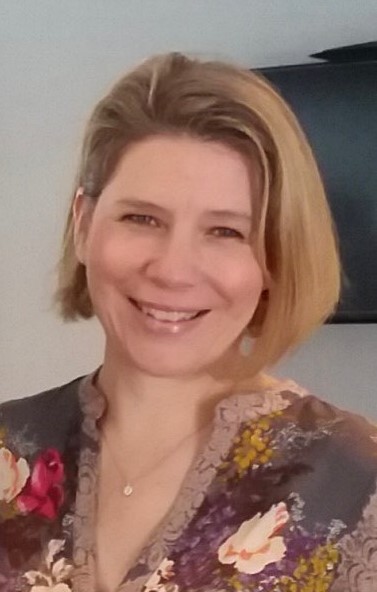
Dr. Laurie Anderson, Pharm.D.
Through her own journey navigating chronic illness, Dr. Laurie has explored and embraced many forms of alternative and non-traditional medicine to support her body for healing. She has gravitated towards practitioners and modalities that treat the whole patient, with the mantra that tending to mind, body and spirit is the true key to lasting health. Over the years, Dr. Laurie has discovered that this often leads to a ‘less is more’ approach.
When not working, Dr. Laurie is an avid gardener, ballroom dancer and traveler with her husband. Remaining curious and finding joy in every day are her super powers.
Subscribe Now, It’s Free!
Recent HBOT News
Randomized, Sham-Controlled, Feasibility Trial of Hyperbaric Oxygen for Service Members With Postconcussion Syndrome: Cognitive and Psychomotor Outcomes 1 Week Postintervention.
Abstract: Background Mild traumatic brain injury (mTBI) and residual postconcussion syndrome (PCS) are common among combatants of the recent military conflicts in Iraq and Afghanistan. Hyperbaric oxygen (HBO2) is a proposed treatment but has not been rigorously...
Management of sport-related concussion: a review.
Abstract: To systematically review the evidence for rest, treatment, and rehabilitation after sport-related concussion. Nine databases including PubMed, Cochrane Central Register of Controlled Trials, Sport Discus, and Web of Science were searched for studies that...
Clinical Trial – Tranexamic Acid and Thromboelastography During Cesarean Delivery
The aim of this study is to characterize the coagulation changes, using thromboelastography
(TEG), after prophylactic tranexamic administration during cesarean delivery. Specifically,
TEG values will be compared in patients who receive prophylactic tranexamic acid or placebo
before surgery, during elective cesarean delivery, and 2 hours postpartum.
Postpartum hemorrhage (PPH) is increasing in incidence in the United States, renewing
interest in multimodal approaches to blood conservation during cesarean delivery.
Pharmacologic therapy with the antifibrinolytic agent, tranexamic acid (TA), has been shown
to reduce estimated blood loss (EBL) during cesarean delivery, but its effect on global
coagulation as assessed by TEG, and how this correlates with lowering blood loss, has not
been elucidated.
This study will be conducted as a randomized, double-blind, controlled trial with two study
arms: control (60 patients); and treatment (60 patients).
Subjects will be pre-medicated with routine pre-cesarean delivery medications including oral
sodium citrate 30 mL and intravenous (IV) metoclopramide 10 mg. A peripheral IV and
noninvasive hemoglobin monitor will be placed, and baseline labs sent: type and screen, serum
hemoglobin, platelet count, fibrinogen, activated partial thromboplastin time (aPTT),
prothrombin time (PT), and baseline TEG values (r time, k time, alpha angle, and maximum
amplitude). Patients will have blood pressure, heart rate, and pulse oximetry measured
throughout surgery as per standard of care. Patients will all receive IV lactated Ringers’
(LR) solution prior to surgery and throughout surgery, with volume recorded and a goal of
less than 2 L unless more IV fluid is clinically indicated. All patients will have a spinal
anesthetic as per standard of care, with hyperbaric bupivacaine 12 mg, fentanyl 10 μg, and
hydromorphone 100 μg. If the anesthetic plan is altered (combined spinal-epidural, general
anesthesia conversion, general anesthesia planned), indications and medication doses used
will be noted for analysis.
Immediately following induction of anesthesia and prior to skin incision, infusion of study
solution will be initiated.
Study solutions will consist of:
1. Control group: 100 mL 0.9% normal saline (NS).
2. Treatment group: 100 mL 0.9% NS containing 1g tranexamic acid (TA). Study solution will
be infused via an infusion pump over 10 minutes. Blood loss will be measured by visual
estimate and weight of surgical sponges. Noninvasive hemoglobin will be measured
throughout the study. All routine care lab values will be noted. At minimum, one lab
panel will be sent one hour after study solution initiation (hemoglobin, fibrinogen,
platelet count, aPTT, PT, and TEG).