
Special Report – Veterans and HBOT
The unfortunate truth is that countless veterans, just like Simon, repeatedly battle suicidal thoughts. They struggle from their battle wounds and PTSD with each passing minute.
These brave souls protected our country, and it’s beyond time that we protect their future. Thankfully there is hope in HBOT.
Watch the 30 Minute Special Report
Veterans are at especially high risk for suicide due to the injuries they’ve endured and the horrific images they’ve seen. Post-traumatic stress disorder (PTSD) and traumatic brain injury (TBI) rank high among the reasons why veterans are choosing death over living. But there is hope for new beginnings. Hyperbaric oxygen therapy (HBOT) is helping war veterans turn their lives around.
In this Special Report, Edward diGirolamo, host of the HBOT News Network, dives into HBOT and what the state of North Carolina is doing to help get veterans this life saving therapy. We hear from Melissa Spain, CEO of the Community Foundation of NC East, as she discusses their involvement to get NC Senate Bill 442 passed; a bill that has appropriated funds to provide HBOT to NC veterans who suffer from TBI and PTSD.
We are also greeted by Elena Schertz, Nurse Practitioner at Extivita-RTP in Durham, NC. Elena gives us a tour of their state-of-the-art clinic where soldiers are receiving HBOT. One of their veteran patients, Simon LeMay, agreed to share his story with us to help spread the hope that exists within the world of hyperbaric oxygen therapy.
Meet a true American Hero, Simon LeMay, retired Sergeant Major with 25-years in the US Marine Corps. LeMay was deployed to Iraq and Afghanistan five times during a ten year period. He lost his best friend in battle and witnessed horrific incidents of violence and injury among his Marine bothers. Although LeMay was blessed to avoid serious physical injury to himself, he did come home with an invisible wound of war.
IED exposures left him with a TBI and visions of war and death haunted him with PTSD. Simon turned to alcohol and pain pills to ease the emotional and physical pain, leading him down a dark tunnel of depression and suicidal thoughts that almost ended in demise.
After hearing about it from friends, his loving family talked him into trying hyperbaric oxygen therapy to help heal his brain injuries. LeMay received treatment at Extivita- RTP in Durham, NC and states after 20-30 treatments he started realizing that he was once again “starting to feel emotion,” with the sense of worthlessness disappearing and the suicidal ideation being no more.
“I started looking forward to the next day,” Simon exclaims.
Also included in this Special Report is a raw and personal interview with Cate, Simon’s wife. Today she is thrilled with Simon’s progress, even calling hyperbaric oxygen therapy “God sent.”

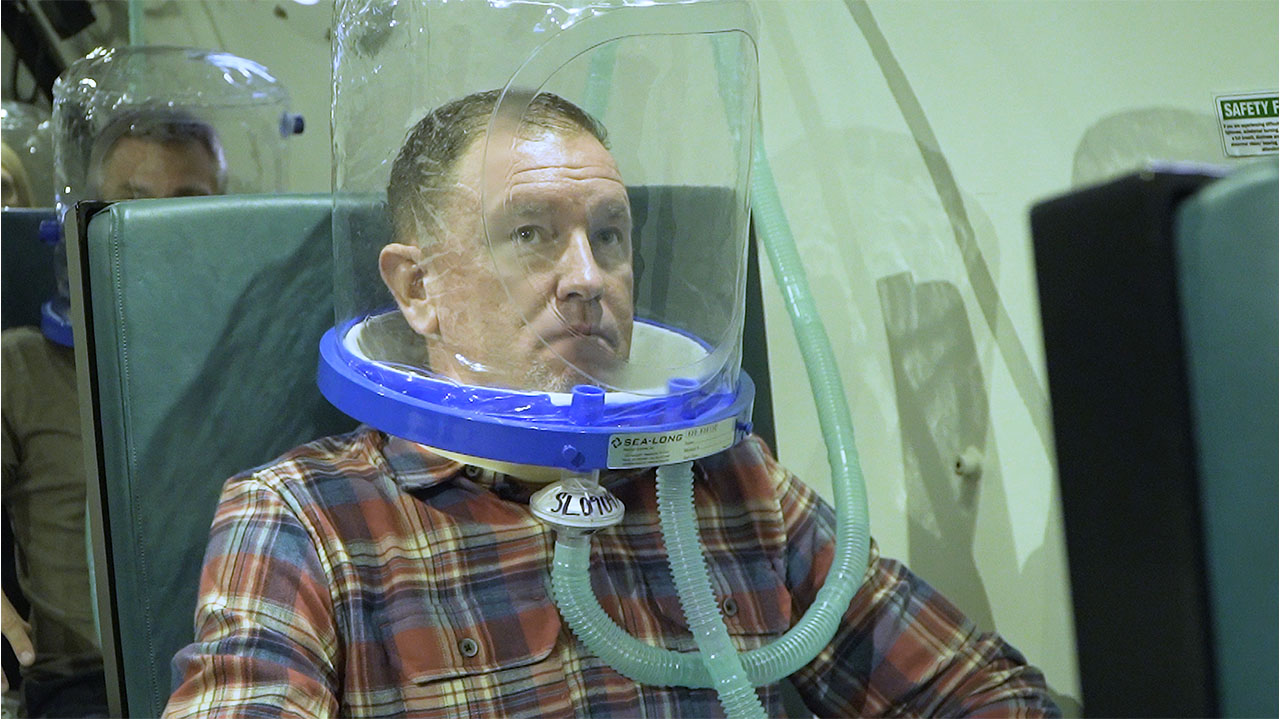

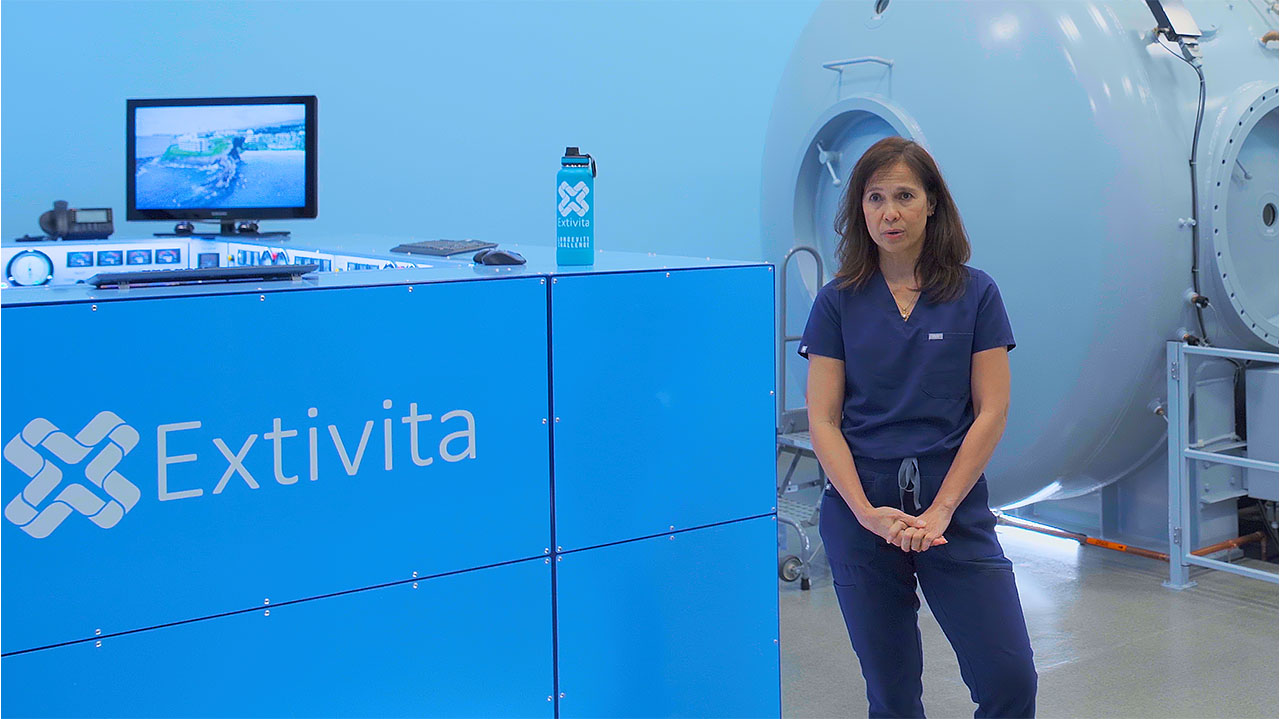

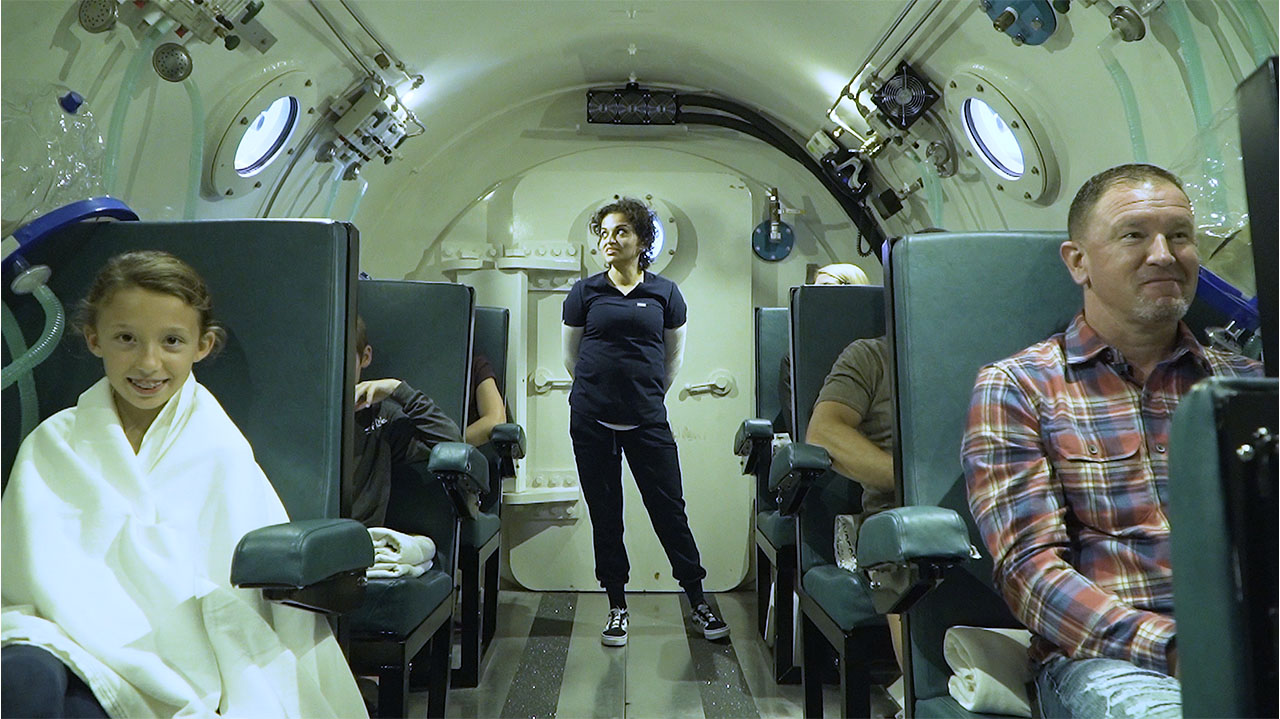




Guest
Organizations
For more information about the guest organizations featured in this special, please click on the links.

North Carolina Hyperbaric Oxygen Therapy Clinic
Extivita RTP

NC HBOT for Veterans Program
The Community Foundation of NC East
Subscribe Now, It’s Free!
Recent HBOT News
Clinical Trial – Effects of Repetitive Hyperbaric Oxygen Therapy in Patients With Acute Ischaemic Stroke
Background and Rationale:
Cerebrovascular disease is always ranked at the top causes of death and most of hospitalized
acute stroke patients have ischemic stroke [1].
Although the mortality rate of acute ischemic stroke is less than that of hemorrhagic stroke
[1], it still results in patient disabilities and complications that often lead to
significant costs to individuals, families, and society.
Traditional treatment for acute ischemic stroke includes thrombolytic therapy by injecting
tissue plasminogen activator (t-PA) within three hours after onset of symptoms [2],
antiplatelets and/or anticoagulant agents administered within the first 48 hours. Clinically,
the narrow time window of thrombolytic therapy and coexisting contraindications limit the use
of t-PA [2]. Thus, searching for an effective supplemental treatment for acute ischemic
stroke is imperative.
Hyperbaric oxygen therapy (HBOT) is valuable in treating acute carbon monoxide poisoning
[3,4], air or gas embolism [5], facilitating wound healing [6] and has been used as an
adjuvant treatment for many neurological disorders that need further study as concussion [7]
, stroke [8,9], cerebral palsy [ 10],traumatic brain injury [ 11], cerebral air embolism
[12], Autism [13] and multiple sclerosis [14].
Indications of hyperbaric oxygen therapy recommended by undersea and hyperbaric medical
society (UHMS) [15] are 1.air or gas embolism [5], 2.carbon monoxide poisoning [3,4],
3.clostridial myositis and myonecrosis [16], 4.crush injury, compartment syndrome and other
acute traumatic ischemias [17], 5.decompression sickness [18], 6.arterial insufficiencies
[19], 7.severe anemia [20], 8.intracranial abscess [21], 9.necrotizing soft tissue infections
[22],10. refractory osteomyelitis [23], 11.delayed radiation injury [24], 12.compromised
grafts and flaps [25], 13.acute thermal burn injury [26] and 14.idiopathic sudden
sensorineural hearing loss [27].
Known mechanisms of HBOT-induced neuroprotection include enhancing neuronal viability via
increased tissue oxygen delivery to the area of diminished blood flow, reducing brain edema,
and improving metabolism after ischemia [28,29]. Furthermore, a recent study performed on a
rat suggested that upregulation of the expression of glial derived neurotrophic factor (GDNF)
and nerve growth factor (NGF) might underlie the effect of HBOT [30].
The effectiveness of use of Hyperbaric oxygen therapy in human ischemic stroke is still
controversial that need further evaluation.
Clinical Trial – Effect of Adjuvant Hyperbaric Oxygen Therapy on Bells Palsy Outcome
This is a randomized, single blinded, non-placebo controlled that will compare one group of
Bells Palsy patients receiving the current standard of care including oral corticosteroids
and oral antivirals against an experimental group receiving the current standard of care in
addition to hyperbaric oxygen therapy. Outcome assessment will be based on both objective
analyses of facial movements as well as subjective quality of life scales.
[Hyperthyroidism-induced calciphylaxis: A case report].
Abstract: Calciphylaxis or calcific uremic arteriolopathy (CUA) is a cutaneous disease with ulcerations secondary to calcification of cutaneous and subcutaneous small arteries and arterioles. It is a rare but severe disease with significant morbidity and mortality...