
Special Report – Veterans and HBOT
The unfortunate truth is that countless veterans, just like Simon, repeatedly battle suicidal thoughts. They struggle from their battle wounds and PTSD with each passing minute.
These brave souls protected our country, and it’s beyond time that we protect their future. Thankfully there is hope in HBOT.
Watch the 30 Minute Special Report
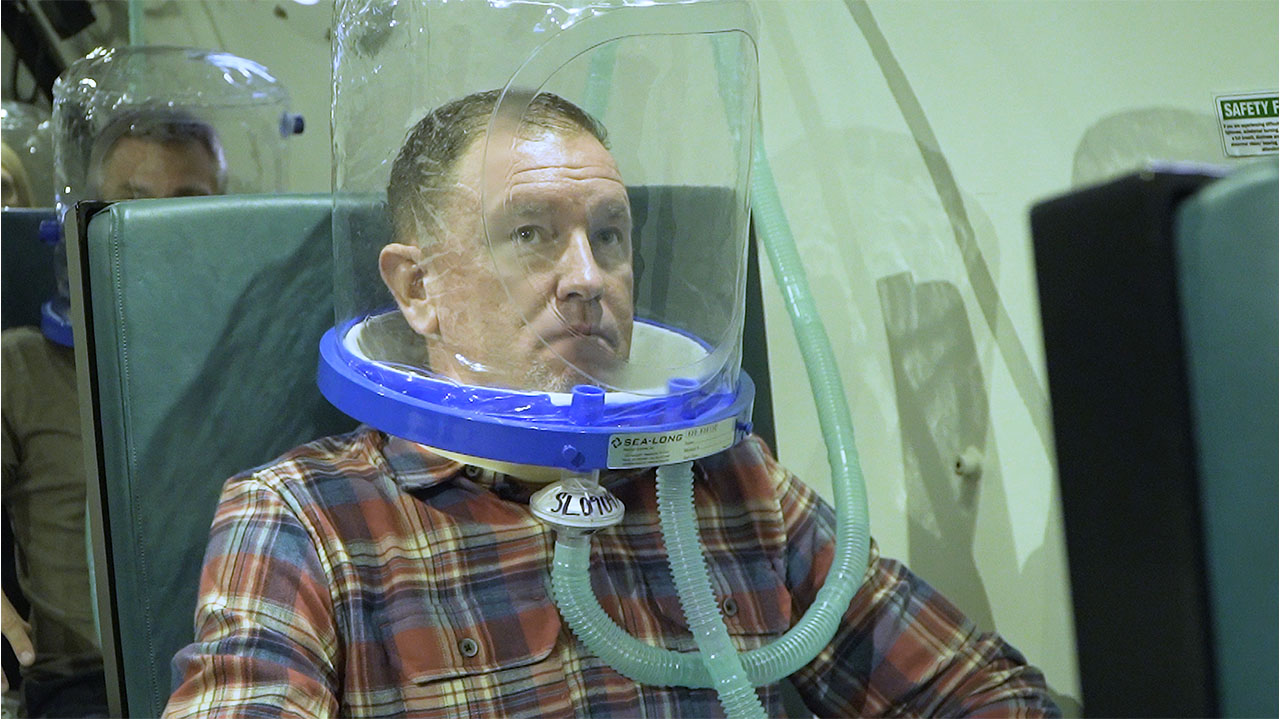
Veterans are at especially high risk for suicide due to the injuries they’ve endured and the horrific images they’ve seen. Post-traumatic stress disorder (PTSD) and traumatic brain injury (TBI) rank high among the reasons why veterans are choosing death over living. But there is hope for new beginnings. Hyperbaric oxygen therapy (HBOT) is helping war veterans turn their lives around.
In this Special Report, Edward diGirolamo, host of the HBOT News Network, dives into HBOT and what the state of North Carolina is doing to help get veterans this life saving therapy. We hear from Melissa Spain, CEO of the Community Foundation of NC East, as she discusses their involvement to get NC Senate Bill 442 passed; a bill that has appropriated funds to provide HBOT to NC veterans who suffer from TBI and PTSD.
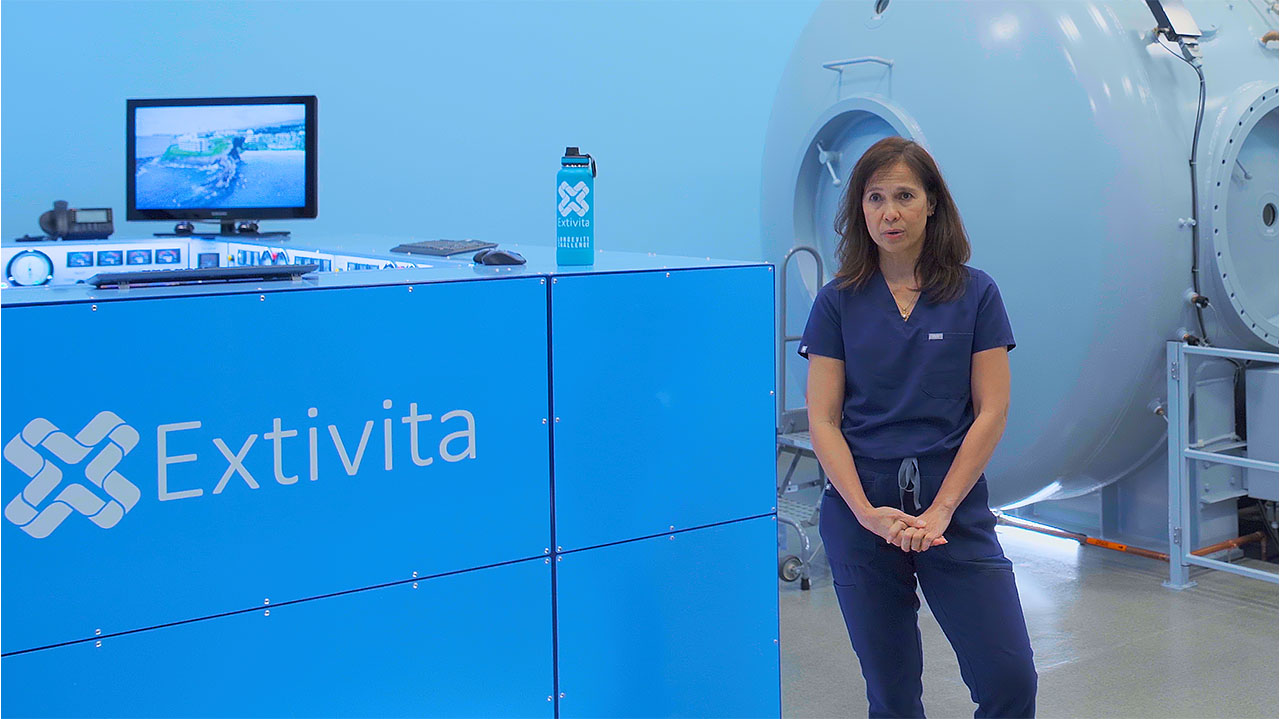
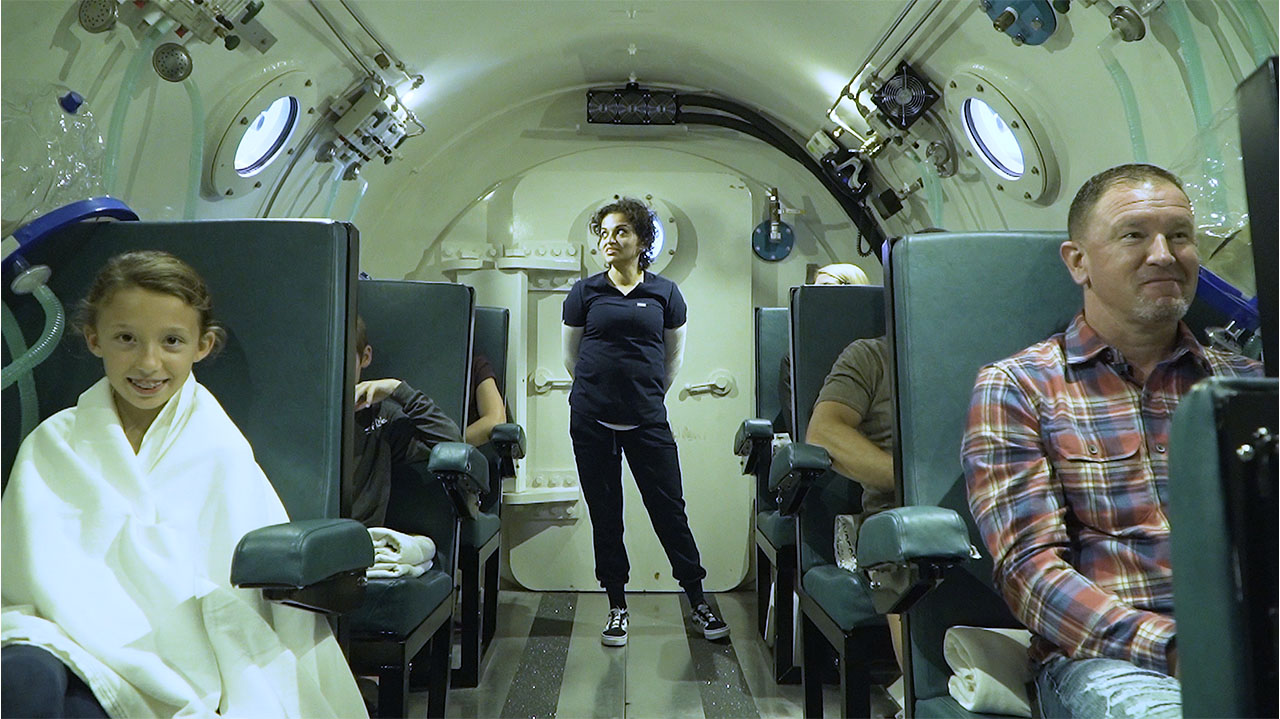
We are also greeted by Elena Schertz, Nurse Practitioner at Extivita-RTP in Durham, NC. Elena gives us a tour of their state-of-the-art clinic where soldiers are receiving HBOT. One of their veteran patients, Simon LeMay, agreed to share his story with us to help spread the hope that exists within the world of hyperbaric oxygen therapy.
Meet a true American Hero, Simon LeMay, retired Sergeant Major with 25-years in the US Marine Corps. LeMay was deployed to Iraq and Afghanistan five times during a ten year period. He lost his best friend in battle and witnessed horrific incidents of violence and injury among his Marine bothers. Although LeMay was blessed to avoid serious physical injury to himself, he did come home with an invisible wound of war.
IED exposures left him with a TBI and visions of war and death haunted him with PTSD. Simon turned to alcohol and pain pills to ease the emotional and physical pain, leading him down a dark tunnel of depression and suicidal thoughts that almost ended in demise.
After hearing about it from friends, his loving family talked him into trying hyperbaric oxygen therapy to help heal his brain injuries. LeMay received treatment at Extivita- RTP in Durham, NC and states after 20-30 treatments he started realizing that he was once again “starting to feel emotion,” with the sense of worthlessness disappearing and the suicidal ideation being no more.
“I started looking forward to the next day,” Simon exclaims.
Also included in this Special Report is a raw and personal interview with Cate, Simon’s wife. Today she is thrilled with Simon’s progress, even calling hyperbaric oxygen therapy “God sent.”







Guest
Organizations
For more information about the guest organizations featured in this special, please click on the links.

North Carolina Hyperbaric Oxygen Therapy Clinic
Extivita RTP

NC HBOT for Veterans Program
The Community Foundation of NC East
Subscribe Now, It’s Free!
Recent HBOT News
prediction of wound healing outcome using skin perfusion pressure and transcutaneous oximetry: a single-center experience in 100 patients.
Abstract: Chronic lower extremity wounds are challenging and typically occur in patients with complicating conditions such as diabetes and peripheral vascular disease. Noninvasive modalities developed to assess wound healing potential, such as transcutaneous oximetry...
Hyperbaric oxygen therapy as an adjunctive treatment for diabetic foot wounds: a comprehensive review with case studies.
Abstract: Complications associated with diabetes are often expensive to treat, and commonly include foot ulceration. While most diabetic foot ulcers heal with standard treatment, when standard treatment measures fail, adjunctive therapies must be considered. We...
Clinical Trial – HBOT Late Radiation Tissue Injury
Background: Radiotherapy is a common treatment for many malignancies. Radiation-related
complications developing months or years after radiation treatment are known as late
radiation tissue injury (LRTI) and are estimated to effect 5%-15% of all long-term survivors
who have received radiation.
Hyperbaric oxygen therapy (HBOT) is a well established treatment of LRTI. Most of the studies
evaluating effect of HBOT on LRTI are focused on survival, resolution of tissue damage and
improvement in LENT-SOMA scale. Very few studies have addressed effect of HBOT on pain in
LTRI. Krahn and colleagues were the first to report the analgesic effect of HBOT in 3 cases
of refractory pain in oncological patients with radiation soft tissue injury. Other studies
showed significant improvement in pain intensity in patients with breast cancer and pelvic
malignancies treated with HBOT for LTRI. In patients that had developed radiation- induced
brachial plexopathy, HBOT elicited an increase in warm pain thresholds and a reduction in
lymphoedema. A prospective case study of 16 patients with gynecological cancer found no
changes with respect to pain and depression outcomes. A trial in patients with radiation
induced proctopathy showed that 75% of patients with rectal pain had some improvement,
although none experienced a complete resolution of pain symptoms.
There are several mechanisms by which HBOT may elicit analgesic effects. There is a growing
body of evidence that HBOT’s analgesic effect related to nitric oxide metabolism and
endogenous opioid secretion. Furthermore, the inhibition of tumor necrosis factor alph
(TNF-α), the production of substance P, and the modulation of serotonergic pathways have all
demonstrated a modification in the pain response following HBOT. In animal studies HBOT
decreased allodynia and hyperalgesia in different models of neuropathic and inflammatory
pain. The long lasting antinociceptive effect of HBOT was found to be dose-dependent in
non-injured tissues.
In human studies, HBOT decreased pain and edema and improved function in patients suffering
from the complex regional pain syndrome, and improved pain scores and range of motion in
patients with idiopathic femoral head necrosis. Women suffering from interstitial cystitis
demonstrated a reduction in pelvic pain following weeks and months of HBOT treatment. In
patients suffering from idiopathic trigeminal neuralgia HBOT produced a rapid reduction in
symptoms and these effects were lasting for 6 months following treatment. HBOT was also found
to be an effective treatment for cluster headaches and migraines and alleviated muscle and
bone pains in patients with myofascial syndrome, fibromyalgia, and biphosphonate-related
osteonecrosis of the jaw.
Based on the evidence presented above and HBOT’s known analgesic effect in many conditions,
the investigators designed this study with the objective to evaluate if HBOT reduces pain,
improves depression and impacts on patients quality of life in patients suffering from late
radiation tissue injury.
Study Design: Prospective observational study (n=300). Patients that have had radiation
therapy for malignancy, developed late radiation injury and suffer from chronic pain.