
HBOT Conversations:
Join us for interviews with researchers, practitioners, industry experts, and patients to share their stories, successes, and expertise relative to hyperbaric oxygen therapy
Subscribe. Join the discussion. Share the hope.
Listen to or Watch the HBOT Conversations Podcast
Listen to the HBOT Converstations podcast by downloading it from your favorite podcasting platform or scroll down and watch an episode here on the HBOT News website:


Watch the HBOT Conversations Podcast
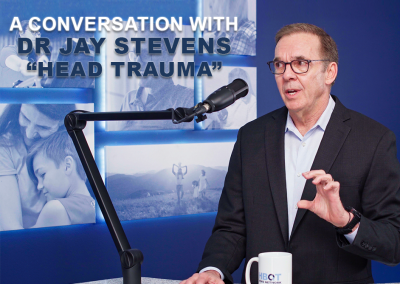
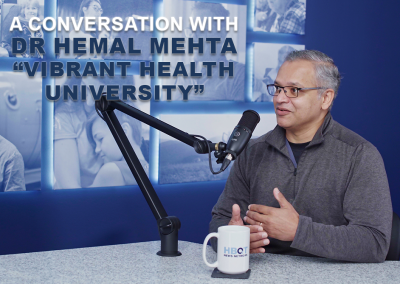
Subscribe Now, It’s Free !
Recent HBOT News
Executive summary: The Brain Injury and Mechanism of Action of Hyperbaric Oxygen for Persistent Post-Concussive Symptoms after Mild Traumatic Brain Injury (mTBI) (BIMA) Study.
The Brain Injury and Mechanism of Action of Hyperbaric Oxygen for Persistent Post-Concussive Symptoms after Mild Traumatic Brain Injury (mTBI) (BIMA) study, sponsored by the Department of Defense and held under an investigational new drug application by the Office of the Army Surgeon General, is one of the largest and most complex clinical trials of hyperbaric oxygen (HBO₂) for post-concussive symptoms (PCS) in U.S. military service members.
Hyperbaric oxygen for mild traumatic brain injury: Design and baseline summary.
The Brain Injury and Mechanisms of Action of Hyperbaric Oxygen for Persistent Post-Concussive Symptoms after Mild Traumatic Brain Injury (mTBI) (BIMA) study, sponsored by the Department of Defense, is a randomized double-blind, sham-controlled clinical trial that has a longer duration of follow-up and more comprehensive assessment battery compared to recent HBO₂ studies. BIMA randomized 71 participants from September 2012 to May 2014. Primary results are expected in 2017. Randomized military personnel received hyperbaric oxygen (HBO₂) at 1.5 atmospheres absolute (ATA) or sham chamber sessions at 1.2 ATA, air, for 60 minutes daily for 40 sessions. Outcomes include neuropsychological, neuroimaging, neurological, vestibular, autonomic function, electroencephalography, and visual systems evaluated at baseline, immediately following intervention at 13 weeks and six months with self-report symptom and quality of life questionnaires at 12 months, 24 months and 36 months. Characteristics include: median age 33 years (range 21-53); 99% male; 82% Caucasian; 49% diagnosed post-traumatic stress disorder; 28% with most recent injury three months to one year prior to enrollment; 32% blast injuries; and 73% multiple injuries. This manuscript describes the study design, outcome assessment battery, and baseline characteristics. Independent of a therapeutic role of HBO₂, results of BIMA will aid understanding of mTBI.
Neuropsychological assessments in a hyperbaric trial of post-concussive symptoms.
Results of studies addressing the effect of mild traumatic brain injury (mTBI) and post-traumatic stress disorder (PTSD) on symptoms and neuropsychological assessments are mixed regarding cognitive deficits in these populations. Neuropsychological assessments were compared between U.S. military service members with mTBI only (n=36) vs. those with mTBI÷ PTSD (n=35) from a randomized interventional study of mTBI participants with persistent post-concussive symptoms (PCS). The mTBI group endorsed worse symptoms than published norms on PCS, PTSD and pain scales (⟩50% abnormal on Neurobehavioral Symptom Inventory (NSI), PTSD Checklist-Civilian, McGill Pain Questionnaire-Short Form) and some quality of life domains. Worse symptom reporting was found in the mTBI÷ PTSD group compared to mTBI (e.g., mean NSI total score in mTBI 27.5 (SD=12.7), mTBI÷ PTSD 39.9 (SD=13.6), p⟨0.001). The mTBI÷PTSD group performed worse than mTBI on the Weschler Adult Intelligence Scale digit span (mean difference -1.5, 95% CI[-2.9,-0.1], p=0.04) and symbol search (mean difference -1.5, 95% CI[-2.7,-0.2], p=0.03) and Grooved Pegboard (dominant hand mean difference -7.0, 95% CI[-11.5,-2.4], p=0.003; non-dominant mean difference -9.8, 95% CI[-14.9,-4.7], p⟨0.001). Differences were detected in ANAM simple reaction time (p=0.04) and mathematical processing (p=0.03) but not verbal fluency or visuospatial memory assessments. Results indicate increased symptom severity and some cognitive deficits in mTBI÷ PTSD compared to mTBI alone.