
HBOT Conversations:
Jim Hooker & HBOT for Vets (Part 1)
In early 2010 Mr. Hooker cofounded, and served as the Chief Operating Officer of a foundation which had as its mission to support the successful transition of Wounded In Action (WIA) military families into the civilian community. As a result of his work in support of seriously injured veterans being treated at the Walter Reed National Military Medical Center (WRNMMC) at Bethesda, Maryland, Mr. Hooker has become proficient in understanding and the treatment of Traumatic Brain Injury (TBI) and Post Traumatic Stress Disorder (PTSD).
Mr. Hooker also directed the preparation of a video describing a “Soldiers Combat Experience and Homecoming” with a retired, TBI hyperbaric oxygen therapy (HBOT) recovered, U.S. Army Major. He initiated and executed interactions with a marine corps wounded warrior battalion medical staff, stimulating the prescribed use of HBOT for TBI/PTSD wounded marine families; while identifying, resourcing and supporting several TBI/PTSD injured active duty and veteran personnel through successful HBOT. Mr. Hooker is a known author on several articles published in the North Carolina Medical Journal on TBI and PTSD veteran care in North Carolina, and he authored NC Law 2019-175 authorizing prescribed HBOT for veterans with TBI and PTSD injuries, signed into law by the North Carolina Governor on 26 July, 2019.
Watch the Podcast
HBOT News welcomes Jim Hooker, a 83 year old retired Navy Vietnam veteran, who served our country for 20 years. After leaving the military, he spent the next 36 years in Washington D.C., and during that time he got involved with a church ministry that was taking care of injured veterans. One thing lead to another and that ministry paved the way for Jim to become Chief Operating Officer of the Wounded In Action Family Foundation. Their mission was to bring the injured men and women home after they were discharged from the hospitals, because the military doesn’t do a very good job of telling vets how to get home to their families, or preparing the family for what they will soon experience living with an injured veteran of war.
Jim tells the story of his very first case. It was a triple amputee, young man in the Army, who was married and had five children, Jim’s foundation spent $400,000 over 36 months getting this vet to where they thought was settled and ready to come home. They got him registered in a community college, set up his wife with a job, put his kids in school, and they even set the family up with a home in Maryland. They did everything they could think of to bring him home to the best environment possible, but he never came home. He never came home because “his head didn’t work”; he had sustained too much brain damage from the blast that took his three limbs. Jim was left extremely frustrated and distraught that the mission ultimately failed — they spent all this time, energy, and money and in the end he never came home.
Soon after, Dr. Paul Harch came across Jim’s television. It seemed like divine intervention that Dr. Harch was talking about Hyperbaric Oxygen Therapy and how it heals injured brains that have PTSD and TBI. At the time (10 years ago), Jim didn’t even know what Post-Traumatic Stress Disorder (PTSD) and Traumatic Brain Injury (TBI) was. Jim’s wife encouraged him to pay attention to what she was watching on the television, and Jim did. He called Dr. Harch and asked if he could come to the Harch Institute in New Orleans to learn more about Hyperbaric Oxygen Therapy for veterans. Dr. Harch not only welcomed Jim, they spent about two days together discussing HBOT and brain healing. In time, Jim was eventually introduced to Major Ben Richards, a patient of Dr. Harch’s.
Ben was an Army veteran who experienced a very severe TBI in combat. Ben was told that he needs to just get used to this new normal, and was sent on his way to live the rest of his life with a brain injury. Ben became suicidal, but crossed paths with one of Dr. Harch’s past patients who stressed that there is a therapy out there that works to heal brain injuries…. she introduced him to HBOT and Dr. Harch. Dr. Harch treated Ben pro bono, and Jim also met with Ben at the beginning of his dive sessions. Jim refers to Ben as a man who couldn’t keep his balance to stand, his speech was slurred, and his vision was a mess. Keeping track of his progress, Jim witnessed Ben start to make a beautiful recovery after 40 dives, and then a complete recovery after 80 HBOT sessions. They told his story to the world and Jim has since been a strong voice recommending HBOT to treat and cure veterans who are battling PTSD and TBI. Jim, Ben, and Dr. Harch made a video that he recommends everyone watch, called “A Soldier’s Story of Combat and Homecoming”. Ben continued to do Hyperbaric Oxygen Therapy dives and as of how he’s completed about 120 dives and is absolutely thriving in life.
Jim trusted that Ben’s story was just the start to helping so many other veterans. So he went on a mission to find the proof and to show the proof that this works! Hyperbaric Oxygen Therapy not only can save the lives of our veterans, but it can free them from the chains of PTSD and TBI. Jim has relied on his faith to lead him on this journey where he can help as many veterans as possible get the HBOT treatment they deserve. He says meeting host, Ed di Girolamo, was one stop on his walk of faith, and he’s grateful to have met another veteran and someone so adverse in the world of HBOT who shares the same passion and drive to make a difference.
Over time, Jim met with State Legislators in North Carolina, and congressmen and women who have all listened to him as he lobbied for funding from the state to heal their veterans the way they deserve. With the help of Dr. Greg Murphy, a doctor within the assembly of North Carolina, Jim has educated countless decision makers on the power of Hyperbaric Oxygen Therapy and has delivered all the proof that the answer to healing our vets is oxygen + pressure.
The law was passed under Senate Bill 442, allocating $150,000 to help veterans get 40 or more Hyperbaric Oxygen Therapy treatments. Things moved quickly after that…. the HBOT for Vets website was born at the hands of a local television personality, Mike Weeks; Melissa Spain at the Community Foundation of Eastern NC was appointed the fiduciary of the funds; and Jim has been handling the incoming requests for HBOT treatment, sending approved vets to Extivita-RTP to complete the 40 Hyperbaric Oxygen Therapy sessions that are paid for with the allocated state funds.
Jim reminds us that for anyone who has suffered a head injury, sometimes it’s hard to see the positive progress they are making because the brain heals so slowly. But he urges North Carolina veterans to try it and stick with it, because better days are bound to be within your reach. He outlines all the symptoms of a brain injury, and urges you to seek out Hyperbaric Oxygen Therapy if you or a loved one has suffered a brain injury.
*This interview is part of a two part series with Jim Hooker, stay tuned next week on 2/17 when we release Part 2
Guest
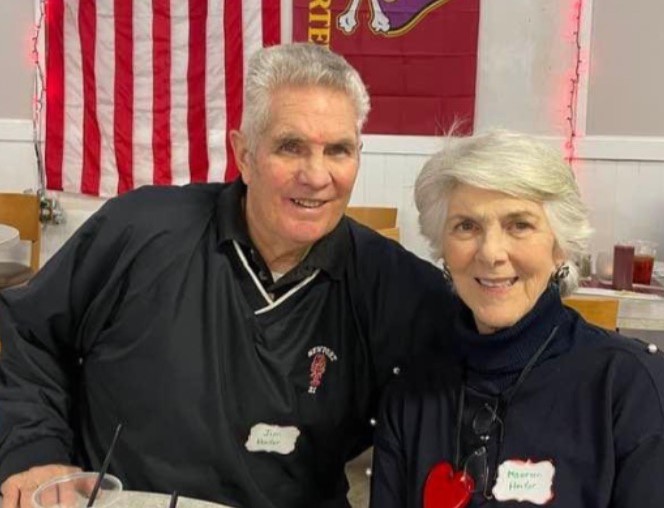
Jim Hooker
During his last several years in the Navy, Mr. Hooker was assigned to several positions in the Joint (Navy/Air Force) Cruise Missiles Project Office (JCMPO). Initially, Mr. Hooker was the Director of Organization and Management. During this assignment he was responsible for the creation and staffing of the joint program, a 360-person organization composed of both military and civilian personnel. Subsequently, Mr. Hooker was the Director of Resources Management executing JCMPO financial management, budgeting, resources management, and cost analysis responsibilities. In this capacity, he served as the principal advisor to the Director of the JCMPO on all financial matters including preparation and presentation of budget justifications to the Navy, Air Force, DoD and congress. For the two years prior to his departure from the Navy, Mr. Hooker was the Director of Contracts. In this position, Mr. Hooker supervised 46 personnel, including 26 contracting officers. The division awarded approximately two billion dollars worth of contracts annually to over 50 different contractors. During this period, Mr. Hooker authored a number of unique and complex terms and conditions including special incentive arrangements requiring congressional approval. In early 2010 Mr. Hooker cofounded, and served as the Chief Operating Officer of a foundation which had as its mission to support the successful transition of Wounded In Action (WIA) military families into the civilian community. As a result of his work in support of seriously injured veterans being treated at the Walter Reed National Military Medical Center (WRNMMC) at Bethesda, Maryland, Mr. Hooker has become proficient in understanding and the treatment of Traumatic Brain Injury (TBI) and Post Traumatic Stress Disorder (PTSD).
Examples of work accomplished include: Prepared a detailed strategy and plan to implement accessibility of effective treatment for veterans with Traumatic Brain (TBI) and Post Traumatic Stress Disorder (PTSD) injuries. Directed the preparation of a video describing a “Soldiers Combat Experience and Homecoming” with a retired, TBI hyperbaric oxygen therapy (HBOT) recovered, U.S. Army Major. Initiated and executed interactions with a marine corps wounded warrior battalion medical staff, stimulating the prescribed use of HBOT for TBI/PTSD wounded marine families. Identified, resourced and supported several TBI/PTSD injured active duty and veteran personnel through successful HBOT. Authored several articles published in the North Carolina Medical Journal on TBI and PTSD veteran care in North Carolina. Authored NC Law 2019-175 authorizing prescribed HBOT for veterans with TBI and PTSD injuries, signed into law by the North Carolina Governor on 26 July, 2019. Supported North Carolina budget legislation resulting in the appropriation of funds to treat TBI/PTSD wounded Veterans with HBOT. Assisted in the implementation of the North Carolina HBOT program to treat veteran families with TBI and PTSD injuries. This program was funded by the 2021 and 2022 North Carolina legislatures and over 40 veterans have been treated or are in therapy as a result.
Mr. Hooker received a Bachelor of Science Degree, in Commerce and Finance, from Villanova University and an M.B.A. from the U.S. Naval Post Graduate School, Monterey, California.
Subscribe Now, It’s Free!
Recent HBOT News
Clinical Trial – Transcranial Magnetic Stimulation and Hyperbaric Chamber for Women Fibromyalgia
Fibromyalgia syndrome (FMS) is a multisystem disease, characterized by generalized chronic
musculoskeletal pain. In addition, there is a lot of care for fatigue, sleep disorders,
morning stiffness, cognitive disorders, depression, anxiety and stress. Other common symptoms
are back pain, headaches, irritable bowel, balance problems and deterioration of physical
function in general. Patients with fibromyalgia (FM) often show pain at specific points that
are known as "tender spots or tender spots, with an increased sensitivity to painful stimuli"
(hyperalgesia) and a decreased pain threshold (allodynia). which can be evidenced in the
physical examination and in the absence of anomalies that justify in the biological or image
tests. These pain points to pressure, based on the most specific and specific criteria for
the diagnosis of the disease, traditionally based on the criteria of the American College of
Rheumatology (ACR), according to which, should be presented so minus 11 out of 18 painful
points to confirm it. Although the etiology remains unknown and unclear, its appearance is
attributed to a problem of central sensitization, that is, changes in central processing,
which causes an alteration of the mechanisms that regulate the sensation of pain, with
amplification of nociceptive input . and perpetuation of painful stimuli. Fibromyalgia is
becoming a common syndrome in the countries of Western Europe, with a prevalence in the
general population that ranges between 1-3%, and specifically in Spain, around 2.4%. In
addition, it has a higher incidence in women than men (73-95%), predominantly affecting women
between the ages of 40-50 years. About 3% of women with fibromyalgia are at an age when
menopause occurs, so not only do they experience the symptoms of both states but they even
exacerbate the syndrome with each other. On the other hand, and in relation to its
chronicity, the care of this type of patients involves large costs for society with a
significant consumption of health resources in the field of primary care, as well as the
costs of work absenteeism. For these reasons, it is considered an important problem with a
great impact on the health system, and therefore more and more studies are being developed
with the aim of better understanding the pathophysiology of this disease. The therapeutic
approach includes low cost and easy access measures, such as physical exercise (EF) programs
to improve the symptoms of FM. Physical exercise has positive effects directly on pain, joint
and muscle stiffness, generalized sensitivity and fatigue, among others, and secondarily on
cognitive disorders. Thus, the vast majority of studies focus on low-impact aerobic exercise,
performed between 60% and 70% of the maximum heart rate two to three times a week. However,
to date, there is no study that compares the effectiveness of physical exercise with other
innovative therapeutic actions, such as transcranial magnetic stimulation (TMS), the
hyperbaric chamber (HBOT), in parameters related to pain and quality of life. the life of
patients with fibromyalgia. The general objective is the effectiveness of transcranial
magnetic stimulation and the hyperbaric chamber in women with fibromyalgia. As specific
objectives we propose:
To assess the effect of HBOT, TMS and EF on quality of life in women with fibromyalgia.
– Object the effect of HBOT, TMS and EF in cortical functioning.
– Evaluate the effect of HBOT, TMS and EF on fatigue.
– Evaluate the effect of HBOT, TMS and EF on psychological aspects, such as depression and
anxiety.
– Evaluate the effect of HBOT, TMS and EF on the perception of pain and the number of
painful points.
– Evaluate the effect of HBOT, TMS and EF on the quality of sleep.
– Evaluate the effect of HBOT, TMS and EF on the quality of life.
– Evaluate the effect of HBOT, TMS and EF on the pain constructs.
– Determine the effect of HBOT, TMS and EF on plasma endorphin levels.
Heat Shock Protein 70 (HSP70) Reduces Hepatic Inflammatory and Oxidative Damage in a Rat Model of Liver Ischemia/Reperfusion Injury with Hyperbaric Oxygen Preconditioning.
Abstract: BACKGROUND Several clinical conditions can cause hepatic ischemia/reperfusion (I/R) injury. This study aimed to determine the mechanism of the protective effect of hyperbaric oxygen preconditioning (HBO₂P) on hepatic ischemia/reperfusion (I/R) injury in a...
Effect of hyperbaric oxygen therapy and corticosteroid therapy in military personnel with acute acoustic trauma.
Abstract: Acute acoustic trauma (AAT) is a sensorineural hearing impairment due to exposure to an intense impulse noise which causes cochlear hypoxia. Hyperbaric oxygen therapy (HBO) could provide an adequate oxygen supply. The aim was to investigate the effectiveness...