
HBOT Conversations:
Tom Fox (Part 2)
Tom is the Research Physiologist for the Hyperbaric Institute for Research and Training, a division of Island Hyperbaric Centre in Pincourt QC. He has worked in the field of Clinical Hyperbaric Oxygen for the last 30 years, and has been intimately involved with the implementation and the development of the US Army’s Clinical Hyperbaric Service at Dwight David Eisenhower Army Medical Center. Tom is a senior army aviator and flew twelve years as a Medical Evacuation Pilot for the US Army.
Tom joined the Extivita-RTP team in 2022 as the Safety Director, and is joining us in a 2-part series to discuss the history of Hyperbaric Oxygen Therapy and dive into his personal experience healing patients with HBOT.
Watch the Podcast
In Part 2 of Ed di Girolamo’s conversation with Tom Fox, we dive further into the history of hyperbarics and how this all plays a part in where we are today in understanding, administering, and healing patients with HBOT. Part 1 discussed HBOT history up to Cunningham’s ball in the 1920s.
We start our conversation discussing the time when operating rooms were essentially hyperbaric chambers. Tom explains that was before the FDA, and they started using pressurized rooms and oxygen as an alternative method to do heart surgery and replace valves, because if you super-saturate the body during surgery you can extend the length of time that a patient can go without oxygen. The time was upwards of 13 to 15 minutes, allowing the surgeon more time to do valve replacement. This could have been a real game-changer for the HBOT industry, but it was short-lived because the bypass machine replaced hyperbaric operating rooms.
Then in 1963 the HBOT industry had a set-back. President John F. Kennedy had a premature son who had a condition that lead to a hypoxic event (lack of oxygen) following birth. The child was placed in a hyperbaric oxygen chamber at Harvard. Initially, he did very well. But, 60 years ago we didn’t know a lot about the toxic effects and the therapeutic limits of the use of oxygen. He was treated at a much greater pressure than physicians would treat people today, and this little baby was treated for extended time, up to 7 hours! So Hyperbaric Oxygen Therapy was seen in a negative light right after that, because as different physicians got involved in it, they said that it was HBOT that killed John F. Kennedy’s baby. That incident made it difficult for the hyperbaric industry to bounce back into a positive light. Yet, there was a saving grace; thankfully around this same time and soon after Europe and the USSR were developing whole systems and procedures to administer HBOT. They had hospitals in a former USSR that was using hyperbarics as their principal treatment; so when physicians here in the US wanted to treat with HBOT, they used a machine to translate a Russian manual, so they could get it right.
Moving forward, a lot of the physicians that were fostering and having great success treating with HBOT came out of the military. Tom explains that he has been in the HBOT industry for a long time, 31 years and he has been in the presence of some of the true pioneers in hyperbarics.
And then the Undersea Medical Society enters the picture…..
Tom explains, “Now in 1967, that’s kind of when the Undersea Medical Society came around, you know, what they did was they go, ‘Okay, this is the Wild West. We need to rein this in and we need to identify the rationale, why we’re doing this so that we can structure this into an offering in medicine, a therapeutic offering into medicine.’ And you had doctors like Dr. Kindwall, Dr. Hart, these are pioneers at the time that were instrumental in the formation of the new Medical Society. You know, that was both a curse and it had a lot of positive effects, too. But the thing was they put hyperbarics and undersea medicine together, and that’s been a problem. It certainly prevents the thought of clinical hyperbarics progressing independently of diving medicine.
Next, the FDA worked together with the Undersea & Hyperbaric Medical Society, and together they produced a committee report that looked at the indications. The indications were a lot more than what we have today, and since then it’s been refined.
Tom stresses that there’s an art to properly using Hyperbaric Oxygen Therapy, and he states the following —
“In the right hands, hyperbarics can do wonderful things. In the wrong hands, most often it won’t do bad things, but it will not have the desired results.”
di Girolamo and Tom Fox further dive into the art of using hyperbarics properly, and even how incorporating things like a good diet and exercise will play just as much of an important part in a person’s health. Tom stresses that HBOT is not a cure in most cases, but it can be an extremely useful tool to help someone get closer to their baseline.
The one thing that has stood the test of time is that no one can deny that HBOT is effective for hypoxia and inflammation. Any indication that has those two conditions associated with it, can be positively affected by using Hyperbaric Oxygen Therapy. He ends this segment encouraging everyone to keep an open mind about the god-given miracle of combining oxygen and pressure.
“I think you’re going to find that whether you’re dealing with something currently or you may be having, you know, something going on that you’re not even aware of, HBOT is not going to hurt you. It’s a good option.”
Guests
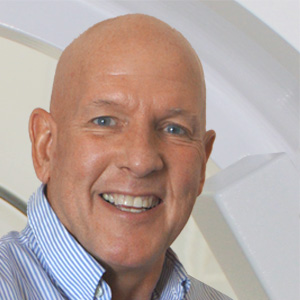
Thomas M. Fox, MAS,MS, CHT - Safety Director at Extivita RTP & Research Physiologist for the Hyperbaric Institute for Research and Training
Tom is the Research Physiologist for the Hyperbaric Institute for Research and Training, a division of Island Hyperbaric Centre in Pincourt QC. He has worked in the field of Clinical Hyperbaric Oxygen for the last 30 years. During this time, he has been intimately involved with the implementation and the development of the US Army’s Clinical Hyperbaric Service at Dwight David Eisenhower Army Medical Center. He has provided contract hyperbaric services since 1997. Prior to accepting his current position in Quebec, Canada, Mr. Fox served as the Chief of the Atmospherics Branch of the U.S. Army School of Aviation Medicine, Fort Rucker Alabama. In this capacity, he was responsible for hyperbaric/ hypobaric operations and training of US and NATO aviators, flight surgeons and flight medics. Mr. Fox is a senior army aviator and flew twelve years as a Medical Evacuation Pilot for the US Army.
Tom joined the Extivita team in 2022 as the Safety Director, helping Extivita to maintain a healthy and safe environment for exceptional patient care.
Subscribe Now, It’s Free!
Recent HBOT News
Clinical Trial – Hyperbaric Oxygenation (HBO) in Traumatic Spinal Cord Injury. (EOS) – Pilot Study
Hypothesis of the Study:
Based on the presented results, the investigator hypothesises that HBO preserves neurons that
are not irreversibly damaged (i.e. severed) during initial trauma, thus enabling regain of
their function. The investigator predicts that HBO treatment protects and enhances motor
function in initially paralysed regions, including improvement in function of the extremities
as well as recovery of urinary bladder control and bowel function.
Outline of the Proposed Study:
Within a prospective "proof of principle" trial, a total of 100 patients will be included.
Fifty patients will be recruited at the Division of Thoracic and Hyperbaric Surgery, Medical
University of Graz. In parallel, 50 control patients will be included at the Department of
Orthopaedics and Trauma, Paracelsus University Salzburg, Salzburger Landeskliniken (SALK),
Austria. Thereby, all patients that are admitted at the Medical University of Graz can be
treated and the enrolment of 50 patients into the treatment group can be implemented within
the outlined time frame. The active recruitment period is planned for three years. Both HBO
treated and control patients will undergo the same surgical and nonsurgical procedures. HBO
treatment will be started within 24 hours after the injury. A total of 21 consecutive daily
sessions will be applied, followed by routine rehabilitation programmes. By matching control
and HBO-treated patients, an evaluation of the treatment effect of HBO is possible. The
outcome will be evaluated by implementing the American Spinal Injury Association
(ASIA)-scores and magnet resonance (MR) imaging. Additionally, inflammatory and regenerative
blood markers will be analysed (neuroendocrine markers/neuro-transmitters: S100beta, Brain
Derived Neurotrophic Growth Factor [BDNF], Glial Fibrillary Acidic Protein [GFAP], Reactive
Oxygen Species (ROS), norepinephrine; array of pro- and anti-inflammatory cytokines and
chemokines).
Clinical Trial – Seated Time for 90% Incidence of Hypotension
The study will determine the 90% effective seated time after intrathecal injection of
hyperbaric bupivacaine to avoid hypotension in patients undergoing cesarean delivery.
Hyperbaric Oxygen Therapy: Exploring the Clinical Evidence.
Abstract: To provide information about hyperbaric oxygen therapy (HBOT), its mechanisms, indications and safe applications based on clinical evidence. This continuing education activity is intended for physicians, physician assistants, nurse practitioners, and nurses...